Mideast war threatens Africa's supply of humanitarian medicine / Photo: Giuseppe CACACE - AFP/File
The Middle East conflict is exacerbating tensions over the humanitarian supply of medicines in Africa, a sector already severely impacted by funding cuts, with nonprofits warning of emptying shelves.
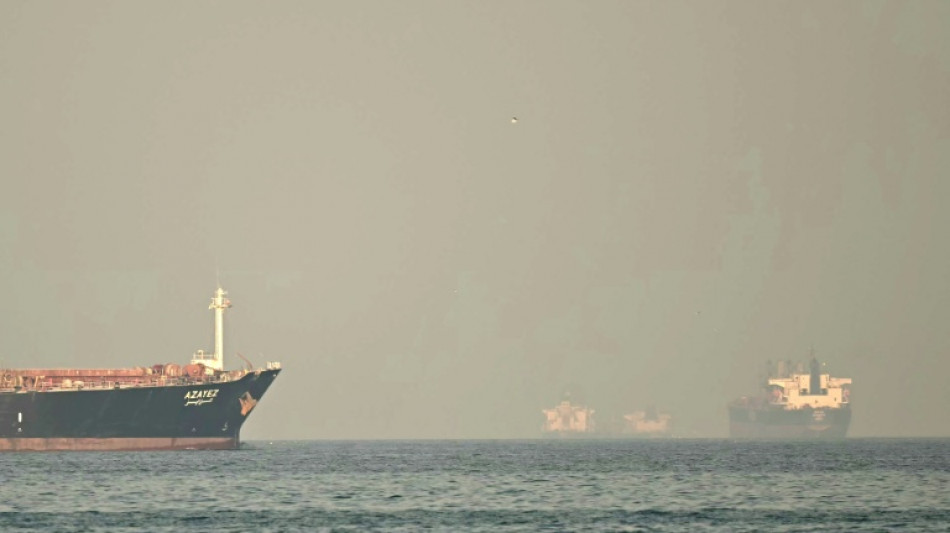
Rising fuel costs and the logistical difficulty of transport through the Strait of Hormuz are affecting the delivery of medication to crisis and conflict zones in Africa, where the situation is already dire following US aid cuts.
"By the end of April, some of our medicine stocks will be depleted," Rodrigue Alitanou, director of operations for medical NGO Alima, told AFP from his office in Dakar.
Alima, which operates in 13 African countries, is sounding the alarm.
"If this goes on for a month and a half, two months, the warnings we are sounding will transform into direct impacts on the continuity of our activities," he said.
Africa imports more than 70 percent of medication and more than 90 percent of pharmaceutical ingredients.
Alitanou is concerned about rising import costs due to soaring fuel prices.
"An extra $2,000 in costs means 200 fewer children suffering from malnutrition will receive treatment," he said.
"We're already seeing it in Sudan, we're already seeing it in the DRC and it's starting to become apparent in most countries," he added.
- Mideast hub -
Situated at the crossroads between Asia, the world's leading producer of medicines, and Africa, the Middle East serves as the primary gateway for supplying the African continent.
Several humanitarian supply centres in Dubai's humanitarian free zone have seen their operations disrupted, affecting logistics transport to Africa.
In Dubai, the World Health Organization's (WHO) logistics hub, which supplies medicines to more than 150 countries worldwide, had to cancel shipments at the start of the conflict due to the closure of airspace and revise routes for delivering supplies.
"Supply lead times are lengthening because we cannot pass through the Strait of Hormuz and have to go via the Cape of Good Hope, particularly with cargo ships, so it is more expensive and adds 15 days to a month to the supply chain," said Damien Dubois, purchasing and inventory officer at MSF Supply, a supply centre within Doctors Without Borders (MSF).
A spokeswoman for the Global Fund to Fight AIDS, Tuberculosis and Malaria told AFP it had observed "delays and cost increases" although the organisation had not yet identified any shortages.
Anne Senequier, co-director of the Global Health Observatory at the Institute for International and Strategic Relations (IRIS), said that "at present we are not talking about a shortage of medicines due to the conflict, we are talking about an additional strain on an already fragile situation, with the risk of shortages emerging in certain vulnerable regions".
Those interviewed by AFP remain cautious regarding the ceasefire agreed Tuesday between the United States and Iran, with strikes continuing Wednesday in the Gulf and maritime traffic in the Strait of Hormuz still disrupted.
For Alitanou "this ceasefire is a first step, but it is not enough. Conflicts are ongoing in the Gulf states and continue to undermine our operations".
Agathe Lamouret, shipments coordinator at MSF Supply, said she believes "it's going to remain very unstable, especially as we don't know what will happen" after the two-week truce.
For his part, Christian Lindmeier, a WHO spokesman, said that "it will take several weeks to overcome the disruption caused by the closure of the Strait of Hormuz".
- 'Just-in-time' basis -
Africa, which is heavily reliant on imports, is particularly vulnerable to geopolitical upheavals, said Ines Alaoui, head of international health policy at France-based Coalition Plus, an organisation uniting international HIV health groups.
"On the African continent we operate on a just-in-time basis. We don't produce or stockpile more than is necessary," she said.
The organisations within Coalition Plus were already bearing the brunt of US aid cuts, with shortages of preventive medicines and antiretrovirals observed on the ground.
The new crisis is "further eroding healthcare", Alaoui said, adding "we fear that people living with HIV will have to stop their treatment".
For Senequier of IRIS, "the risk is that certain vulnerable groups will turn to counterfeit medicines, which will put their health at risk".
O.Hofer--NZN