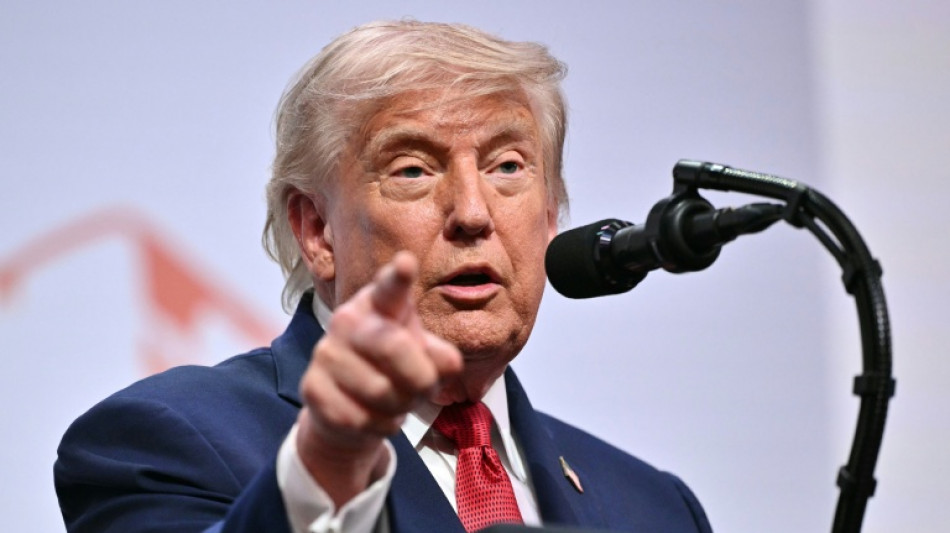
Trump's Iran deal sparks anger among Republican hawks / Photo: Mandel NGAN - AFP/File
US President Donald Trump's deal with Iran has opened a rare breach with Republican hawks, who warn that the agreement falls far short of the sweeping victory he promised and could leave Tehran richer, stronger and still able to threaten the region.
The memorandum of understanding, signed by Trump in France, is aimed at ending months of conflict, reopening the vital Strait of Hormuz and stabilizing energy markets after a war that drove up oil prices and raised fears of a wider Middle East crisis.
But the terms have alarmed some of the same Republicans who spent years denouncing Democratic former president Barack Obama's 2015 nuclear agreement with Iran as dangerously weak.
They have voiced concerns that Trump is offering Iran sanctions relief, access to oil markets and the prospect of a $300 billion reconstruction fund while failing to secure firm commitments on uranium enrichment, ballistic missiles or Tehran's support for armed proxies.
Republican Senator Bill Cassidy wrote on X that former president and Republican icon Ronald Reagan would be "rolling over in his grave," calling the agreement "the worst foreign policy blunder in decades."
"Before the war, the strait was open, Iran was being crushed by sanctions, and 13 service members were still alive," he said. "Now, 13 Americans are dead, families have paid billions at the pump, sanctions will be lifted, and the bombing has stopped."
Trump has defended the deal as a practical way to reopen one of the world's most important energy chokepoints, through which about a fifth of global crude normally passes. He said the agreement was not final and warned that the United States could resume strikes if negotiations fail.
"It's a memorandum of understanding, and if I don't like it, we'll go back to shooting at them, dropping bombs on their head," Trump told reporters Wednesday at a Group of Seven summit in Evian, in eastern France.
- 'Threat to America' -
But the president also appeared to lower his earlier demands, after having called during the war for Iran's "total surrender" and the dismantling of its nuclear program.
Under the memorandum, Iran is expected to keep the Strait of Hormuz open during a 60-day negotiating period and receive sanctions waivers allowing it to sell oil while talks continue.
The deal restates Iran's pledge not to seek a nuclear weapon but does not require an immediate halt to enrichment or the surrender of highly enriched uranium stockpiles.
Republican Senator Ted Cruz warned urged Trump not to "suddenly come in with massive buckets of cash to let them rebuild and become a threat to America again."
"I don't want to see theocratic Islamists who want to kill us made stronger. So if this deal is giving them $300 billion, that's a mistake," he said.
Texas Senator John Cornyn told reporters he was concerned the accord could be little more than "an intermission," leaving Iran able to rebuild its arsenal and keep enriching uranium.
Senate Majority Leader John Thune was more cautious but said lawmakers needed answers on whether the agreement addressed Iran's nuclear program, ballistic missiles and support for militant groups.
Other Trump allies urged patience.
Senator Lindsey Graham said the deal opened the Strait of Hormuz, suspended hostilities and created space to test whether diplomacy could curb Iran's nuclear ambitions.
"I doubt if they can -- on the nuclear program, but why not try?" Graham said, according to The Hill.
Democrats, who are united in opposition to the deal, argue that Trump launched a costly war only to accept a deal that largely restores the pre-war status quo while handing Tehran new leverage.
Trump, meanwhile, has lashed out at critics, dismissing opponents of the deal as "fools" and insisting it gives Washington a chance to end the war without deeper US involvement.
M.J.Baumann--NZN