Ukrainian drones hit Moscow on last day of Russian elections / Photo: - - AFP
Ukraine fired waves of drones at Moscow and the surrounding region early Sunday, killing two people and setting an oil refinery ablaze as Russians voted in a final day of parliamentary elections, officials said.
The attack was the largest on Moscow since the Kremlin launched its Ukraine offensive in 2022 and involved some 1,600 drones, 450 of which were aimed directly at the capital, Moscow Mayor Sergei Sobyanin said.
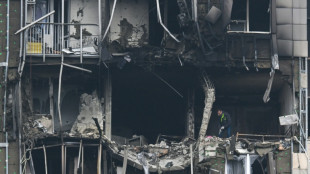
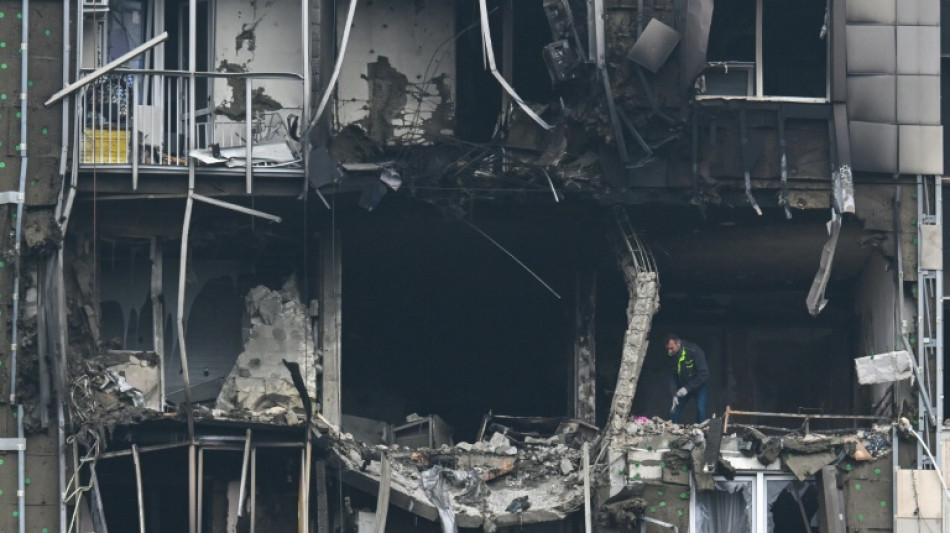
Images showed a gaping hole in a multi-storey apartment building on the outskirts of the city, while another showed black smoke pouring from what appeared to be an oil refinery.
The strikes came on the final day of tightly controlled parliamentary elections that are widely expected to result in another win for the ruling United Russia party which backs President Vladimir Putin.
There was no immediate response from Putin to the strikes. But Moscow Mayor Sergei Sobyanin accused Ukraine of attempting to interfere with the polls.
"The unprecedented attack was clearly planned with the aim of disrupting the elections. The enemy did not succeed," Sobyanin said on Telegram.
Ukraine's President Volodymyr Zelensky meanwhile praised the strikes, saying: "Our long-range responses had a very significant impact in the Moscow region last night."
"One of Russia's key oil industry facilities and the aggressor's logistics facility were hit. These are billions of dollars that sustain the war machine," he posted on X.
Ukraine has targeted Russian infrastructure with drones throughout the war, in retaliation for Russian bombardment of its own towns and cities.
At least two people were killed in Sunday's attacks -- a 44-year-old woman and an elderly man -- in two separate locations, Moscow regional Governor Andrey Vorobyov said.
A fire triggered by a drone crashing into a 21-storey building also led to 400 people being evacuated, Vorobyov said.
- Voter angst -
The strikes came as voting to determine all 450 seats in Russia's lower house State Duma entered its third and final day.
The parliamentary vote is Russia's first since launching its Ukraine offensive in 2022, and while the results are unlikely to offer many surprises, they may offer clues as to public sentiment towards the war.
The United Russia party, which has won every parliamentary election in Russia since 2003, is widely expected to cruise to another victory.
All other parties back Putin and the Ukraine war.
Yabloko, a liberal party that has called for an end to the fighting, was barred from running its federal list by Russia's Supreme Court, although its candidates remain on the ballot in some single-mandate constituencies.
Putin had urged Russians to take part, casting the vote as a show of support for Moscow's troops and an "answer to those who want to weaken Russia".
In Moscow, one voter told AFP they were frustrated by the state of the economy.
"Many people have lost their jobs. Wages are now falling rather than rising," Diana, 30, said.
Another voter, 71-year-old Tatiana, said she had voted for United Russia.
"It is the largest party, the hardest-working and most productive," she said.
Putin's political opponents have mostly been driven into exile, while his main rival, Alexei Navalny, died in an Arctic prison in 2024.
Navalny's widow Yulia Navalnaya called on anti-war Russians to collectively cast their ballots at noon on Sunday, a tactic that drew crowds in the 2024 presidential election.
In Berlin, a few dozen opposition supporters gathered outside the Russian embassy to protest, an AFP reporter saw.
- Cyberattacks -
As voting entered a final day, Russia's electoral chief said there had been a wave of cyberattacks targeting election infrastructure.
Ella Pamfilova, chair of Russia's Central Election Commission, did not say who was responsible.
The attacks appeared to have been carried out by "highly professional, well-coordinated groups using artificial intelligence tools," she said.
"Over the past period, more than 1,000 waves of DDoS attacks have been recorded against infrastructure in Russia that is specifically involved in the electoral process," Pamfilova was quoted as saying by Russian news agencies.
DDoS (distributed denial-of-service) attacks involve overwhelming a system with internet traffic so that it is unable to function normally.
She warned on Saturday that saboteurs had also severed communication lines in Russia's far east, in an apparent attempt to frustrate the voting.
"We view the incident as a deliberate act of sabotage and an attempt to disrupt voting in the region," Pamfilova was quoted as saying by state news agency TASS.
I.Widmer--NZN