Zürcher Nachrichten - China a better influence in Latin America than US: poll

EUR -
AED 4.135607
AFN 74.312152
ALL 92.327118
AMD 408.113884
ANG 2.015836
AOA 1032.483179
ARS 1713.524166
AUD 1.62259
AWG 2.029499
AZN 1.91856
BAM 1.959708
BBD 2.267352
BDT 138.40109
BGN 1.895446
BHD 0.424523
BIF 3374.991374
BMD 1.125935
BND 1.440773
BOB 13.525493
BRL 5.867029
BSD 1.12576
BTN 109.058616
BWP 15.562483
BYN 3.390762
BYR 22068.333923
BZD 2.264015
CAD 1.60429
CDF 2600.911191
CHF 0.93273
CLF 0.028256
CLP 1115.712356
CNY 7.548891
CNH 7.552554
COP 3684.128199
CRC 515.828695
CUC 1.125935
CUP 27.017239
CVE 110.736191
CZK 24.454533
DJF 200.101683
DKK 7.479143
DOP 67.612863
DZD 150.890027
EGP 58.776238
ERN 16.889031
ETB 181.303794
FJD 2.549163
FKP 0.853385
GBP 0.850469
GEL 2.933107
GGP 0.853385
GHS 13.224156
GIP 0.853385
GMD 82.760588
GNF 9851.935187
GTQ 8.602851
GYD 235.479607
HKD 8.835722
HNL 30.198025
HRK 7.540056
HTG 147.413981
HUF 368.676725
IDR 20141.295479
ILS 3.436727
IMP 0.853385
INR 108.254467
IQD 1474.97538
IRR 1966490.662268
ISK 137.285738
JEP 0.853385
JMD 178.215407
JOD 0.798333
JPY 177.7008
KES 144.435427
KGS 98.463484
KHR 4566.794394
KMF 493.160101
KPW 1013.342222
KRW 1513.645675
KWD 0.347723
KYD 0.938071
KZT 505.788672
LAK 25285.698596
LBP 100827.515843
LKR 372.269175
LRD 192.929461
LSL 18.747254
LTL 3.324595
LVL 0.681068
LYD 7.21166
MAD 11.193491
MDL 20.117119
MGA 4987.894231
MKD 61.703875
MMK 2364.327599
MNT 4051.529572
MOP 9.099046
MRU 45.133164
MUR 54.214216
MVR 17.407387
MWK 1954.62425
MXN 20.448343
MYR 4.599338
MZN 71.951471
NAD 18.747249
NGN 1498.384001
NIO 41.271206
NOK 10.829927
NPR 174.493786
NZD 2.004871
OMR 0.432226
PAB 1.125745
PEN 3.881667
PGK 5.048738
PHP 70.464983
PKR 311.785203
PLN 4.386363
PYG 6586.222362
QAR 4.10235
RON 5.339077
RSD 117.692945
RUB 94.165779
RWF 1660.754721
SAR 4.207704
SBD 9.095387
SCR 15.509686
SDG 677.254284
SEK 11.304508
SGD 1.439851
SHP 0.850115
SLE 27.702139
SLL 23610.293318
SOS 643.360169
SRD 42.573311
STD 23304.589613
STN 25.023914
SVC 9.849774
SYP 14639.412412
SZL 18.74724
THB 37.74177
TJS 10.362265
TMT 3.940774
TND 3.371618
TOP 2.710982
TRY 55.317098
TTD 7.633223
TWD 35.829296
TZS 2966.84321
UAH 50.654468
UGX 4492.018081
USD 1.125935
UYU 45.371692
UZS 13271.96765
VES 974.472491
VND 29257.994447
VUV 135.207174
WST 3.131081
XAF 655.957
XAG 0.018651
XAU 0.000271910232
XCD 3.042897
XCG 2.028846
XDR 0.796095
XOF 655.957
XPF 119.331742
YER 266.062577
ZAR 18.752571
ZMK 10134.773796
ZMW 22.120113
ZWL 362.550741
SSP 6432.009475
MXV 2.313693
  • BCC

    0.2900

    74.99

    +0.39%

  • NGG

    0.7900

    76.12

    +1.04%

  • BTI

    0.2849

    52.64

    +0.54%

  • AZN

    -0.8000

    156.9

    -0.51%

  • GSK

    -0.1500

    47.03

    -0.32%

  • BCE

    -0.1900

    19.73

    -0.96%

  • CMSC

    0.0800

    20.24

    +0.4%

  • BP

    0.2900

    44.79

    +0.65%

  • RIO

    1.3400

    94.21

    +1.42%

  • RBGPF

    0.0000

    65

    0%

  • CMSD

    0.0900

    20.43

    +0.44%

  • VOD

    0.4400

    16.82

    +2.62%

  • RYCEF

    0.3000

    19.7

    +1.52%

  • JRI

    0.1300

    10.9

    +1.19%

  • RELX

    -0.0700

    33.42

    -0.21%

China a better influence in Latin America than US: poll
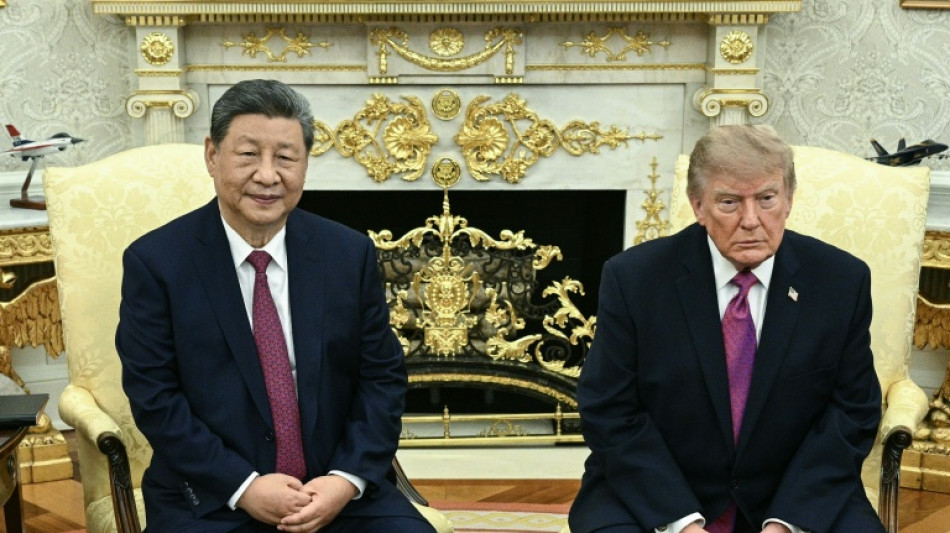
China a better influence in Latin America than US: poll / Photo: Brendan SMIALOWSKI - AFP

China a better influence in Latin America than US: poll

China's influence in Latin America is now viewed more positively than that of the United States, a major poll conducted in 17 Latin American countries showed Friday.

Text size:

The 2026 Latinobarometro survey showed that China overtaking the United States in terms of influence for the first time since the annual survey began in 1995.

It showed 57 percent of people in Latin America considering the United States to be a positive influence, down from 60 percent in 2020.

China, meanwhile, was considered a positive influence by 65 percent of respondents, a jump from 48 percent six years ago.

Costa Rica and the Dominican Republic were the only countries in the region where US influence was deemed more positive than that of China.

The report partly attributed the shift to Washington's "almost complete absence" from the region in the two decades after the 2003 Iraq War.

During that time, Latin America "drew closer to other powers, to China, to the European Union, to Japan," Marta Lagos, director of Latinobarometer, told AFP.

Lagos said China had won over Latin American populations by allowing them to access cheaper imports.

"The void that China fills is the void in people's pockets, more than anything else," she said.

The growing disaffection towards the United States comes nearly halfway through Trump's second term, during which he has openly asserted his desire for hegemony over Latin America, as part of what he calls the "Donroe Doctrine."

-- US popularity drops --

As a country, the United States remains more popular than China, with 63 percent saying they had a favorable view of the world's top economy, compared to 58 percent for its arch-rival.

But America's popularity was markedly down compared to 2024, when Democratic president Joe Biden was in the White House and 73 percent had a favorable view of the United States.

The "Donroe Doctrine" blends Trump's first name with that of James Monroe, the fifth US president, who more than two centuries ago declared Latin America the United States' exclusive sphere of influence.

Trump's push to restore US dominance in what Washington calls "our hemisphere" was in evidence in January when the United States overthrew Venezuelan president Nicolas Maduro.

The Latinobarometro poll showed a majority of people in all but one country -- Argentina -- approving of Maduro's capture by US special forces.

But only 35 percent considered it benefited Venezuela, compared to 28 percent who said it harmed the Caribbean country.

Citizens of Venezuela itself were, however, among those who viewed US influence most positively.

Chile-based Latinobarometro is a non-profit organization that surveys opinions on a range of issues, from democracy to the economy, security and migration.

The 2026 survey was based on some 19,200 face-to-face interviews carried out in 17 countries between May 7 and June 17, with a margin of error of 1 percent.

cb-gma/md/mjf

T.L.Marti--NZN