Zürcher Nachrichten - Scientists sound alarm as ocean temperatures hit new record

EUR -
AED 4.183233
AFN 72.900796
ALL 94.178505
AMD 419.314312
ANG 2.039391
AOA 1044.526125
ARS 1682.963331
AUD 1.650836
AWG 2.050323
AZN 1.940938
BAM 1.953816
BBD 2.29467
BDT 140.137703
BGN 1.926028
BHD 0.429564
BIF 3383.764104
BMD 1.139068
BND 1.474203
BOB 7.873316
BRL 5.906116
BSD 1.139343
BTN 106.936538
BWP 15.483957
BYN 3.304345
BYR 22325.7403
BZD 2.291333
CAD 1.616088
CDF 2585.685641
CHF 0.921945
CLF 0.026716
CLP 1051.47848
CNY 7.750051
CNH 7.748997
COP 3924.853754
CRC 517.274756
CUC 1.139068
CUP 30.185312
CVE 110.152667
CZK 24.262503
DJF 202.435681
DKK 7.474852
DOP 66.942027
DZD 151.891398
EGP 56.388104
ERN 17.086026
ETB 183.690043
FJD 2.581248
FKP 0.861953
GBP 0.862588
GEL 3.012882
GGP 0.861953
GHS 12.846463
GIP 0.861953
GMD 83.152397
GNF 9982.863336
GTQ 8.692174
GYD 238.447299
HKD 8.931931
HNL 30.484046
HRK 7.534145
HTG 148.908797
HUF 353.806604
IDR 20318.644856
ILS 3.419541
IMP 0.861953
INR 107.482778
IQD 1492.484522
IRR 1566275.979936
ISK 143.990074
JEP 0.861953
JMD 179.437798
JOD 0.807645
JPY 184.248302
KES 147.464231
KGS 99.611968
KHR 4573.356185
KMF 494.356077
KPW 1025.161943
KRW 1749.07411
KWD 0.352667
KYD 0.949478
KZT 552.798685
LAK 25007.607115
LBP 102029.928944
LKR 382.987923
LRD 207.538374
LSL 18.727983
LTL 3.363373
LVL 0.689012
LYD 7.313542
MAD 10.683358
MDL 20.201374
MGA 4819.022121
MKD 61.650608
MMK 2391.4173
MNT 4078.140908
MOP 9.203718
MRU 45.46983
MUR 54.345384
MVR 17.599037
MWK 1975.671941
MXN 19.928917
MYR 4.656556
MZN 72.790718
NAD 18.727983
NGN 1569.96699
NIO 41.927427
NOK 11.321935
NPR 171.101263
NZD 2.019175
OMR 0.437978
PAB 1.139393
PEN 3.885055
PGK 4.999879
PHP 69.810658
PKR 317.086147
PLN 4.288536
PYG 6953.908432
QAR 4.152965
RON 5.240402
RSD 117.409287
RUB 89.840095
RWF 1668.578957
SAR 4.278556
SBD 9.171725
SCR 15.116694
SDG 683.441416
SEK 11.086063
SGD 1.474085
SHP 0.85043
SLE 28.253073
SLL 23885.698624
SOS 651.167384
SRD 42.695744
STD 23576.41575
STN 24.475148
SVC 9.968834
SYP 125.903618
SZL 18.716995
THB 37.997617
TJS 10.544809
TMT 3.986739
TND 3.377019
TOP 2.742604
TRY 53.107967
TTD 7.743002
TWD 36.285825
TZS 2987.418743
UAH 51.139324
UGX 4181.643799
USD 1.139068
UYU 45.735567
UZS 13685.704189
VES 707.080099
VND 29957.498463
VUV 136.632283
WST 3.172872
XAF 655.291613
XAG 0.019292
XAU 0.000279
XCD 3.07839
XCG 2.053315
XDR 0.816089
XOF 655.288739
XPF 119.331742
YER 271.810235
ZAR 18.752312
ZMK 10252.986409
ZMW 20.523521
ZWL 366.779554
  • CMSC

    -0.1160

    21.93

    -0.53%

  • RBGPF

    0.0000

    61.3

    0%

  • RYCEF

    0.7000

    18.7

    +3.74%

  • NGG

    -0.4100

    83.01

    -0.49%

  • RIO

    -1.3700

    93.74

    -1.46%

  • BTI

    0.2800

    62.76

    +0.45%

  • RELX

    0.4200

    31.34

    +1.34%

  • VOD

    0.0300

    13.89

    +0.22%

  • BCE

    -0.2800

    22.92

    -1.22%

  • BP

    -0.5900

    37.13

    -1.59%

  • AZN

    2.7300

    188.41

    +1.45%

  • CMSD

    -0.1600

    21.77

    -0.73%

  • GSK

    0.6100

    52.5

    +1.16%

  • BCC

    1.2600

    81.02

    +1.56%

  • JRI

    0.2100

    12.79

    +1.64%

Scientists sound alarm as ocean temperatures hit new record
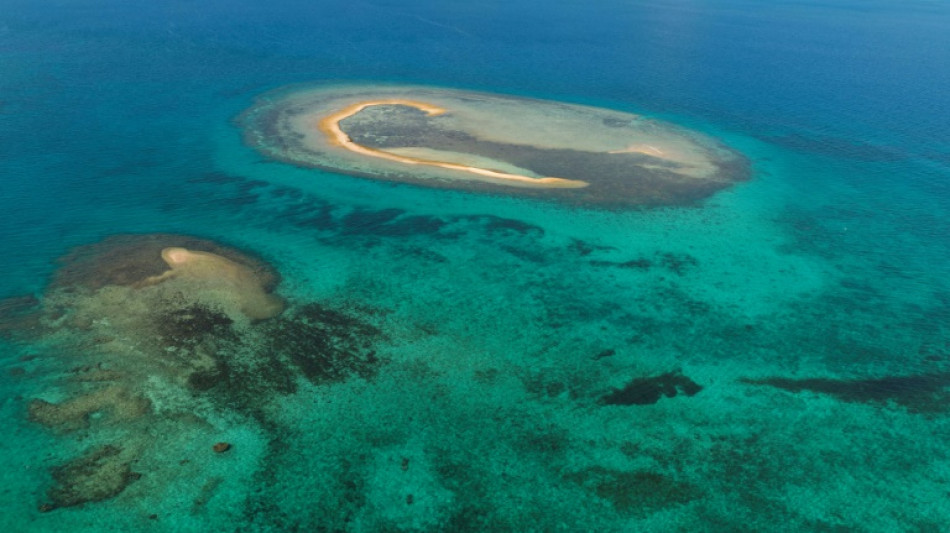
Scientists sound alarm as ocean temperatures hit new record / Photo: Fred Payet - AFP/File

Scientists sound alarm as ocean temperatures hit new record

The world's oceans, which have absorbed most of the excess heat caused by humanity's carbon pollution, continued to see record-breaking temperatures last year, according to research published Wednesday.

Text size:

Climate change has increased surface temperatures across the planet, leading to atmospheric instability and amplifying extreme weather events such as storms.

Oceans absorb about 90 percent of the excess heat from greenhouse gas emissions, shielding land surfaces but generating huge, long-lasting marine heatwaves that are already having devastating effects on underwater life.

The study, by researchers in China, the US, Italy and New Zealand, said that 2022 was "the hottest year ever recorded in the world's oceans".

Heat content in the oceans exceeded the previous year's levels by around 10 Zetta joules -- equivalent to 100 times the electricity generation worldwide in 2021, according to the authors.

"The oceans are absorbing most of the heating from human carbon emissions," said co-author Michael Mann, a professor at the University of Pennsylvania.

"Until we reach net zero emissions, that heating will continue, and we'll continue to break ocean heat content records, as we did this year," he said. "Better awareness and understanding of the oceans are a basis for the actions to combat climate change."

Records going back to the late 1950s show a relentless rise in ocean temperatures with almost continuous increases going back to around 1985.

- 'Nightmare for marine life' -

Scientists have warned that climbing temperatures have wrought major changes to ocean stability faster than previously thought.

The research, published in the journal Advances in Atmospheric Sciences, was based on observations from 24 scientists across 16 institutes worldwide.

It also found other indications suggesting that ocean health is deteriorating.

Increasing water temperatures and ocean salinity -- also at an all-time high -- directly contribute to a process of "stratification", where water separates into layers that no longer mix.

This has wide-ranging implications because it affects the exchange of heat, oxygen and carbon between the ocean and atmosphere, with effects including a loss of oxygen in the ocean.

"Deoxygenation itself is a nightmare for not only marine life and ecosystems but also for humans and our terrestrial ecosystems," the researchers said in a statement.

Updated data released this week showed that average global atmospheric temperatures across 2022 made it the fifth warmest year since records began in the 19th century, according to Europe's Copernicus Climate Change Service.

Countries across the world have faced a cascade of unprecedented natural disasters made more likely and deadly by climate change.

Many of these impacts can be linked to a fast-warming ocean and the related changes in the hydrological cycle.

"Some places are experiencing more droughts, which lead to an increased risk of wildfires, and other places are experiencing massive floods from heavy rainfall, often supported by increased evaporation from warm oceans," said co-author Kevin Trenberth, of the US National Center for Atmospheric Research and the University of Auckland.

O.Krasniqi--NZN