Zürcher Nachrichten - NASA exploring ways to keep ISS afloat without Russian help: official

EUR -
AED 4.243199
AFN 76.816385
ALL 93.186779
AMD 421.940448
AOA 1059.499986
ARS 1731.96426
AUD 1.634492
AWG 2.081161
AZN 1.961832
BAM 1.955111
BBD 2.320873
BDT 142.639766
BHD 0.434545
BIF 3449.985005
BMD 1.155398
BND 1.47658
BOB 13.695177
BRL 5.874733
BSD 1.152289
BTN 109.648538
BWP 15.553455
BYN 3.431177
BYR 22645.802735
BZD 2.317474
CAD 1.612324
CDF 2614.086957
CHF 0.934654
CLF 0.026803
CLP 1054.878725
CNY 7.796165
CNH 7.792791
COP 3648.389022
CRC 523.81326
CUC 1.155398
CUP 30.61805
CVE 110.22332
CZK 24.264051
DJF 205.196847
DKK 7.475264
DOP 67.26602
DZD 153.587771
EGP 57.609419
ERN 17.330971
ETB 185.985596
FJD 2.552261
FKP 0.857019
GBP 0.856098
GEL 3.015386
GGP 0.857019
GHS 13.519372
GIP 0.857019
GMD 84.920858
GNF 10120.260724
GTQ 8.791676
GYD 241.024009
HKD 9.064594
HNL 30.884989
HRK 7.534375
HTG 150.666939
HUF 363.033032
IDR 20546.50216
ILS 3.468101
IMP 0.857019
INR 110.072122
IQD 1509.468404
IRR 1589307.85432
ISK 142.587462
JEP 0.857019
JMD 182.994762
JOD 0.819159
JPY 182.969975
KES 149.450928
KGS 101.03906
KHR 4680.351701
KMF 492.199617
KRW 1636.950761
KWD 0.356741
KYD 0.960262
KZT 540.040464
LAK 26016.724996
LBP 103187.513486
LKR 386.502211
LRD 207.987652
LSL 18.720126
LTL 3.41159
LVL 0.698888
LYD 7.329387
MAD 10.739418
MDL 20.037856
MGA 4917.246994
MKD 61.540878
MMK 2425.815605
MNT 4152.793668
MOP 9.311421
MRU 46.322486
MUR 54.303818
MVR 17.850835
MWK 1998.087679
MXN 19.811612
MYR 4.723385
MZN 73.835683
NAD 18.719883
NGN 1573.640789
NIO 42.405066
NOK 10.986386
NPR 175.441455
NZD 1.961282
OMR 0.444252
PAB 1.152294
PEN 3.902292
PGK 5.092273
PHP 70.184643
PKR 319.904254
PLN 4.298497
PYG 6851.557409
QAR 4.212107
RON 5.248053
RSD 117.311005
RUB 95.047204
RWF 1694.395945
SAR 4.326684
SBD 9.31909
SCR 17.004942
SDG 693.751675
SEK 10.958327
SGD 1.477899
SLE 28.42391
SOS 658.56522
SRD 43.750885
STD 23914.407904
STN 24.491693
SVC 10.082449
SZL 18.716328
THB 38.099829
TJS 10.629864
TMT 4.055447
TND 3.38512
TRY 55.133169
TTD 7.810216
TWD 37.221116
TZS 3053.212273
UAH 51.608202
UGX 4291.578596
USD 1.155398
UYU 46.383264
UZS 13781.027404
VES 873.206446
VND 30204.417097
VUV 137.915725
WST 3.158531
XAF 655.723234
XAG 0.018032
XAU 0.000266
XCD 3.122521
XCG 2.076769
XDR 0.815509
XOF 655.723234
XPF 119.331742
YER 275.443085
ZAR 18.669755
ZMK 10399.966413
ZMW 21.749246
ZWL 372.037716
  • CMSC

    0.0240

    21.744

    +0.11%

  • JRI

    0.1500

    12.81

    +1.17%

  • BCC

    2.3400

    86.6

    +2.7%

  • CMSD

    -0.1600

    21.82

    -0.73%

  • BCE

    -0.0200

    22.75

    -0.09%

  • RIO

    1.4500

    101.1

    +1.43%

  • GSK

    0.7900

    52.96

    +1.49%

  • BTI

    0.6000

    59.33

    +1.01%

  • BP

    -0.6000

    41.63

    -1.44%

  • NGG

    0.4700

    80.88

    +0.58%

  • RBGPF

    0.7600

    70.5

    +1.08%

  • VOD

    0.1900

    16.19

    +1.17%

  • RELX

    0.0485

    35.52

    +0.14%

  • RYCEF

    0.2300

    20.85

    +1.1%

  • AZN

    1.4100

    161.42

    +0.87%

NASA exploring ways to keep ISS afloat without Russian help: official

NASA exploring ways to keep ISS afloat without Russian help: official

NASA is exploring ways to keep the International Space Station in orbit without Russian help, but doesn't see any immediate signs Moscow is withdrawing from the collaboration following the invasion of Ukraine, a senior official said Monday.

Text size:

Kathy Lueders, who heads the agency's human spaceflight program, told reporters on a call that operations on the research platform were proceeding "nominally" and "we're not getting any indications at a working level that our counterparts are not committed."

"That said, we always look for how do we get more operational flexibility and our cargo providers are looking at how do we add different capabilities," she continued.

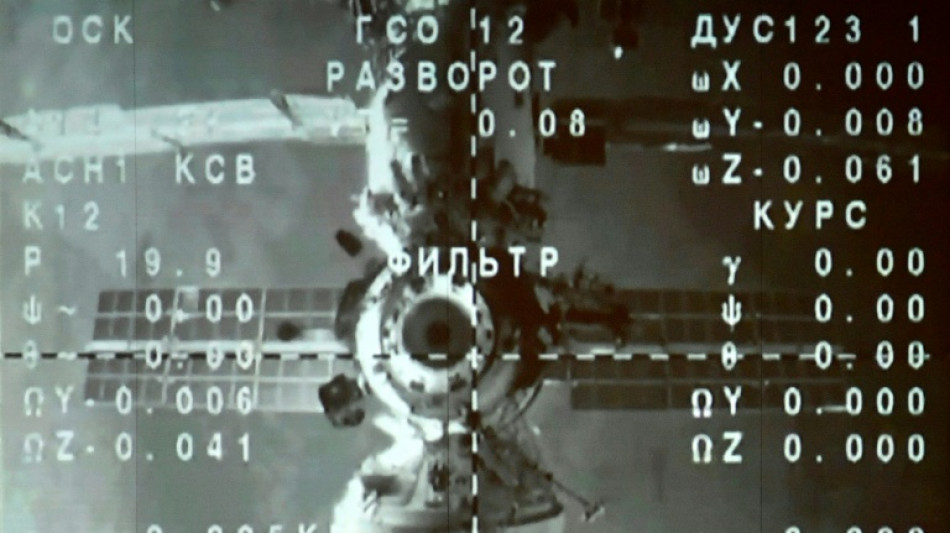
While the US side of the ISS supplies power and life support, Russia is responsible for propulsion and keeping the station afloat: it does this by using docked Progress spacecraft to periodically give the station a boost to maintain its altitude, approximately 250 miles (400 kilometers) high.

Last week, though, Russia's space chief Dmitry Rogozin raised the prospect of pulling out of the partnership in response to US sanctions, allowing the 400 ton structure to come crashing down to Earth while most likely avoiding his country, since its orbit doesn't fly much over it.

Lueders said: "Northrop Grumman has been offering up a reboost capability, and you know, our SpaceX folks are looking at can we have additional capability."

The last Northrop Grumman Cygnus cargo vessel that arrived at the ISS on February 21 was the first to boast a capacity to "reboost" the outpost without Russian help.

On Friday, SpaceX boss Elon Musk tweeted his company's logo in response to Rogozin's rhetorical question about who would save the ISS from an uncontrolled de-orbit.

But Lueders stressed that such plans were a contingency measure only.

"It would be very difficult for us to be operating on our own -- ISS is an international partnership that was created...with joint dependencies," she said.

"As a team, we are looking at where we may have operational flexibilities, but... it would be a sad day for international operations if we can't continue to peacefully operate in space," she concluded.

A symbol of post Cold War detente, the ISS has been continuously habited for more than 21 years and has weathered past geopolitical storms, notably Russia's invasion of Crimea in 2014. But some observers believe the invasion of Ukraine could hasten the demise of US-Russian space cooperation.

J.Hasler--NZN