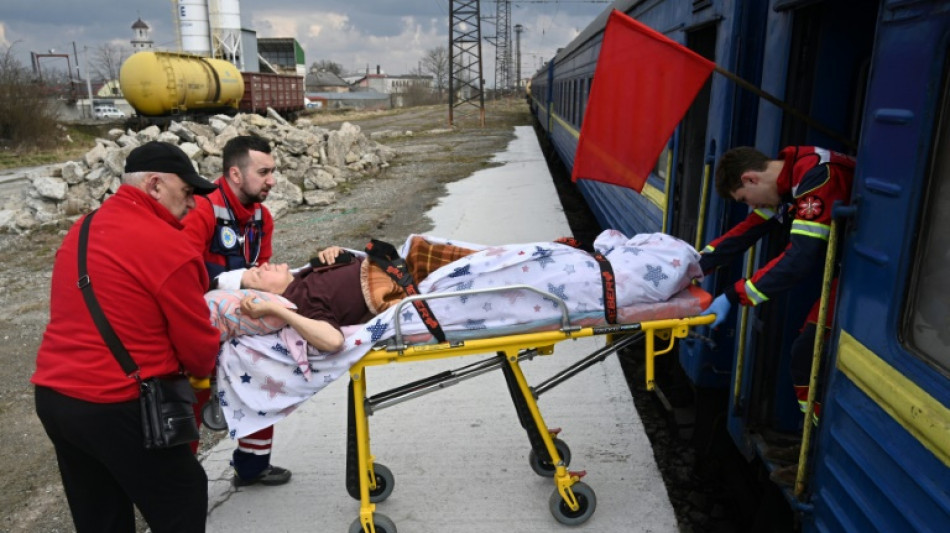
Superbugs pose 'huge challenge' in treating Ukraine war wounds / Photo: YURIY DYACHYSHYN - AFP/File
Infections with superbugs that are resistant to most drugs have presented a "huge challenge" in treating the devastating injuries of people wounded in the war in Ukraine, doctors in Germany said on Tuesday.
Superbugs -- strains of bacteria resistant to antibiotics -- were already considered a major health problem in Ukraine before Russia invaded, and researchers have warned the conflict could make the situation worse.
Out of 47 wounded patients evacuated from Ukraine to Berlin's Charite University Hospital for treatment last year, 14 had injuries infected with multidrug-resistant bacteria, according to new research.
That number included three children and one soldier, with six suffering from gunshot wounds and the other eight injured in bomb or grenade explosions.
Andrej Trampuz, an infectious disease specialist at the hospital, told AFP the combination of the complicated, horrific wounds and superbug infections had created the "most challenging situation" he had experienced in 25 years as a doctor.
Charite doctor Maria Virginia Dos Santos said the infections came about because Ukraine war casualties "often receive suboptimal surgical and antibiotic treatment in often unsterile low resource conditions and war zone, emergency settings, sometimes for weeks or even months".
- 'Silent pandemic' -
Antimicrobial resistance (AMR), which is spurred by the massive use of antibiotics in humans and animals, has been dubbed "the silent pandemic".
Superbugs are estimated to have killed 1.27 million people in 2019, according to the World Health Organization (WHO), which has warned that the annual number could rise to 10 million by 2050.
Trampuz said drug-resistant bacteria was already "everywhere" in Ukraine before the war, adding that this was likely due to the use of antibiotics in animals.
But the addition of severe, open wounds that are not quickly treated during the war had led to more infections, he said, with the combination presenting "a huge challenge" for doctors.
He said the medical team had used several innovative ways to treat the infections, including putting antibiotics directly into the wound during surgery as well as deploying bacteriophages, which are viruses that only target bacteria.
Following treatment, 10 of the patients were discharged from hospital, with two thought to have returned to Ukraine, according to the new research presented at the European Congress of Clinical Microbiology and Infectious Diseases in Denmark's capital Copenhagen.
Two are still undergoing treatment, while two others who are no longer at the hospital have developed new acute infections, according to the research, which has not been peer-reviewed.
Despite concerns the drug-resistant superbugs could spread in Germany, Trampuz said no cases had been transmitted because the patients were isolated and treated quickly.
Trampuz called for doctors in Ukraine to receive more support and resources so patients can be more effectively treated immediately after being wounded.
Earlier this month, the WHO said it had delivered 10 bacteriological analysers and 1,200 test kits to hospitals and regional centres in Ukraine.
It said the deliveries would help decrease the use of antibiotics and provide a clearer picture of antimicrobial resistance in Ukraine.
O.Hofer--NZN