Zürcher Nachrichten - New research shows unintended harms of organic farming

EUR -
AED 4.240257
AFN 73.32143
ALL 96.053795
AMD 433.817139
ANG 2.066822
AOA 1058.764604
ARS 1599.696819
AUD 1.675026
AWG 2.078272
AZN 1.967396
BAM 1.955877
BBD 2.317892
BDT 141.205579
BGN 1.973561
BHD 0.434817
BIF 3418.53506
BMD 1.154596
BND 1.481959
BOB 7.981315
BRL 6.067751
BSD 1.150845
BTN 109.078309
BWP 15.865627
BYN 3.425635
BYR 22630.074075
BZD 2.314491
CAD 1.604715
CDF 2635.36902
CHF 0.917923
CLF 0.027055
CLP 1068.301597
CNY 7.980392
CNH 7.989998
COP 4229.267091
CRC 534.421114
CUC 1.154596
CUP 30.596784
CVE 110.269357
CZK 24.603629
DJF 204.928096
DKK 7.496448
DOP 68.502706
DZD 153.573067
EGP 60.780401
ERN 17.318934
ETB 177.904429
FJD 2.606389
FKP 0.868614
GBP 0.866456
GEL 3.094767
GGP 0.868614
GHS 12.609498
GIP 0.868614
GMD 84.867224
GNF 10090.398654
GTQ 8.807348
GYD 240.899518
HKD 9.036039
HNL 30.555207
HRK 7.557064
HTG 150.85596
HUF 390.276858
IDR 19617.503194
ILS 3.622683
IMP 0.868614
INR 109.435464
IQD 1507.559561
IRR 1516272.693223
ISK 144.047794
JEP 0.868614
JMD 181.147157
JOD 0.818654
JPY 185.066713
KES 149.485906
KGS 100.96983
KHR 4609.182101
KMF 494.167328
KPW 1039.005581
KRW 1741.604016
KWD 0.355512
KYD 0.959038
KZT 556.361981
LAK 25029.988892
LBP 103054.87152
LKR 362.514322
LRD 211.168343
LSL 19.761581
LTL 3.409221
LVL 0.698404
LYD 7.34629
MAD 10.755925
MDL 20.213799
MGA 4796.189489
MKD 61.642435
MMK 2427.526343
MNT 4123.646826
MOP 9.285467
MRU 45.949815
MUR 54.000874
MVR 17.838939
MWK 1995.478838
MXN 20.923702
MYR 4.530678
MZN 73.836825
NAD 19.761581
NGN 1597.337286
NIO 42.351673
NOK 11.20288
NPR 174.524895
NZD 2.015881
OMR 0.443458
PAB 1.150845
PEN 4.008858
PGK 4.973196
PHP 69.911197
PKR 321.19049
PLN 4.298271
PYG 7524.297272
QAR 4.195866
RON 5.111746
RSD 117.404638
RUB 93.863708
RWF 1680.566396
SAR 4.33291
SBD 9.285301
SCR 17.363686
SDG 693.912357
SEK 10.938258
SGD 1.49255
SHP 0.866246
SLE 28.345751
SLL 24211.30527
SOS 657.725986
SRD 43.413994
STD 23897.798134
STN 24.500968
SVC 10.069398
SYP 129.111885
SZL 19.759781
THB 37.518628
TJS 10.995934
TMT 4.041085
TND 3.392934
TOP 2.779989
TRY 51.310654
TTD 7.819309
TWD 36.998328
TZS 2969.117305
UAH 50.443693
UGX 4287.169379
USD 1.154596
UYU 46.58184
UZS 14034.554481
VES 540.268027
VND 30409.162038
VUV 138.27014
WST 3.204592
XAF 655.982917
XAG 0.0165
XAU 0.000256
XCD 3.120353
XCG 2.074082
XDR 0.815832
XOF 655.982917
XPF 119.331742
YER 275.490657
ZAR 19.766689
ZMK 10392.750198
ZMW 21.663856
ZWL 371.779317
  • RBGPF

    -13.5000

    69

    -19.57%

  • GSK

    -0.1000

    53.84

    -0.19%

  • BCC

    0.1400

    74.43

    +0.19%

  • CMSD

    -0.0900

    22.66

    -0.4%

  • NGG

    -0.4800

    81.92

    -0.59%

  • BCE

    -0.2200

    25.25

    -0.87%

  • RIO

    0.8500

    86.64

    +0.98%

  • RYCEF

    -0.5900

    14.65

    -4.03%

  • AZN

    5.0200

    188.42

    +2.66%

  • RELX

    -0.1000

    31.97

    -0.31%

  • CMSC

    -0.0500

    22.77

    -0.22%

  • JRI

    -0.2700

    11.8

    -2.29%

  • BTI

    0.3749

    57.8

    +0.65%

  • VOD

    -0.1400

    14.49

    -0.97%

  • BP

    0.5100

    46.68

    +1.09%

New research shows unintended harms of organic farming
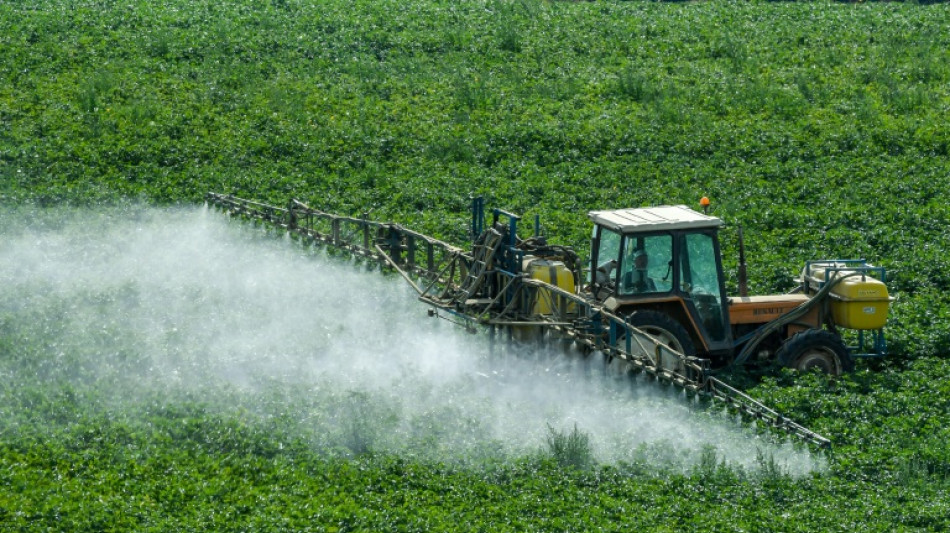
New research shows unintended harms of organic farming / Photo: Philippe HUGUEN - AFP/File

New research shows unintended harms of organic farming

Organic farming is often touted as a more sustainable solution for food production, leveraging natural forms of pest control to promote eco-friendly cultivation.

Text size:

But a new study published in Science on Thursday finds that expanding organic cropland can lead to increased pesticide use in surrounding non-organic fields, offsetting some environmental benefits.

These harmful "spillover effects" can be mitigated if organic farms are clustered together and geographically separated from conventional farms, the researchers found.

"Despite policy pushes to increase the amount of organic agriculture, there remain key knowledge gaps regarding how organic agriculture impacts the environment," said lead author Ashley Larsen, of the University of California, Santa Barbara.

Although organic agricultural practices generally improve environmental conditions such as soil and water quality, the trade-offs aren't very well understood.

For example, organic fields could harbor more beneficial species that prey on insects, such birds, spiders and predatory beetles and fewer pests. Or, the lack of chemical pesticides and genetically modified seeds could mean they harbor more pests.

To find out, Larsen and colleagues analyzed data on some 14,000 fields in Kern County, California, across seven years.

Kern County produces high-value crops including grapes, watermelons, citrus, tomatoes, potatoes and much more, making it one of the most valuable crop producing regions in the United States.

The team paired digitized maps of fields and the crops grown on them with records of pesticide applications and whether a field had an organic certification.

"Surrounding organic agriculture leads to an increase in pesticide use on conventional fields, but also leads to a larger decrease on nearby organic fields," said Larsen, with the effect manifesting primarily in insecticides, which specifically target insects.

The level of pesticides in conventional fields decreased the further away they were from organic fields.

But the situation could be completely remedied if organic fields were grouped together, the researchers found, based on a less-detailed national level analysis they also carried out.

"Spatially clustering organic fields and spatially separating organic and conventional fields could reduce the environmental footprint of both organic and conventional cropland," the team concluded.

Writing in a related commentary, Erik Lichtenberg of the University of Maryland said that the authors had shown farmers' decisions about pesticide are influenced by the presence of nearby organic fields -- but it's not fully clear why.

The value of the crops, their susceptibility to pests, and farmers' personal risk tolerances likely all play roles.

"Which mobile pests are involved, where they originate in the landscape, or how and why they move across the landscape are poorly understood," said Lichtenberg, calling for more research in this area.

H.Roth--NZN