Zürcher Nachrichten - Australia submits more ambitious 2030 emissions target to UN

EUR -
AED 4.172583
AFN 72.714994
ALL 94.095258
AMD 416.93039
ANG 2.034203
AOA 1042.439173
ARS 1678.393563
AUD 1.646838
AWG 2.045106
AZN 1.932124
BAM 1.95366
BBD 2.282559
BDT 139.397284
BGN 1.921128
BHD 0.428303
BIF 3385.787417
BMD 1.13617
BND 1.47037
BOB 7.831145
BRL 5.903087
BSD 1.133338
BTN 106.927973
BWP 15.464853
BYN 3.22531
BYR 22268.937374
BZD 2.279363
CAD 1.613407
CDF 2579.106417
CHF 0.921088
CLF 0.026568
CLP 1045.651444
CNY 7.715164
CNH 7.728059
COP 3916.992467
CRC 515.823542
CUC 1.13617
CUP 30.108512
CVE 110.140459
CZK 24.263314
DJF 201.818011
DKK 7.474359
DOP 66.785364
DZD 151.644677
EGP 56.259632
ERN 17.042554
ETB 180.253457
FJD 2.574679
FKP 0.863433
GBP 0.861405
GEL 2.999465
GGP 0.863433
GHS 12.746587
GIP 0.863433
GMD 82.364658
GNF 9930.989042
GTQ 8.646261
GYD 237.121874
HKD 8.907746
HNL 30.35879
HRK 7.533145
HTG 148.124464
HUF 354.06242
IDR 20476.060681
ILS 3.389111
IMP 0.863433
INR 107.255213
IQD 1488.383059
IRR 1562290.935301
ISK 143.997977
JEP 0.863433
JMD 178.622739
JOD 0.805514
JPY 183.844277
KES 147.167707
KGS 99.358247
KHR 4556.042688
KMF 493.097649
KPW 1022.553644
KRW 1756.627155
KWD 0.351815
KYD 0.944449
KZT 549.268583
LAK 25069.596973
LBP 101492.423899
LKR 381.944839
LRD 206.260402
LSL 18.848876
LTL 3.354815
LVL 0.687258
LYD 7.277995
MAD 10.697607
MDL 20.116607
MGA 4831.642929
MKD 61.621185
MMK 2385.4291
MNT 4071.833326
MOP 9.152312
MRU 45.526079
MUR 54.75243
MVR 17.553721
MWK 1973.527785
MXN 19.891724
MYR 4.680112
MZN 72.597053
NAD 18.849181
NGN 1562.427472
NIO 41.594972
NOK 11.221204
NPR 171.083805
NZD 2.013504
OMR 0.436864
PAB 1.133318
PEN 3.887952
PGK 4.973595
PHP 69.722796
PKR 315.39418
PLN 4.2841
PYG 6925.382454
QAR 4.141347
RON 5.232743
RSD 117.37322
RUB 85.441876
RWF 1665.460754
SAR 4.266307
SBD 9.148389
SCR 15.044871
SDG 681.702207
SEK 11.070417
SGD 1.473589
SHP 0.848266
SLE 28.174058
SLL 23824.926728
SOS 647.684732
SRD 42.401842
STD 23516.430757
STN 24.473404
SVC 9.916961
SYP 125.583284
SZL 18.765698
THB 37.928752
TJS 10.477437
TMT 3.976596
TND 3.337505
TOP 2.735626
TRY 52.962799
TTD 7.697432
TWD 36.197931
TZS 2975.557203
UAH 50.960498
UGX 4193.258468
USD 1.13617
UYU 45.468786
UZS 13613.845773
VES 705.281089
VND 29904.001617
VUV 136.136759
WST 3.156026
XAF 655.218994
XAG 0.019775
XAU 0.000283
XCD 3.070557
XCG 2.042526
XDR 0.814896
XOF 655.227635
XPF 119.331742
YER 271.118684
ZAR 18.750127
ZMK 10226.89091
ZMW 20.456229
ZWL 365.846365
  • RBGPF

    0.0000

    61.3

    0%

  • CMSC

    -0.0190

    22.046

    -0.09%

  • CMSD

    -0.0900

    21.93

    -0.41%

  • JRI

    0.0100

    12.58

    +0.08%

  • NGG

    0.5900

    83.42

    +0.71%

  • BCE

    0.0000

    23.2

    0%

  • RIO

    1.0800

    95.11

    +1.14%

  • GSK

    0.8000

    51.89

    +1.54%

  • BTI

    1.0900

    62.48

    +1.74%

  • BCC

    2.1000

    79.76

    +2.63%

  • RYCEF

    0.7000

    18.7

    +3.74%

  • VOD

    0.0500

    13.86

    +0.36%

  • AZN

    2.6600

    185.68

    +1.43%

  • RELX

    -0.2300

    30.92

    -0.74%

  • BP

    -0.1400

    37.72

    -0.37%

Australia submits more ambitious 2030 emissions target to UN
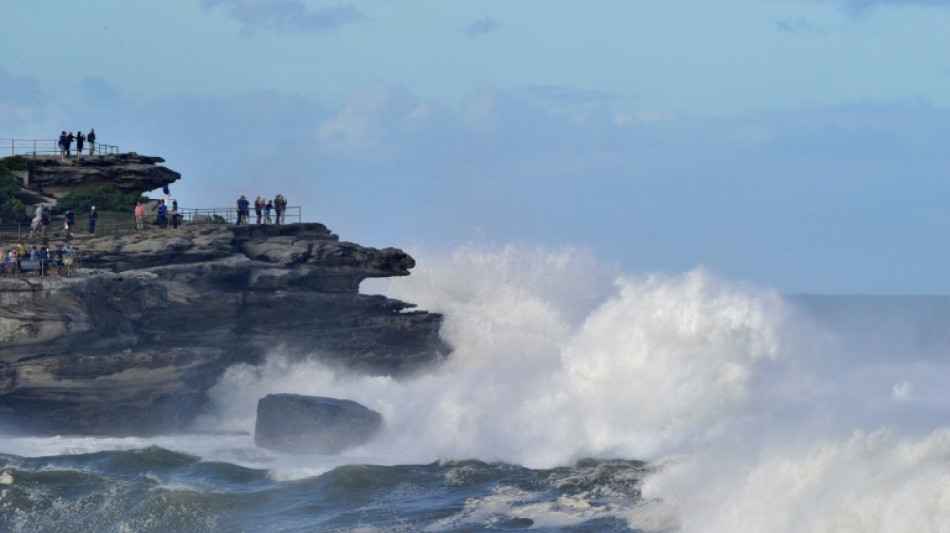
Australia submits more ambitious 2030 emissions target to UN / Photo: Muhammad FAROOQ - AFP

Australia submits more ambitious 2030 emissions target to UN

Australia's new centre-left government submitted more ambitious emissions targets to the United Nations Thursday, seeking to end a decade of footdragging on climate change.

Text size:

Prime Minister Anthony Albanese raised the country's 2030 emissions reduction target to 43 percent, up from a more modest previous target of 26-28 percent.

The new goal "sets Australia up for a prosperous future, a future powered by cleaner, cheaper energy," Albanese said.

Despite being ravaged by floods, fires and droughts, Australia has long been seen as a laggard on climate action.

The vast continent-country is replete with fossil fuel deposits and is one of the world's top exporters of coal and gas.

Coal still plays a key role in domestic electricity production.

In 2022, MIT ranked Australia 52nd of 76 nations on its Green Future Index, which rates how much countries are shifting towards an environmentally sustainable economy.

- The 'climate wars' -

But Albanese made emissions cuts a centrepiece of his recent election campaign and pledged to "end the climate wars" that led to decades of policy stasis.

Albanese sought to frame the decision as an economic boon: "What business has been crying out for is investment certainty," he said.

The Business Council of Australia welcomed the raised targets, saying they "should be a line in the sand."

"Australia can't afford to stall progress again because failure will see Australians miss out on new opportunities, new industries and better jobs," the council's chief executive Jennifer Westacott said.

- 'Seize the opportunity' -

Albanese said Thursday that world leaders had "all welcomed Australia's changed position" on climate action during his conversations with them since taking power last month.

The issue of emissions reduction and fossil fuel exports was a key point of tension between Australia's previous government and Pacific leaders, who have labelled climate change the greatest threat to their region.

Albanese tried to sidestep criticism that higher targets could harm Australian jobs saying he wanted to "seize the opportunity that is there from acting on climate change".

The new targets would give business the certainty it needed to "invest over a longer time frame than the political cycle of three years," he said.

But he has so far refused to set a deadline for phasing out coal, in line with other rich countries.

Even before the announcement, Australia's fossil fuel industry was in flux with many major companies seeking to decarbonise their operations.

On Wednesday, global miner BHP announced it had been unable to find a buyer for its coal mines in the Australian state of New South Wales and would instead close the project by 2030.

The news came just a day after fossil fuel giant BP announced it would take out a 40.5 per cent stake in a renewables project in Australia, billed as the largest power station on earth.

Anja-Isabel Dotzenrath, BP's executive vice president of gas and low carbon energy, said the company believed that "Australia has the potential to be a powerhouse in the global energy transition".

N.Zaugg--NZN