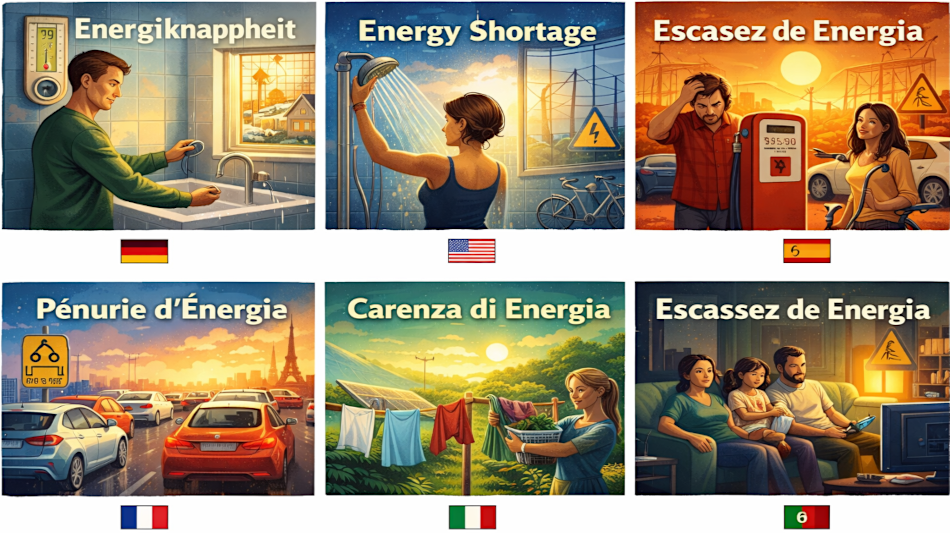
Saving energy in everyday life or a complete rip-off?
Global energy supply has been tightened by the Middle East conflict. Before the latest war, about 20 % of the world’s oil moved through the Strait of Hormuz. Fighting has throttled this shipping corridor and sent Brent crude prices soaring by 59 % to $115.66 per barrel in March 2026. The International Energy Agency (IEA) responded by releasing 400 million barrels from strategic reserves, the largest draw in its history. Liquefied natural gas deliveries to Europe have also fallen sharply, increasing the risk of shortages.
Countries have adopted emergency measures. South Korea has said it could extend driving restrictions beyond public institutions if crude rises to $120–130 per barrel. Nigeria’s petrol prices have jumped 65 %, prompting tax breaks and fuel rationing. Ethiopia’s state-owned engineering group told staff to switch to virtual meetings to save fuel. Sri Lanka has cut its work week to four days, and the Philippines declared a national energy emergency.
IEA recommendations and policy responses - the IEA proposes ten measures aimed at reducing demand in the short term. Key recommendations include:
- Work from home – remote work where possible to reduce commuting.
- Lower speed limits – cutting highway speeds by at least 10 km/h to save fuel.
- Avoid air travel – opt for trains or buses for shorter trips.
- Accelerate energy-efficiency upgrades – insulate buildings better and modernize heating systems.
- Invest in renewable energy – expand solar and wind power, deploy heat pumps and electrify transport.
Governments are combining these measures with rationing. Indonesia plans to impose driving restrictions and price controls. Fuel tax cuts and subsidies are being used to cushion households in many countries. Meanwhile, workers and businesses are demanding structural reforms to ensure long-term energy security.
Situation in Germany
Germany has past experience with saving energy. During the 2022 gas crisis, households cut gas consumption by 20 % and electricity use by 6–7 %. Nevertheless, gas storage levels were only 22.27 % full in April 2026 and need to reach 80 % before winter. Oil reserves cover about three months of imports. Experts like Martin Pehnt urge investment in insulation, heat pumps, solar power and industrial decarbonization to reduce fossil-fuel dependence.
Surveys show a mixed public response. An ista poll found that 69 % of participants save energy to reduce costs, yet nearly half plan to maintain their current consumption. A survey by Hansgrohe/YouGov reported that 69 % of respondents are willing to shorten their showers or lower the water temperature, but only 32 % actually reduce temperature. Some 72 % oppose government mandates to save water. Willingness to save energy varies widely across age groups and regions.
The question that citizens in Germany keep asking media representatives is: "Why are the prices of petrol, diesel and energy so high? Is it a brazen, pure rip-off by the state, perpetrated by completely incompetent politicians, or what are the reasons?"
Public debate and outlook
The debate about personal conservation is intense. Advocates argue that small steps – shorter showers, turning down thermostats, driving less – can deliver immediate savings. Critics call such advice symbolic, saying structural reforms are needed: massive investments in renewable energy, improved public transport, extensive renovation programmes for housing stock and fairer energy pricing. Online comments also note that not all households have the same capacity to save; renters often cannot upgrade insulation, and commuters depend on their cars.
With no quick end to geopolitical tensions in sight, energy prices are unlikely to fall soon. A combination of individual actions and policy measures is crucial to ensure supply and affordability. Ultimately, only a structural shift towards renewable energy sources can end recurring crises.