Zürcher Nachrichten - NASA eyes two more dates in September for possible Moon launch

EUR -
AED 4.238329
AFN 75.597361
ALL 92.954598
AMD 422.471461
AOA 1058.284223
ARS 1722.537298
AUD 1.634385
AWG 2.07733
AZN 1.964452
BAM 1.955897
BBD 2.323715
BDT 142.427045
BHD 0.435031
BIF 3448.945305
BMD 1.154072
BND 1.477673
BOB 13.700678
BRL 5.953051
BSD 1.153657
BTN 110.051827
BWP 15.57277
BYN 3.420443
BYR 22619.812825
BZD 2.320365
CAD 1.607628
CDF 2620.322368
CHF 0.935866
CLF 0.026796
CLP 1054.659959
CNY 7.787218
CNH 7.785718
COP 3604.259441
CRC 523.137208
CUC 1.154072
CUP 30.58291
CVE 110.270454
CZK 24.255191
DJF 205.450162
DKK 7.475842
DOP 67.273327
DZD 153.364679
EGP 57.910874
ERN 17.311081
ETB 186.61713
FJD 2.550733
FKP 0.853294
GBP 0.854362
GEL 3.012258
GGP 0.853294
GHS 13.573671
GIP 0.853294
GMD 84.826641
GNF 10131.501126
GTQ 8.801435
GYD 241.621951
HKD 9.055335
HNL 30.92353
HRK 7.533827
HTG 150.847461
HUF 364.712152
IDR 20575.951166
ILS 3.459097
IMP 0.853294
INR 110.054911
IQD 1511.374756
IRR 1586531.743866
ISK 142.00892
JEP 0.853294
JMD 182.529028
JOD 0.818234
JPY 183.76694
KES 149.244255
KGS 100.923698
KHR 4674.231198
KMF 491.635296
KRW 1629.757392
KWD 0.356481
KYD 0.961448
KZT 538.058269
LAK 26030.287514
LBP 103314.510158
LKR 385.799082
LRD 208.2403
LSL 18.722226
LTL 3.407674
LVL 0.698087
LYD 7.357364
MAD 10.688829
MDL 20.039991
MGA 4964.245542
MKD 61.523043
MMK 2422.902464
MNT 4148.659183
MOP 9.324161
MRU 46.113281
MUR 54.287648
MVR 17.829926
MWK 2000.498949
MXN 19.750865
MYR 4.722344
MZN 73.750974
NAD 18.722226
NGN 1572.572858
NIO 42.4521
NOK 10.966627
NPR 176.078709
NZD 1.962586
OMR 0.443744
PAB 1.153657
PEN 3.900293
PGK 5.177256
PHP 70.603841
PKR 320.24024
PLN 4.300338
PYG 6869.339772
QAR 4.205708
RON 5.238103
RSD 117.35995
RUB 95.154496
RWF 1699.384055
SAR 4.322988
SBD 9.308395
SCR 15.797785
SDG 693.018932
SEK 10.978283
SGD 1.477363
SLE 28.390297
SOS 659.332612
SRD 43.792425
STD 23886.962054
STN 24.501212
SVC 10.094499
SZL 18.711331
THB 38.215916
TJS 10.631426
TMT 4.050793
TND 3.387468
TRY 55.095173
TTD 7.813556
TWD 37.205557
TZS 3064.059083
UAH 51.76436
UGX 4292.212302
USD 1.154072
UYU 46.452298
UZS 13717.678506
VES 872.204288
VND 30163.404995
VUV 137.158905
WST 3.154924
XAF 655.989447
XAG 0.017761
XAU 0.000263
XCD 3.118937
XCG 2.079348
XDR 0.815452
XOF 655.989447
XPF 119.331742
YER 275.135581
ZAR 18.687376
ZMK 10388.036652
ZMW 21.63207
ZWL 371.61074
  • RBGPF

    -0.6200

    69.88

    -0.89%

  • RYCEF

    -0.2800

    20.57

    -1.36%

  • CMSC

    -0.0460

    21.524

    -0.21%

  • RELX

    -0.1750

    35.445

    -0.49%

  • RIO

    -0.7100

    101.2

    -0.7%

  • NGG

    0.8450

    80.325

    +1.05%

  • BCC

    0.9100

    85.66

    +1.06%

  • GSK

    -0.9700

    51.19

    -1.89%

  • JRI

    0.0050

    12.735

    +0.04%

  • BTI

    -0.0700

    56.98

    -0.12%

  • BCE

    0.7950

    23.335

    +3.41%

  • CMSD

    0.0000

    21.69

    0%

  • BP

    0.3950

    43.275

    +0.91%

  • AZN

    -2.2550

    159.655

    -1.41%

  • VOD

    0.2050

    15.955

    +1.28%

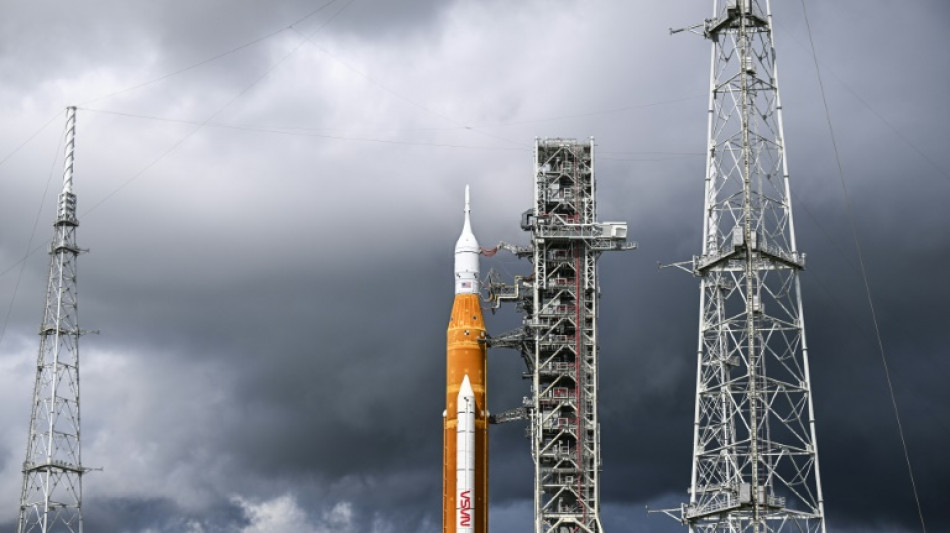
NASA eyes two more dates in September for possible Moon launch
NASA eyes two more dates in September for possible Moon launch / Photo: CHANDAN KHANNA - AFP/File

NASA eyes two more dates in September for possible Moon launch

NASA is looking at September 23 and September 27 as possible dates for its next attempt at launching its Artemis 1 mission to the Moon, senior official Jim Free told reporters Thursday.

Text size:

Two previous attempts were scrapped after the giant Space Launch System rocket experienced technical glitches including a fuel leak.

The launch window for the 23rd would open at 6:47am (1047 GMT), while the 27th would open at 11:37am (1537 GMT), added Free, associate administrator for the agency's exploration systems development directorate.

The dates were chosen to avoid a conflict with the DART mission, in which a probe will strike an asteroid on September 26 to test its ability to divert the object.

Both missions require use of an international array of antennas called the Deep Space Network.

The launch dates still depend, however, on NASA receiving a special waiver to avoid retesting batteries on an emergency flight system that is used to destroy the rocket if it strays from its designated range to a populated area.

If it does not receive the waiver, the rocket will have to be wheeled back to its assembly building, pushing the timeline back several weeks.

Mike Bolger, exploration ground systems manager, added that teams were working to replace seals to fix the hydrogen leak issue -- work that could be completed by the end of Thursday, which would pave the way for a tanking test on September 17.

The Artemis 1 space mission hopes to test the SLS as well as the unmanned Orion capsule that sits atop, in preparation for future Moon-bound journeys with humans aboard.

Once launched, it will take several days for the spacecraft to reach the Moon, flying around 60 miles (100 kilometers) at its closest approach.

The capsule will fire its engines to get to a distant retrograde orbit (DRO) of 40,000 miles beyond the Moon, a record for a spacecraft rated to carry humans.

The trip is expected to last several weeks, and one of its main objectives is to test the capsule's heat shield, which at 16 feet (5 meters) in diameter is the largest ever built.

Artemis is named after the twin sister of the Greek god Apollo, after whom the first Moon missions were named.

The next mission, Artemis 2, will take astronauts to the Moon without landing on its surface, while the third -- set for the mid-2020s -- would see the first woman and person of color on lunar soil.

NASA wants to build a lunar space station called Gateway and keep a sustained presence on the Moon to gain insight into how to survive very long space missions, ahead of a mission to Mars in the 2030s.

S.Scheidegger--NZN