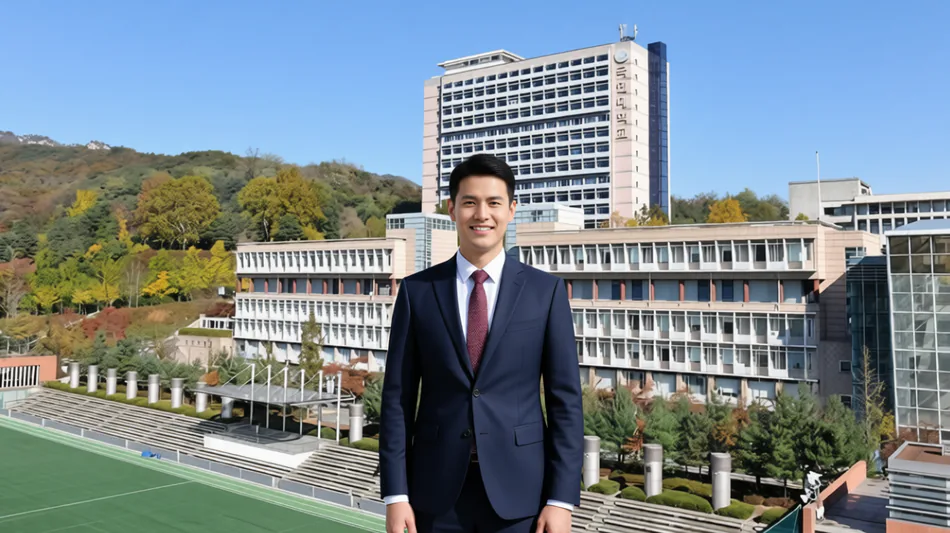
Kookmin University Launches Korea's First QNX-Based Embedded Software Curriculum
Kookmin University has officially launched the QNX Centre Korea, marking a significant step in local technical education. Established in partnership with global embedded software provider QNX, the center introduces Korea’s first university curriculum based on QNX technology, aiming to bridge the gap between academic training and industry demands in critical sectors like automotive and robotics.
Kookmin University has established the QNX Centre Korea in partnership with QNX, a global provider of embedded software and operating systems, to deliver specialized education in the field. The center was officially launched on November 4 at the university’s Seoul campus.
The initiative makes Kookmin University the first institution in Korea to introduce a curriculum based on QNX technology. The university stated that the new center will serve as a platform for industry-academia collaboration, designed to nurture talent in embedded software and connect academic institutions with government agencies and industry partners across the country.
QNX, which operates as a division of BlackBerry Limited, provides operating systems and software development technologies for industries where safety and reliability are paramount. These sectors include automotive, medical devices, and industrial automation. The new program aims to cultivate skilled professionals in emerging fields such as software-defined vehicles, robotics, smart factories, and the industrial internet of things.
The educational program is led by Jeong Gu-min, a professor in the university’s School of Electrical Engineering. It will feature hands-on training utilizing the QNX Everywhere program and QNX operating systems. Students and faculty members will have free access to the QNX Software Development Platform 8.0 and various development tools, including the QNX Hypervisor.
"We are pleased to introduce advanced embedded software education at Kookmin University in partnership with QNX," Jeong said. "As software increasingly shapes the future of mobility, robotics and advanced manufacturing, education must evolve accordingly."
Jeong emphasized that the center aims to give students early exposure to industry-grade software. The goal is to equip them with practical skills that allow them to contribute to the industry immediately after graduation.
The university plans to offer elective courses for students in relevant academic disciplines, with classes scheduled to begin in the second semester. Participants will engage in hands-on embedded software development exercises and student projects, as well as demonstrations based on educational materials provided by QNX.
The QNX Everywhere program is already implemented at educational institutions in several countries, including Canada, the United States, Malaysia, India, and Germany. Through this partnership, Kookmin University intends to develop the center into a hub for embedded software education and cooperation, expanding its reach beyond traditional academic boundaries.
E.Schneyder--NZN