Zürcher Nachrichten - Asia heatwaves made 30 times more likely by climate change: study

EUR -
AED 4.169644
AFN 72.093516
ALL 94.383371
AMD 417.736819
ANG 2.032771
AOA 1041.701222
ARS 1679.480864
AUD 1.648523
AWG 2.045086
AZN 1.9303
BAM 1.958034
BBD 2.286509
BDT 139.642404
BGN 1.919776
BHD 0.428202
BIF 3388.871104
BMD 1.13537
BND 1.474828
BOB 7.845193
BRL 5.922778
BSD 1.135295
BTN 107.433418
BWP 15.532064
BYN 3.199551
BYR 22253.260537
BZD 2.283276
CAD 1.616198
CDF 2576.155678
CHF 0.922636
CLF 0.026528
CLP 1044.052439
CNY 7.709733
CNH 7.736437
COP 3905.83325
CRC 516.805597
CUC 1.13537
CUP 30.087317
CVE 110.383654
CZK 24.247369
DJF 201.778359
DKK 7.475233
DOP 66.547981
DZD 151.595785
EGP 56.336399
ERN 17.030557
ETB 183.035082
FJD 2.5543
FKP 0.860835
GBP 0.862751
GEL 2.997056
GGP 0.860835
GHS 12.715901
GIP 0.860835
GMD 82.251366
GNF 9947.56902
GTQ 8.659881
GYD 237.477232
HKD 8.902155
HNL 30.337193
HRK 7.536362
HTG 148.443948
HUF 356.102114
IDR 20426.449506
ILS 3.392371
IMP 0.860835
INR 107.084501
IQD 1487.335271
IRR 1561191.117191
ISK 144.168984
JEP 0.860835
JMD 178.807954
JOD 0.804989
JPY 183.708645
KES 147.018845
KGS 99.288132
KHR 4561.345018
KMF 492.750507
KPW 1021.833789
KRW 1753.710196
KWD 0.351408
KYD 0.9461
KZT 552.497421
LAK 24920.201678
LBP 102288.732742
LKR 383.007004
LRD 206.790497
LSL 18.835679
LTL 3.352454
LVL 0.686774
LYD 7.272061
MAD 10.674161
MDL 20.106384
MGA 4742.557364
MKD 61.637966
MMK 2383.755532
MNT 4064.701566
MOP 9.169364
MRU 45.394594
MUR 54.735521
MVR 17.552948
MWK 1968.598149
MXN 20.023359
MYR 4.698096
MZN 72.552347
NAD 18.874335
NGN 1557.773921
NIO 41.56604
NOK 11.195854
NPR 171.889122
NZD 2.013017
OMR 0.436557
PAB 1.13533
PEN 3.850378
PGK 4.980815
PHP 69.702664
PKR 315.747061
PLN 4.292478
PYG 6925.023304
QAR 4.127318
RON 5.234856
RSD 117.375708
RUB 85.038488
RWF 1667.739581
SAR 4.268242
SBD 9.141949
SCR 15.322054
SDG 681.786348
SEK 11.093248
SGD 1.473671
SHP 0.847669
SLE 28.100583
SLL 23808.154509
SOS 648.864161
SRD 42.531174
STD 23499.875712
STN 24.527986
SVC 9.933553
SYP 125.494876
SZL 18.835983
THB 37.943514
TJS 10.541259
TMT 3.973797
TND 3.335148
TOP 2.7337
TRY 52.783672
TTD 7.698021
TWD 36.075489
TZS 2975.241646
UAH 50.960592
UGX 4188.779316
USD 1.13537
UYU 45.32251
UZS 13641.475842
VES 704.784587
VND 29899.98042
VUV 134.880228
WST 3.135486
XAF 656.726557
XAG 0.02012
XAU 0.000285
XCD 3.068395
XCG 2.046098
XDR 0.814022
XOF 650.567583
XPF 119.331742
YER 270.927785
ZAR 18.84295
ZMK 10219.681001
ZMW 20.46398
ZWL 365.588817
  • RYCEF

    -0.4700

    18.16

    -2.59%

  • RBGPF

    0.9600

    61.3

    +1.57%

  • CMSC

    -0.0450

    22.065

    -0.2%

  • RIO

    -1.5500

    94.03

    -1.65%

  • VOD

    -0.2400

    13.81

    -1.74%

  • GSK

    -0.9800

    51.09

    -1.92%

  • RELX

    -0.0600

    31.15

    -0.19%

  • BCE

    0.1750

    23.215

    +0.75%

  • NGG

    1.2600

    82.83

    +1.52%

  • BCC

    5.8600

    77.66

    +7.55%

  • JRI

    -0.0600

    12.57

    -0.48%

  • BP

    -1.4700

    37.86

    -3.88%

  • BTI

    0.6500

    61.39

    +1.06%

  • CMSD

    0.0600

    22.02

    +0.27%

  • AZN

    2.0000

    183.02

    +1.09%

Asia heatwaves made 30 times more likely by climate change: study
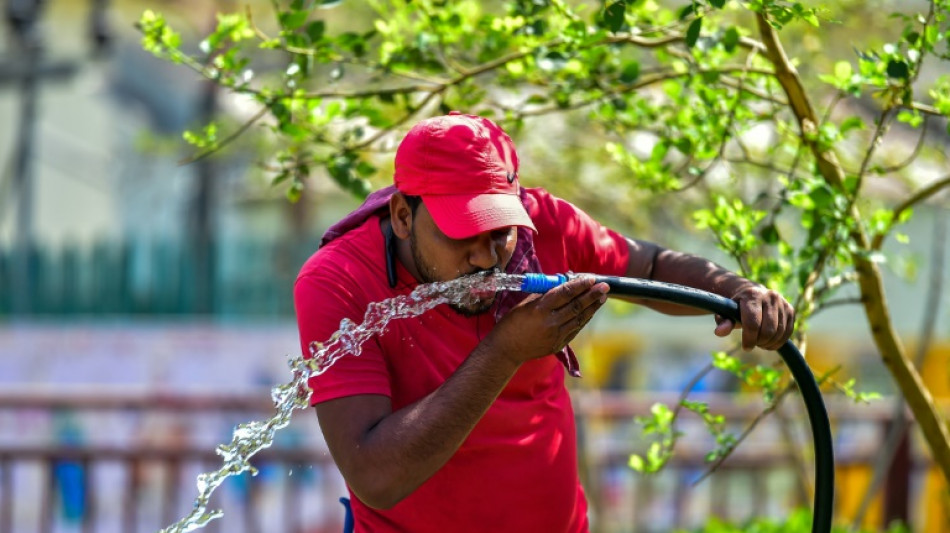
Asia heatwaves made 30 times more likely by climate change: study / Photo: SANJAY KANOJIA - AFP/File

Asia heatwaves made 30 times more likely by climate change: study

Climate change made record-breaking deadly heatwaves in Bangladesh, India, Laos and Thailand last month at least 30 times more likely, according to a study published Wednesday.

Text size:

Parts of India saw temperatures above 44 degrees Celsius (111 Fahrenheit) in mid-April, with at least 11 deaths near Mumbai attributed to heat stroke on a single day. In Bangladesh, Dhaka suffered its hottest day in almost 60 years.

The city of Tak in Thailand saw its highest-ever temperature of 45.4 Celsius, while Sainyabuli province in Laos hit 42.9 Celsius, an all-time national temperature record, the study by the World Weather Attribution group said.

Two deaths were reported in Thailand, but the real toll was likely higher as the extreme heat caused widespread hospitalisations, with the poor and vulnerable the worst affected.

The new study by international climate scientists looked at the average maximum temperature and the maximum heat index, which includes humidity.

"In both regions, the researchers found that climate change made the humid heatwave at least 30 times more likely, with temperatures at least 2 degrees Celsius hotter than they would have been without climate change," WWA said in a statement.

"Until overall greenhouse gas emissions are halted, global temperatures will continue to increase and events like this will become more frequent and severe," it added.

The analysis also found that such events in India and Bangladesh, previously once-a-century, can now be expected around once every five years because of human-caused climate change.

For Laos and Thailand, if global temperatures rise by two degrees Celsius -- as will happen within around 30 years if emissions are not cut rapidly -- such extreme events could happen every 20 years, compared to every two centuries now, the study said.

"We see again and again that climate change dramatically increases the frequency and intensity of heatwaves, one of the deadliest weather events there are," said Friederike Otto of the Grantham Institute for Climate Change and the Environment, who was involved in the study.

"Still, heat action plans are only being introduced very slowly across the globe. They need to be an absolute priority adaptation action everywhere, but in particular in places where high humidity enhances the impacts of heatwaves," she added.

Scientists were previously reluctant to directly link a particular event to climate change, but in recent years a new field of "attribution science", like that done by the WWA, has emerged.

Some weather events have a more complicated relationship to global warming than others, with the relationship to heatwaves and increased rainfall relatively easy to study.

Other phenomena such as droughts, snowstorms, tropical storms and wildfires are more complicated however, according to the WWA.

A.P.Huber--NZN