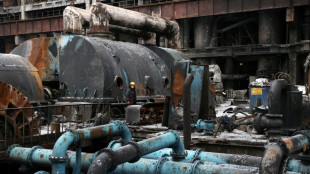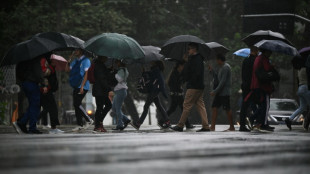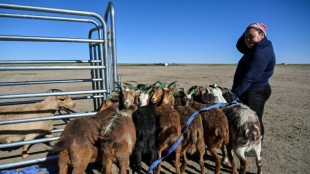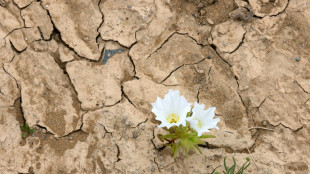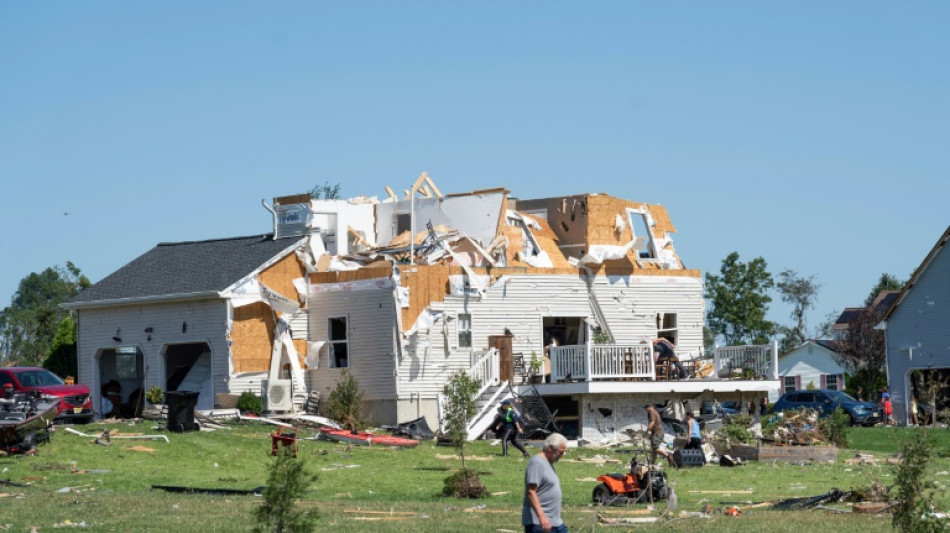
Life on Earth under 'existential threat': climate scientists / Photo: Branden Eastwood - AFP/File
Climate change poses an "existential threat" to life on Earth, prominent scientists warned Tuesday, in an assessment on this year's avalanche of heat records and weather extremes that they said are hitting more ferociously than expected.
With expectations that 2023 will be the hottest year on record, regions across the planet have been scorched by deadly heat waves.
Others have been hit by floods, or in some cases, have suffered both extremes in quick succession.
"The truth is that we are shocked by the ferocity of the extreme weather events in 2023. We are afraid of the uncharted territory that we have now entered," said an international coalition of authors in a new report published in the journal BioScience.
Their stark assessment: "Life on planet Earth is under siege".
They said humanity had made "minimal progress" in curbing its planet-heating emissions, with major greenhouse gases at record levels, and subsidies for fossil fuels soaring last year.
The damning assessment comes just a month ahead of UN COP28 climate negotiations to be held in oil-rich United Arab Emirates.
"We must shift our perspective on the climate emergency from being just an isolated environmental issue to a systemic, existential threat," the authors said.
The study on the state of the climate looked at recent data on 35 planetary "vital signs" and found 20 of these were at record extremes this year.
- 'Off the chart' -
Just roughly 1.2 degrees Celsius of temperature rise above pre-industrial levels has triggered a range of calamitous and costly consequences.
This year has also seen the beginning of a warming El Nino weather phenomenon.
The European Union's Copernicus Climate Change Service has said that the three months to September were the hottest period ever recorded, and likely the hottest in approximately 120,000 years.
Many climate-related records were broken by "enormous margins" in 2023, the report said, particularly temperatures in the oceans, which have absorbed almost all the excess heat caused by human carbon pollution.
Co-author Johan Rockstrom, director of the Potsdam Institute for Climate Impact Research, said recorded sea surface temperatures "go completely off the chart" and scientists are not yet able to fully explain why.
The potentially serious impacts include threats to sea life and coral reefs and an increase in the intensity of large tropical storms, the report said.
People across the planet have faced heatwaves and droughts this year, while severe flooding has struck in the US, China and India and beyond.
In Canada, record wildfires partly related to climate change released more carbon dioxide than the country's total 2021 greenhouse gas emissions, the report said.
- 1.5C era -
Before 2023, days with global average temperatures more than 1.5C above pre-industrial levels were a rarity, the authors said. This year had already registered 38 such days by mid-September.
The more ambitious Paris Agreement target of 1.5C will be measured over decades.
But lead author William Ripple, professor at Oregon State University, said we are likely entering a period where annual temperatures will reach that level or higher, risking danger from climate feedback loops and tipping points.
"Once crossed, these tipping points could change our climate in ways that may be difficult or impossible to reverse," he told AFP.
These could include the meltdown of the ice sheets in Greenland and West Antarctica, thawing of large areas of permafrost and widespread coral reef die back.
With some tipping points "we're not going to avoid them now, it's more about slowing the damage", said co-author Tim Lenton, director of the Global Systems Institute at the University of Exeter
To do that, emissions must be slashed and temperature rise curbed.
Every fraction of a degree matters, Lenton told AFP: "There's still a lot to play for."
That includes the number of people who might face intolerable conditions in coming decades, like severe heat, limited food availability and climate extremes.
The report said three to six billion people could be "confined beyond the livable region" by century's end.
"Many world leaders have generally continued to support business as usual, rather than enacting policies to curb climate change and sustain life on Earth," said Ripple.
"We hope recent extreme weather events will help motivate policymakers at the upcoming COP28 climate conference to support massive cuts in fossil fuel emissions and increased funding for climate adaptation, especially in the world's most vulnerable regions."
W.O.Ludwig--NZN