Zürcher Nachrichten - Warmest Arctic summer caused by accelerating climate change

EUR -
AED 4.164447
AFN 72.004008
ALL 94.192054
AMD 417.364792
ANG 2.030235
AOA 1040.391472
ARS 1677.41211
AUD 1.64532
AWG 2.042535
AZN 1.930749
BAM 1.955652
BBD 2.284927
BDT 139.536383
BGN 1.917381
BHD 0.427768
BIF 3380.74462
BMD 1.133954
BND 1.471889
BOB 7.839339
BRL 5.899396
BSD 1.134514
BTN 107.038914
BWP 15.480694
BYN 3.228585
BYR 22225.505097
BZD 2.281708
CAD 1.614791
CDF 2572.941842
CHF 0.922228
CLF 0.026522
CLP 1043.827275
CNY 7.700119
CNH 7.71754
COP 3900.247298
CRC 516.360994
CUC 1.133954
CUP 30.04979
CVE 110.255699
CZK 24.253412
DJF 202.022958
DKK 7.474296
DOP 66.85495
DZD 151.455507
EGP 56.136297
ERN 17.009315
ETB 178.928606
FJD 2.544817
FKP 0.861749
GBP 0.861788
GEL 2.993284
GGP 0.861749
GHS 12.759924
GIP 0.861749
GMD 82.212457
GNF 9941.249043
GTQ 8.655346
GYD 237.369976
HKD 8.890871
HNL 30.356707
HRK 7.536148
HTG 148.278799
HUF 355.563292
IDR 20390.766972
ILS 3.374079
IMP 0.861749
INR 107.019152
IQD 1486.187734
IRR 1559243.917571
ISK 144.012695
JEP 0.861749
JMD 178.806493
JOD 0.803924
JPY 183.550352
KES 146.948813
KGS 99.164194
KHR 4568.6146
KMF 492.135677
KPW 1020.559304
KRW 1750.190057
KWD 0.351197
KYD 0.94542
KZT 549.838465
LAK 25213.873004
LBP 101596.829476
LKR 382.341118
LRD 206.472582
LSL 18.787581
LTL 3.348272
LVL 0.685917
LYD 7.28545
MAD 10.680393
MDL 20.137301
MGA 4836.591994
MKD 61.64877
MMK 2380.776672
MNT 4063.891816
MOP 9.161727
MRU 45.062596
MUR 54.645287
MVR 17.519607
MWK 1967.234048
MXN 20.004786
MYR 4.668829
MZN 72.470882
NAD 18.787581
NGN 1564.641505
NIO 41.745926
NOK 11.216854
NPR 171.258288
NZD 2.011646
OMR 0.436007
PAB 1.134504
PEN 3.882321
PGK 4.978624
PHP 69.42412
PKR 315.72835
PLN 4.287396
PYG 6932.415194
QAR 4.135351
RON 5.232175
RSD 117.384725
RUB 85.611258
RWF 1667.159361
SAR 4.259484
SBD 9.130547
SCR 15.940623
SDG 680.372671
SEK 11.070479
SGD 1.471646
SHP 0.846611
SLE 28.120022
SLL 23778.459723
SOS 648.345307
SRD 42.478358
STD 23470.565428
STN 24.498149
SVC 9.92725
SYP 125.338352
SZL 18.785167
THB 37.877702
TJS 10.488215
TMT 3.96884
TND 3.368546
TOP 2.73029
TRY 52.745603
TTD 7.705418
TWD 36.116109
TZS 2969.757262
UAH 51.013146
UGX 4197.682909
USD 1.133954
UYU 45.516562
UZS 13627.97055
VES 703.905542
VND 29845.678273
VUV 135.871245
WST 3.149871
XAF 655.901669
XAG 0.019811
XAU 0.000285
XCD 3.064569
XCG 2.0446
XDR 0.814184
XOF 655.907453
XPF 119.331742
YER 270.589849
ZAR 18.783807
ZMK 10206.954842
ZMW 20.477273
ZWL 365.132835
  • NGG

    0.6800

    83.52

    +0.81%

  • CMSC

    -0.0450

    22.065

    -0.2%

  • GSK

    0.8300

    51.91

    +1.6%

  • RBGPF

    0.0000

    61.3

    0%

  • RIO

    0.9000

    94.95

    +0.95%

  • RYCEF

    -0.1600

    18

    -0.89%

  • JRI

    -0.0150

    12.58

    -0.12%

  • VOD

    -0.0200

    13.79

    -0.15%

  • RELX

    0.1450

    31.315

    +0.46%

  • BCE

    -0.0150

    23.2

    -0.06%

  • CMSD

    0.0600

    22.02

    +0.27%

  • BP

    -0.2050

    37.52

    -0.55%

  • BTI

    0.5700

    61.935

    +0.92%

  • BCC

    1.8300

    79.43

    +2.3%

  • AZN

    2.4800

    185.01

    +1.34%

Warmest Arctic summer caused by accelerating climate change
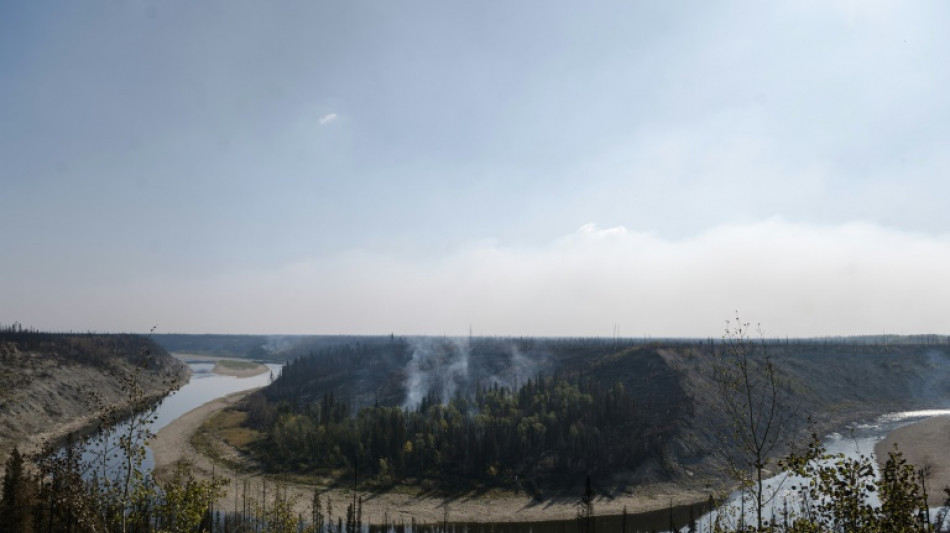
Warmest Arctic summer caused by accelerating climate change / Photo: ANDREJ IVANOV - AFP/File

Warmest Arctic summer caused by accelerating climate change

Summer surface air temperatures in 2023 were the warmest ever observed in the Arctic as a result of accelerating human-caused climate change, an official report card published Tuesday said.

Text size:

The average temperature from the months of July-September was 43 degrees Fahrenheit (6.4 Celsius), the highest since record-keeping began in 1900.

"The overriding message from this year’s report card is that the time for action is now," National Oceanic and Atmospheric Administration administrator Rick Spinrad said in a statement.

"We as a nation and global community must dramatically reduce greenhouse gas emissions that are driving these changes."

Average summer temperatures have been rising 0.31 F (0.17 C) per decade.

Overall, it was the Arctic's sixth warmest year, at 20 degrees Fahrenheit (-7 C).

Now in its 18th year, the NOAA Arctic Report Card is the work of 82 authors across 13 countries.

Observations from this year's report emphasize an ongoing trend line of warming sea and air temperatures, decreasing snow cover, diminishing sea ice, and continued melting of the Greenland Ice Sheet.

But the year also brought high impact events that had the "clear signature" of climate change, for example the Canadian Arctic experienced its worst wildfire season on record, causing the evacuation of 20,000 people from the town of Yellowknife in August.

Also in August, a glacial lake near Juneau, Alaska burst through its dam, causing massive flooding and property damage along the Mendenhall River, as a result of two decades of glacial thinning.

The long term warming trend has a variety of uneven impacts across ecosystems and food webs that people rely upon.

For example, sockeye salmon reached a record-high abundance in Bristol Bay, Alaska in the years 2021 and 2022.

The species, a staple of commercial fisheries, has thrived under warmer waters, which allow juveniles to grow faster in lakes and increase their odds of survival when they reach the ocean.

On the other hand, chinook and chum salmon have drastically declined following heat waves that negatively impact their growth rates, contributing to smaller adults.

Another chapter of the report examines subsea permafrost, a field that is relatively little known, even among scientists -- though potentially an important source of greenhouse gas emissions.

As the world emerged from the last ice age, rising ocean waters in the Arctic covered permafrost, transforming it into subsea permafrost over thousands of years.

"An estimated 2.5 million km2 of subsea permafrost remains today, but it continues to thaw due to the original ocean inundation event and more recent, rapid Arctic warming," the report said.

G.Kuhn--NZN