Zürcher Nachrichten - 2023-24 winter warmest on record for mainland US

EUR -
AED 4.358686
AFN 77.145243
ALL 96.636973
AMD 452.900547
ANG 2.124546
AOA 1088.336435
ARS 1725.464149
AUD 1.707235
AWG 2.139287
AZN 2.013799
BAM 1.955354
BBD 2.406161
BDT 145.986713
BGN 1.993151
BHD 0.450405
BIF 3539.352612
BMD 1.186844
BND 1.512981
BOB 8.255118
BRL 6.245411
BSD 1.194492
BTN 109.70591
BWP 15.629658
BYN 3.402638
BYR 23262.149846
BZD 2.402662
CAD 1.618648
CDF 2688.202567
CHF 0.917039
CLF 0.026071
CLP 1029.433075
CNY 8.250645
CNH 8.248248
COP 4355.422163
CRC 591.57508
CUC 1.186844
CUP 31.451376
CVE 110.240328
CZK 24.360569
DJF 212.73239
DKK 7.467503
DOP 75.214117
DZD 154.438388
EGP 55.90725
ERN 17.802666
ETB 185.585211
FJD 2.616576
FKP 0.866911
GBP 0.867168
GEL 3.19856
GGP 0.866911
GHS 13.087071
GIP 0.866911
GMD 86.639448
GNF 10482.786402
GTQ 9.162988
GYD 249.935117
HKD 9.268638
HNL 31.532341
HRK 7.53326
HTG 156.346985
HUF 381.685626
IDR 19929.431485
ILS 3.66783
IMP 0.866911
INR 109.139241
IQD 1565.043144
IRR 49995.819691
ISK 144.996819
JEP 0.866911
JMD 187.210468
JOD 0.841466
JPY 184.045735
KES 154.23072
KGS 103.78971
KHR 4803.985566
KMF 492.540492
KPW 1068.159944
KRW 1728.763412
KWD 0.364266
KYD 0.995565
KZT 600.827939
LAK 25709.354463
LBP 106980.457386
LKR 369.447316
LRD 215.332715
LSL 18.968635
LTL 3.504443
LVL 0.71791
LYD 7.496322
MAD 10.836529
MDL 20.093588
MGA 5338.805156
MKD 61.625948
MMK 2492.763063
MNT 4232.739691
MOP 9.606809
MRU 47.666934
MUR 53.894966
MVR 18.34888
MWK 2071.536383
MXN 20.742444
MYR 4.678488
MZN 75.673253
NAD 18.968315
NGN 1657.879276
NIO 43.960717
NOK 11.448953
NPR 175.530934
NZD 1.971295
OMR 0.457938
PAB 1.194628
PEN 3.994189
PGK 5.113942
PHP 69.865996
PKR 334.192385
PLN 4.215357
PYG 8002.209077
QAR 4.355625
RON 5.095363
RSD 117.373237
RUB 90.539571
RWF 1743.046616
SAR 4.451618
SBD 9.556012
SCR 17.136845
SDG 713.89198
SEK 10.574663
SGD 1.508331
SHP 0.890441
SLE 28.870014
SLL 24887.532355
SOS 682.755826
SRD 45.160023
STD 24565.282435
STN 24.494931
SVC 10.452529
SYP 13125.994308
SZL 18.96052
THB 37.452649
TJS 11.152051
TMT 4.153955
TND 3.432432
TOP 2.857636
TRY 51.635564
TTD 8.111185
TWD 37.507823
TZS 3076.276554
UAH 51.202541
UGX 4271.044125
USD 1.186844
UYU 46.360015
UZS 14604.669895
VES 410.578618
VND 30777.24846
VUV 140.986971
WST 3.217275
XAF 655.824039
XAG 0.014548
XAU 0.000252
XCD 3.207506
XCG 2.153009
XDR 0.815617
XOF 655.810227
XPF 119.331742
YER 282.854672
ZAR 19.202781
ZMK 10683.018904
ZMW 23.444753
ZWL 382.163406
  • RIO

    -4.1000

    91.03

    -4.5%

  • SCS

    0.0200

    16.14

    +0.12%

  • CMSC

    0.0500

    23.76

    +0.21%

  • AZN

    0.1800

    92.77

    +0.19%

  • BP

    -0.1600

    37.88

    -0.42%

  • GSK

    0.9400

    51.6

    +1.82%

  • BTI

    0.4600

    60.68

    +0.76%

  • BCC

    0.5100

    80.81

    +0.63%

  • RBGPF

    1.3800

    83.78

    +1.65%

  • NGG

    0.2000

    85.27

    +0.23%

  • BCE

    0.3700

    25.86

    +1.43%

  • JRI

    0.1400

    13.08

    +1.07%

  • CMSD

    -0.0400

    24.05

    -0.17%

  • RELX

    -0.3700

    35.8

    -1.03%

  • VOD

    -0.0600

    14.65

    -0.41%

  • RYCEF

    -0.4300

    16

    -2.69%

2023-24 winter warmest on record for mainland US
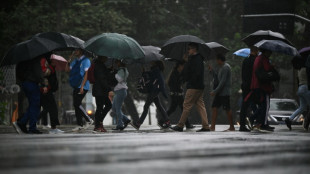
2023-24 winter warmest on record for mainland US / Photo: SCOTT OLSON - GETTY IMAGES NORTH AMERICA/AFP/File

2023-24 winter warmest on record for mainland US

The 2023–24 winter season was the warmest ever recorded for the mainland United States, official data showed Friday, in the latest sign the world is moving into unprecedented territory as a result of the climate crisis.

Text size:

The average temperature in the lower 48 US states from December to February was 37.6 degrees Fahrenheit (3.1C), 5.4 degrees F (3.0C) above average, "ranking as the warmest winter on record," the agency said.

Eight states across the Upper Midwest, Great Lakes and Northeast each saw their warmest winter on record, while temperatures around the Gulf of Mexico were near average.

The average temperature for the lower 48 states in February was 41.1F F, 7.2F above average, the third warmest in the 130-year-long record.

The Smokehouse Creek wildfire, which began on February 26 and became the largest blaze in Texas' history, burned more than a million acres in the Texas Panhandle and western Oklahoma, the agency added.

Other notable events included unusual atmospheric patterns that brought heavy rain and snow to parts of the West, causing powerful winds, significant flooding, landslides and power outages to parts of California.

"The city of Los Angeles received more than 12 inches (30 centimeters) of rain during February, approximately three times the February average, becoming the wettest February in decades for the city," the statement said.

President Joe Biden referred to global warming as a "climate crisis" in his State of the Union speech on Thursday night, moving away from the phrase "climate change."

"I see a future where we save the planet from the climate crisis," he said, hailing his signature climate infrastructure law.

Last month was the warmest February on record globally, the ninth straight month of historic high temperatures across the planet as climate change steers the world into "uncharted territory," Europe's climate monitor said earlier this week.

Copernicus Climate Change Service (C3S) last month said the period from February 2023 to January 2024 marked the first time Earth had endured 12 consecutive months of temperatures 1.5 degrees Celsius hotter than the pre-industrial era.

The UN's IPCC climate panel has warned that the world will likely crash through 1.5C in the early 2030s. Holding warming to below 1.5C has been deemed crucial to averting a long-term planetary climate disaster.

Planet-heating emissions, mainly from the burning of fossil fuels, continue to rise when scientists say they need to fall by almost half this decade.

Countries at UN climate negotiations in Dubai last year agreed to triple global renewables capacity this decade and "transition away" from fossil fuels.

But the deal lacked important details, with governments now under pressure to strengthen their climate commitments in the short term and for beyond 2030.

G.Kuhn--NZN