Zürcher Nachrichten - Climate change is slowing heat waves, prolonging misery

EUR -
AED 4.253793
AFN 73.538311
ALL 96.012872
AMD 436.811565
ANG 2.073056
AOA 1061.957069
ARS 1594.404251
AUD 1.662949
AWG 2.087146
AZN 1.967907
BAM 1.952753
BBD 2.333738
BDT 142.199929
BGN 1.979513
BHD 0.437188
BIF 3439.490881
BMD 1.158078
BND 1.481252
BOB 8.006885
BRL 6.049219
BSD 1.158682
BTN 108.992733
BWP 15.791107
BYN 3.434259
BYR 22698.323661
BZD 2.330614
CAD 1.598929
CDF 2640.417213
CHF 0.916078
CLF 0.026914
CLP 1062.697695
CNY 7.992473
CNH 7.991953
COP 4287.771244
CRC 538.780131
CUC 1.158078
CUP 30.68906
CVE 110.741159
CZK 24.465541
DJF 205.813906
DKK 7.473348
DOP 69.918955
DZD 153.548932
EGP 60.832783
ERN 17.371166
ETB 182.173115
FJD 2.601013
FKP 0.865346
GBP 0.865298
GEL 3.120975
GGP 0.865346
GHS 12.680718
GIP 0.865346
GMD 85.116128
GNF 10167.922589
GTQ 8.86839
GYD 242.440496
HKD 9.053331
HNL 30.712537
HRK 7.537113
HTG 151.948123
HUF 386.461924
IDR 19514.76796
ILS 3.608397
IMP 0.865346
INR 108.902099
IQD 1517.081837
IRR 1520729.78105
ISK 143.208453
JEP 0.865346
JMD 182.519893
JOD 0.821096
JPY 184.418109
KES 150.260853
KGS 101.272974
KHR 4647.365541
KMF 494.499603
KPW 1042.286578
KRW 1737.441285
KWD 0.354974
KYD 0.965639
KZT 559.089227
LAK 24997.108058
LBP 103705.861729
LKR 364.424437
LRD 212.681294
LSL 19.618142
LTL 3.419502
LVL 0.70051
LYD 7.382801
MAD 10.801971
MDL 20.261343
MGA 4829.183971
MKD 61.657391
MMK 2432.15733
MNT 4133.721531
MOP 9.331543
MRU 46.473894
MUR 53.816164
MVR 17.892624
MWK 2011.581663
MXN 20.530511
MYR 4.591194
MZN 74.003039
NAD 19.60631
NGN 1605.454434
NIO 42.524631
NOK 11.217755
NPR 174.391379
NZD 1.989022
OMR 0.445279
PAB 1.158747
PEN 4.007533
PGK 4.990736
PHP 69.517674
PKR 323.162008
PLN 4.275217
PYG 7539.299492
QAR 4.220007
RON 5.095663
RSD 117.432579
RUB 93.801927
RWF 1690.793497
SAR 4.344623
SBD 9.313304
SCR 17.058428
SDG 696.005112
SEK 10.807494
SGD 1.482044
SHP 0.868858
SLE 28.43085
SLL 24284.32366
SOS 661.262482
SRD 43.243198
STD 23969.871023
STN 24.782864
SVC 10.139308
SYP 128.486707
SZL 19.569633
THB 37.787798
TJS 11.095647
TMT 4.053272
TND 3.401852
TOP 2.788373
TRY 51.370242
TTD 7.87901
TWD 36.94728
TZS 2976.328133
UAH 50.873868
UGX 4287.420243
USD 1.158078
UYU 46.90781
UZS 14128.548223
VES 535.136558
VND 30515.348392
VUV 138.399637
WST 3.17105
XAF 654.963162
XAG 0.015959
XAU 0.000254
XCD 3.129763
XCG 2.088422
XDR 0.81354
XOF 652.57625
XPF 119.331742
YER 276.375769
ZAR 19.58907
ZMK 10424.085847
ZMW 21.698169
ZWL 372.900559
  • CMSC

    0.0400

    22.91

    +0.17%

  • JRI

    0.2400

    12.1

    +1.98%

  • RIO

    0.7700

    87.54

    +0.88%

  • BCC

    1.0800

    74.65

    +1.45%

  • BCE

    -0.3400

    25.49

    -1.33%

  • RBGPF

    -13.5000

    69

    -19.57%

  • CMSD

    0.0500

    22.68

    +0.22%

  • NGG

    1.9600

    84.29

    +2.33%

  • RYCEF

    0.3000

    15.9

    +1.89%

  • VOD

    0.0600

    14.72

    +0.41%

  • GSK

    1.7500

    54.7

    +3.2%

  • RELX

    0.0100

    32.47

    +0.03%

  • BP

    0.6200

    45.41

    +1.37%

  • BTI

    0.6900

    58.45

    +1.18%

  • AZN

    1.3600

    187.14

    +0.73%

Climate change is slowing heat waves, prolonging misery
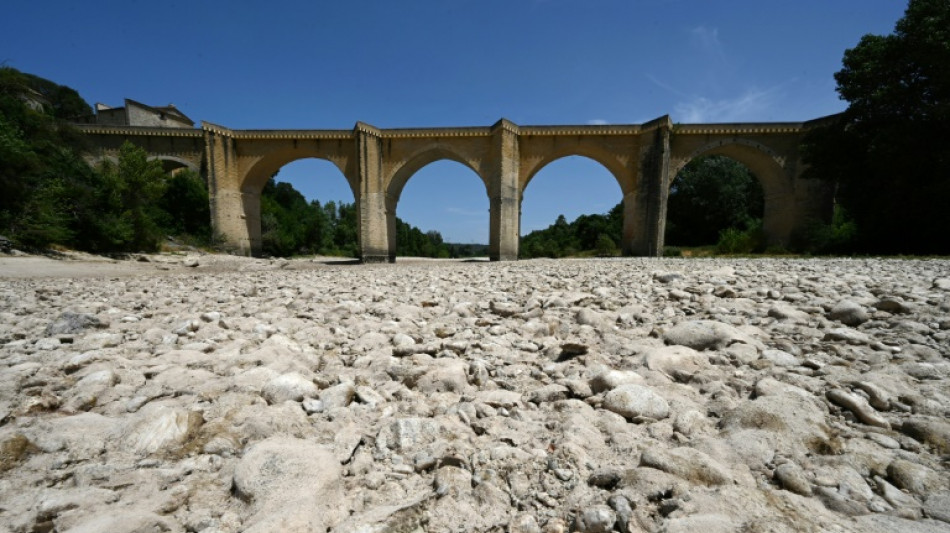
Climate change is slowing heat waves, prolonging misery / Photo: Pascal GUYOT - AFP/File

Climate change is slowing heat waves, prolonging misery

Climate change is causing heat waves to slow to a crawl, exposing humans to extreme temperatures for longer than ever before, a study published in Science Advances said Friday.

Text size:

While previous research has found climate change is causing heat waves to become longer, more frequent and more intense, the new paper differed by treating heat waves as distinct weather patterns that move along air currents, just as storms do.

For every decade between 1979 to 2020, researchers found heat waves slowed down by an average of five miles (eight kilometers) an hour per day.

"If a heatwave is moving slower, that means heat can stay in a region longer, so that has effects on communities," senior author Wei Zhang of Utah State University told AFP.

The researchers divided the world into three dimensional-grid cells and defined heat waves as a million square kilometer zones where temperatures reached at least the 95th percentile of the local historical maximum temperature. They then measured their movement over time in order to determine how fast the hot air was moving.

They also used climate models to determine what the results would have looked like absent human-caused climate change, and found manmade factors loomed large.

"It's pretty clear to us that a dominant factor here to explain this trend is anthropogenic forcing, the greenhouse gas," said Zhang.

The changes have accelerated in particular since 1997 and in addition to human causes, weakening upper atmospheric air circulation may play a part, the paper said.

The duration of heat waves also increased, from an average of eight days at the start, to 12 days during the last five years of the study period.

"The results suggest that longer-traveling and slower-moving large contiguous heat waves will cause more devastating impacts on natural and societal systems in the future if GHG keep rising, and no effective mitigation measures are taken," the authors wrote.

Zhang said he was worried by the disproportionate impacts on less-developed regions.

"In particular, cities that don't have enough green infrastructure or not many cooling centers for some folks, in particular for the disadvantaged population, will be very dangerous," he warned.

la-ia/mdl

P.E.Steiner--NZN