Zürcher Nachrichten - Climate change is fuelling rise in hot nights: analysis

EUR -
AED 4.262927
AFN 72.54755
ALL 95.959794
AMD 436.717019
ANG 2.077873
AOA 1064.424836
ARS 1622.137154
AUD 1.662111
AWG 2.091995
AZN 2.004721
BAM 1.954956
BBD 2.333222
BDT 142.148604
BGN 1.984112
BHD 0.438264
BIF 3440.584323
BMD 1.160769
BND 1.482247
BOB 8.022569
BRL 6.082893
BSD 1.158415
BTN 108.54552
BWP 15.873076
BYN 3.429519
BYR 22751.0655
BZD 2.329924
CAD 1.600253
CDF 2643.647486
CHF 0.915997
CLF 0.026983
CLP 1065.422754
CNY 8.000826
CNH 8.008369
COP 4300.90321
CRC 539.750599
CUC 1.160769
CUP 30.760369
CVE 110.218819
CZK 24.429525
DJF 206.293565
DKK 7.472605
DOP 69.397934
DZD 153.768196
EGP 61.05376
ERN 17.41153
ETB 179.082352
FJD 2.600412
FKP 0.867356
GBP 0.865614
GEL 3.139818
GGP 0.867356
GHS 12.656588
GIP 0.867356
GMD 85.317477
GNF 10153.527079
GTQ 8.871283
GYD 242.442153
HKD 9.077971
HNL 30.674826
HRK 7.534082
HTG 151.893087
HUF 389.158713
IDR 19615.829382
ILS 3.619683
IMP 0.867356
INR 109.005347
IQD 1517.544552
IRR 1524118.253951
ISK 143.807703
JEP 0.867356
JMD 182.805532
JOD 0.822981
JPY 184.283367
KES 150.423575
KGS 101.507475
KHR 4648.952003
KMF 494.487173
KPW 1044.708436
KRW 1740.351532
KWD 0.355532
KYD 0.965383
KZT 559.238457
LAK 24941.227539
LBP 103744.091493
LKR 364.132726
LRD 212.58093
LSL 19.74907
LTL 3.427448
LVL 0.702138
LYD 7.385905
MAD 10.799496
MDL 20.261249
MGA 4836.806744
MKD 61.595926
MMK 2437.808692
MNT 4143.326649
MOP 9.335668
MRU 46.201652
MUR 53.929436
MVR 17.945125
MWK 2008.689157
MXN 20.558254
MYR 4.595472
MZN 74.184822
NAD 19.74907
NGN 1598.865618
NIO 42.63122
NOK 11.249717
NPR 173.665755
NZD 1.990939
OMR 0.446317
PAB 1.158405
PEN 4.006969
PGK 5.002796
PHP 69.723855
PKR 323.646095
PLN 4.269934
PYG 7558.832914
QAR 4.22443
RON 5.094378
RSD 117.432673
RUB 93.727216
RWF 1694.716928
SAR 4.354927
SBD 9.334872
SCR 15.983903
SDG 697.621937
SEK 10.794336
SGD 1.484176
SHP 0.870877
SLE 28.552994
SLL 24340.75073
SOS 661.994115
SRD 43.34301
STD 24025.56743
STN 24.489212
SVC 10.136622
SYP 128.785259
SZL 19.747386
THB 37.859641
TJS 11.115443
TMT 4.074298
TND 3.397876
TOP 2.794852
TRY 51.487403
TTD 7.870601
TWD 37.092332
TZS 2986.14584
UAH 50.87563
UGX 4338.070269
USD 1.160769
UYU 47.210219
UZS 14132.895807
VES 532.651381
VND 30586.253874
VUV 138.721223
WST 3.178418
XAF 655.65969
XAG 0.015829
XAU 0.000254
XCD 3.137035
XCG 2.087798
XDR 0.81543
XOF 655.682275
XPF 119.331742
YER 276.941074
ZAR 19.57688
ZMK 10448.311343
ZMW 21.923814
ZWL 373.767031
  • CMSC

    -0.0100

    22.87

    -0.04%

  • BCC

    1.6900

    73.57

    +2.3%

  • RIO

    0.9300

    86.77

    +1.07%

  • RBGPF

    -13.5000

    69

    -19.57%

  • NGG

    0.2700

    82.33

    +0.33%

  • CMSD

    -0.1100

    22.63

    -0.49%

  • BTI

    -0.1600

    57.76

    -0.28%

  • BCE

    0.0700

    25.83

    +0.27%

  • AZN

    1.7100

    185.78

    +0.92%

  • GSK

    0.9600

    52.95

    +1.81%

  • JRI

    0.1800

    11.86

    +1.52%

  • RYCEF

    -0.2800

    15.69

    -1.78%

  • BP

    1.2200

    44.79

    +2.72%

  • RELX

    -1.3500

    32.46

    -4.16%

  • VOD

    0.1800

    14.66

    +1.23%

Climate change is fuelling rise in hot nights: analysis
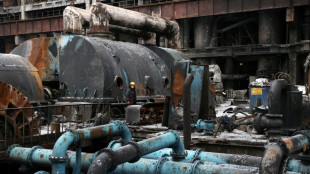
Climate change is fuelling rise in hot nights: analysis / Photo: DAMIR SENCAR - AFP

Climate change is fuelling rise in hot nights: analysis

Human-induced climate change is significantly increasing the number of hot nights for nearly one in three people around the world, a global analysis said Thursday.

Text size:

High nighttime temperatures can become dangerous if they prevent the human body from cooling off and recovering from daytime heat.

The World Health Organization (WHO) recommends keeping room temperature at or below 24 degrees Celsius during the night -- a threshold above which sleep can be uncomfortable.

This is especially important for vulnerable people, such as babies, the elderly and people with chronic health conditions, according to the WHO.

But burning coal, oil and gas which releases climate-warming emissions into the atmosphere is fuelling a rise in nights above 25C, according to Climate Central, an independent group of scientists and climate communicators.

- 'Cascading impacts' -

Around 2.4 billion people experienced at least two additional weeks on average per year over the past decade when the thermometer didn't fall below 25C at night, it found.

"Warmer nighttime temperatures, particularly during hot times of the year, can harm sleep and can reduce physical recovery from hot daytime temperatures, both of which can have cascading impacts on health outcomes," Nick Obradovich, a chief scientist at the Laureate Institute for Brain Research, told AFP.

This year has seen heat records tumble, with extreme temperatures gripping vast swathes of the world from India to Saudi Arabia and Mexico, often staying high at night.

The analysis compared the annual average of hot nights between 2014 and 2023 with a counterfactual world without human-caused climate change based on a peer-reviewed methodology using models that incorporate historical data.

Long-term historical data being patchy or missing for many countries, researchers decided to compare their findings with an imaginary world where the only thing that has changed is the amount of carbon in the atmosphere.

The Caribbean nation of Trinidad and Tobago experienced the largest increase of any country, with an extra 47 nights per year above 25C. The Indian city of Mumbai endured an additional two months of hot nights.

The 25C threshold "isn't some hard-and-fast number below which health is fine and above which health is harmed," Obradovich, who was not involved in the analysis, explained.

"Hotter nighttime temperatures, on average, are worse for health," he added, but the impacts on people vary.

However, when heat is coupled with high humidity levels, the consequences can turn deadly.

Several studies have shown that nocturnal temperatures above 25C deteriorate the quality and length of sleep --- which is vital for humans to function -- and increase the risks of strokes, cardiovascular conditions and mortality.

The elderly and people on lower-income are disproportionally affected, researchers previously found.

L.Rossi--NZN