Can carbon credits help close coal plants? / Photo: JAM STA ROSA - AFP
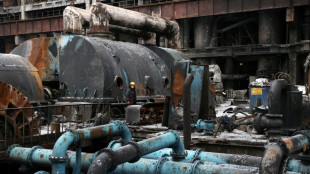
A few dozen kilometres from the Philippine capital Manila sits a coal plant that some hope could be a model for how developing countries can quit the polluting fossil fuel.
An alliance led by The Rockefeller Foundation, a philanthropic group, plans to help close the plant 10 years early, avoiding millions of tons of emissions and monetising them as carbon credits.
The idea is "pretty simple", said Joseph Curtin, managing director of Rockefeller's power and climate team.
"What if the coal asset owner could, instead of selling this carbon-intensive energy to the grid, they could sell the avoided carbon emissions," he told AFP.
Carbon credits essentially allow a polluter to "offset" their emissions by paying for "avoided" emissions elsewhere.
They have been issued on everything from electric buses to protected forests, though investigations have found many projects overstating or improperly calculating avoided emissions.
Coal is the largest source of man-made carbon dioxide emissions, according to the International Energy Agency.
And while some developed countries have phased it out, it remains a cheap, reliable resource for rapidly developing economies facing growing energy demand.
Countries including Indonesia and South Africa have been offered billions of dollars in financing to shutter coal plants early, but with little success so far.
"There's not one coal plant, of all the 4,500 in emerging markets and developing countries, that has been shut down and replaced with clean power," said Curtin.
- Carbon credit problems -
The problem is complex.
Coal employs millions of people directly and indirectly, as well as offering affordable and reliable baseload power.
Government and industry heavyweights are often invested in coal, and in Asia especially plants tend to be young, meaning years of lost income if they close early.
Renewable energy is now often cheaper than coal, but many plants are protected from competition by long-term contracts.
"There simply is no economically viable off-ramp for these asset owners, and that's why we have zero retirements," said Curtin.
Enter the Coal to Clean Credit Initiative (CCCI).
It aims to cover both the cost of closing coal plants and converting them to renewable output, including wind and solar, by generating carbon credits.
And it has a test case: the South Luzon Thermal Energy Corporation (SLTEC).
It was scheduled to operate until at least 2040, but under the CCCI it would close a decade earlier, avoiding up to 19 million tons of CO2 emissions, according to Rockefeller.
Coal-fired operations would be replaced with a mix of renewable generation and battery storage, with workers and the local community compensated.
The Monetary Authority of Singapore -- which supports the initiative -- is keen on credits, and there is private sector interest too, Curtin said.
The idea has faced criticism however, particularly after revelations about problems with other carbon credit projects.
A recurring issue involves "additionality" -- proving that emissions would not have been avoided anyway, even without the carbon credit programme.
This has dogged many forest protection schemes, where developers have failed to show that tracts were at real risk of being chopped down.
Elsewhere, trees that were supposed to be protected have been felled even after credits were sold on protecting them.
- 'Realistic and pragmatic' -
As renewables become cheaper, critics argue market forces might force coal plant closures even with carbon credits.
"It's hard to know what are the forces pushing for and against coal phaseout today," said Gilles Dufrasne from the Carbon Market Watch think tank.
"These forces, economic and political, can change quite significantly over time," he told AFP.
Credits risk becoming a way to "reward investors who have ploughed their money into a highly polluting and often doomed technology," Dufrasne warned.
Other analyses caution that countries could "double count" reduced emissions from coal closures -- including them in their national calculations, even though they have been sold to offset emissions elsewhere.
Curtin acknowledges the criticisms, and says CCCI's methodology is designed to address them.
Only coal projects that are solvent, covered by long-term agreements, and connected to the grid are eligible.
Participating companies must have "no new coal" policies, and closures must involve conversion to renewables, with replacement energy output and provisions to support workers and communities.
"We spent a long time developing what we think is a very, very robust and fairly bulletproof methodology," he said.
It is being reviewed by Verra, a leading credit verifier that has been criticised for oversight failures in the past.
Curtin is sanguine, and says deals for credits priced in the "tens of dollars" could be signed by mid-2025.
"If we want decision makers to have a financially viable off-ramp... we just have to be realistic and pragmatic about that," he said.
"And if anyone's got a better idea, please let us know, because we're looking for new ways of approaching this problem all the time."
O.Pereira--NZN