Zürcher Nachrichten - Climate change worsened deadly Africa floods, scientists say

EUR -
AED 4.245911
AFN 76.881606
ALL 93.218906
AMD 422.095048
AOA 1060.17747
ARS 1724.883763
AUD 1.638748
AWG 2.082491
AZN 1.923974
BAM 1.955777
BBD 2.321673
BDT 142.688326
BHD 0.434695
BIF 3451.159509
BMD 1.156136
BND 1.477083
BOB 13.699839
BRL 5.876985
BSD 1.152686
BTN 109.688713
BWP 15.558817
BYN 3.43236
BYR 22660.274138
BZD 2.318273
CAD 1.612984
CDF 2615.754722
CHF 0.935881
CLF 0.026829
CLP 1055.917611
CNY 7.801148
CNH 7.796157
COP 3633.557369
CRC 523.993852
CUC 1.156136
CUP 30.637616
CVE 110.263706
CZK 24.258167
DJF 205.267592
DKK 7.47791
DOP 67.289211
DZD 152.967205
EGP 57.293328
ERN 17.342047
ETB 186.049717
FJD 2.553385
FKP 0.857252
GBP 0.858528
GEL 3.017423
GGP 0.857252
GHS 13.526841
GIP 0.857252
GMD 84.950214
GNF 10123.881221
GTQ 8.794897
GYD 241.157171
HKD 9.066771
HNL 30.895638
HRK 7.536626
HTG 150.718232
HUF 363.096284
IDR 20580.38469
ILS 3.468236
IMP 0.857252
INR 110.076327
IQD 1509.982284
IRR 1590323.474144
ISK 142.597486
JEP 0.857252
JMD 183.057852
JOD 0.8197
JPY 182.445223
KES 149.15825
KGS 101.1045
KHR 4681.945069
KMF 492.513789
KRW 1627.678205
KWD 0.356853
KYD 0.960589
KZT 540.233662
LAK 26025.694653
LBP 103223.088933
LKR 386.635464
LRD 208.057559
LSL 18.72658
LTL 3.41377
LVL 0.699336
LYD 7.331914
MAD 10.743074
MDL 20.044765
MGA 4918.942288
MKD 61.529278
MMK 2427.365524
MNT 4157.296339
MOP 9.314591
MRU 46.338456
MUR 54.419029
MVR 17.862474
MWK 1998.776549
MXN 20.093332
MYR 4.728717
MZN 73.882875
NAD 18.72658
NGN 1577.96467
NIO 42.419502
NOK 10.997597
NPR 175.501941
NZD 1.96672
OMR 0.442445
PAB 1.152686
PEN 3.903654
PGK 5.09394
PHP 70.183287
PKR 320.014545
PLN 4.299908
PYG 6853.919586
QAR 4.213651
RON 5.24458
RSD 117.338623
RUB 94.338893
RWF 1694.980114
SAR 4.329449
SBD 9.325045
SCR 16.705104
SDG 694.261718
SEK 10.961097
SGD 1.467714
SLE 28.426407
SOS 658.792271
SRD 43.778844
STD 23929.689987
STN 24.499713
SVC 10.085882
SZL 18.72278
THB 38.21027
TJS 10.633575
TMT 4.058039
TND 3.38636
TRY 55.144817
TTD 7.812908
TWD 37.286097
TZS 3051.764195
UAH 51.625994
UGX 4293.949621
USD 1.156136
UYU 46.399456
UZS 13785.838257
VES 873.764445
VND 30295.977227
VUV 137.068231
WST 3.160548
XAF 655.949304
XAG 0.018188
XAU 0.000266
XCD 3.124516
XCG 2.077476
XDR 0.81579
XOF 655.949304
XPF 119.331742
YER 275.618798
ZAR 18.667349
ZMK 10406.616979
ZMW 21.756745
ZWL 372.275461
  • CMSC

    0.0240

    21.744

    +0.11%

  • CMSD

    -0.1600

    21.82

    -0.73%

  • BCE

    -0.0200

    22.75

    -0.09%

  • GSK

    0.7900

    52.96

    +1.49%

  • BTI

    0.6000

    59.33

    +1.01%

  • RIO

    1.4500

    101.1

    +1.43%

  • RBGPF

    0.7600

    70.5

    +1.08%

  • BP

    -0.6000

    41.63

    -1.44%

  • BCC

    2.3400

    86.6

    +2.7%

  • AZN

    1.4100

    161.42

    +0.87%

  • NGG

    0.4700

    80.88

    +0.58%

  • RELX

    0.0485

    35.52

    +0.14%

  • JRI

    0.1500

    12.81

    +1.17%

  • RYCEF

    0.2300

    20.85

    +1.1%

  • VOD

    0.1900

    16.19

    +1.17%

Climate change worsened deadly Africa floods, scientists say
Climate change worsened deadly Africa floods, scientists say / Photo: - - AFP

Climate change worsened deadly Africa floods, scientists say

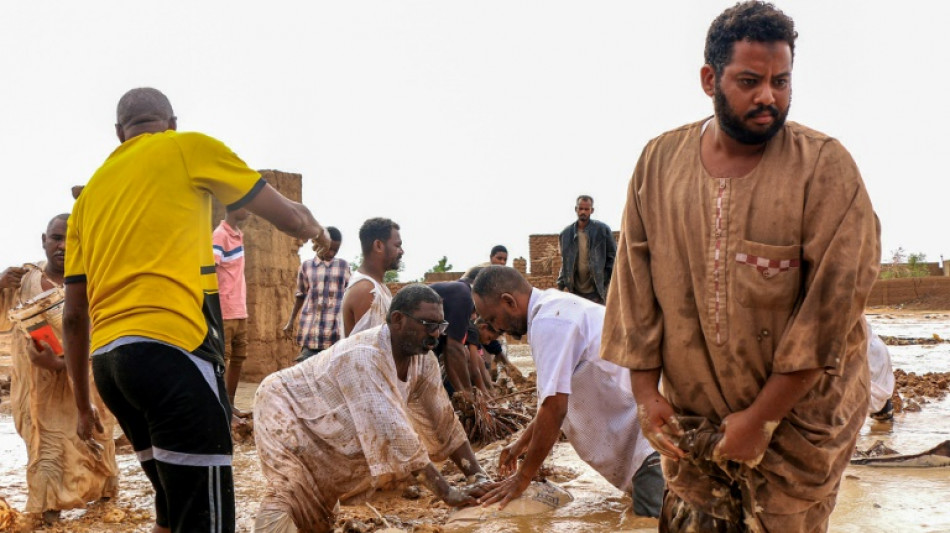
Human-caused climate change worsened floods that have killed hundreds of people and displaced millions in Cameroon, Chad, Niger, Nigeria and Sudan this year, according to a study published on Wednesday.

Text size:

The intense rainy season has unleashed a humanitarian crisis across large areas of the Sahel region bordering the Sahara desert.

A new analysis by the World Weather Attribution (WWA) network of scientists found warming driven by the use of fossil fuels had exacerbated the flooding in Sudan.

The researchers also said climate change would have made this year's torrential rains around five to 20 percent more intense across the Niger and Lake Chad basins, citing a previous WWA study of similar floods in 2022.

"This is only going to keep getting worse if we keep burning fossil fuels," said Clair Barnes from the Centre for Environmental Policy at Imperial College London.

Speaking at a briefing ahead of the study's publication, she said such downpours "could happen every year" if global temperatures increase to two degrees Celsius (35.6 Fahrenheit) above pre-industrial levels.

"It's pretty serious," she said.

- Downpours and storms -

Global warming is not just about rising temperatures -- the extra heat trapped in the atmosphere and seas has knock-on effects and can result in more intense downpours and storms.

The researchers said there was a clear link between the extreme rainfall and a warming planet.

In the study, they focused on war-torn Sudan, where millions of displaced people have been uprooted by conflict and driven into flood-prone areas.

The scientists used modelling to compare weather patterns in our world and one without human-induced warming, and found that month-long spells of intense rainfall in parts of Sudan had become heavier and more likely due to climate change.

At the current 1.3 degrees Celsius of warming, they said similar periods of rainfall are expected to occur on average about once every three years, and have become about 10 percent heavier due to climate change.

- 'Incredibly concerning' -

"These results are incredibly concerning," said Izidine Pinto, one of the study's authors and a researcher at the Royal Netherlands Meteorological Institute.

He warned that "with every fraction of a degree of warming, the risk of extreme floods will keep increasing", and called for the UN's COP29 climate summit to "accelerate the transition away from fossil fuels" when it meets in Azerbaijan next month.

Joyce Kimutai, a researcher at Imperial's Centre for Environmental Policy, said the floods underscored the need for a loss and damage fund for nations devastated by climate change.

A key meeting ahead of COP29 earlier this month ended with countries making little progress over how to finance a deal for poorer nations.

"Africa has contributed a tiny amount of carbon emissions globally, but is being hit the hardest by extreme weather," Kimutai said.

The role of climate change in the floods was compounded by other human-made problems, the researchers said, and they called for better maintenance of dams and investment in early warning systems.

L.Zimmermann--NZN