Extreme weather threatens Canada's hydropower future / Photo: Sebastien ST-JEAN - AFP
Hydropower production in Canada is plummeting as extreme weather linked to climate change, particularly sudden swings between drought and flood, hampers output while threatening the structure of dams themselves.
A world leader in hydroelectricity, Canada has also been forced to cut exports to the United States, which have reached their lowest levels in 14 years, according to the national statistics agency.
For three straight months earlier this year, Canada had to import energy from the US -- a first in eight years, and a role reversal that highlights dramatic shortfalls in hydropower production in Canada and abroad.
The International Energy Agency said 2023 marked "a record decline" in global hydropower generation, with other major producers like China, Turkey and the US also impacted. The IEA tied the declines to "severe and prolonged drought" in major producing regions.
In Canada, which gets 60 percent of its energy from hydropower, drought has hit hard in the key production provinces of British Columbia, Manitoba and Quebec.
- Record Lows -
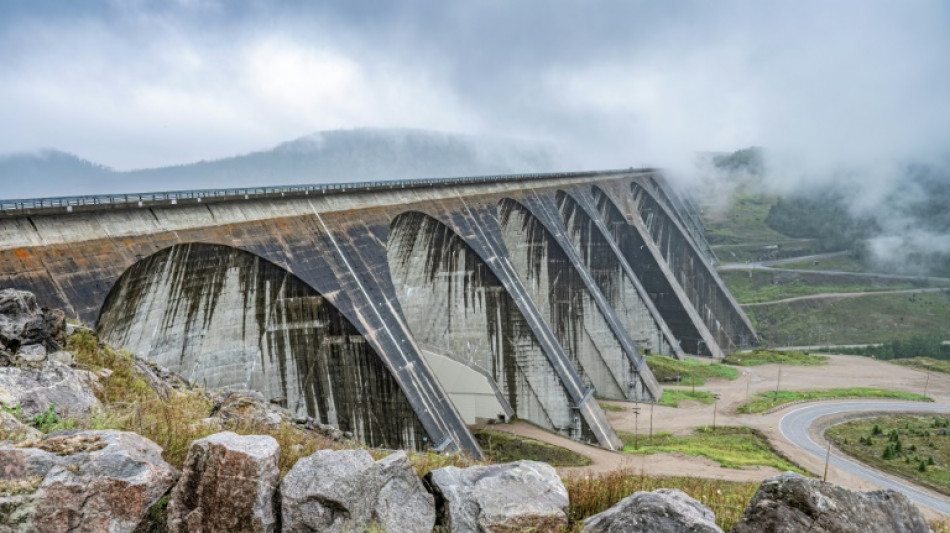
Production challenges are being acutely felt at Quebec's enormous Daniel-Johnson dam, northeast of Montreal, which was made with enough concrete to build a sidewalk from the North Pole to South Pole, according to Hydro-Quebec.
Hydro-Quebec engineer Pierre-Marc Rondeau said the low levels recorded at certain reservoirs in recent years has "broken records."
The public company is "starting to feel" the impacts of climate change, he said.
Water shortages have reduced profits by 30 percent through the first nine of months of this year, the company confirmed this month.
Hydro-Quebec has also had to cut exports to meet local demand this year and in 2023 -- a bitter setback for a company that has invested in new transmission lines and signed long-term supply contracts with customers in New York and Massachusetts.
"We're adjusting the ways we operate the reservoirs to be ready at any time" in the event of flood or drought, Rondeau told AFP.
- Flash floods -
The combined impacts of extreme drought and extreme floods are "exponentially increasing" the challenges facing the hydropower sector, said Reza Najafi, a professor of civil and environmental engineering at Ontario's Western University.
Najafi is part of a group of researchers working on new guidelines for dams in response to the intensification of extreme weather events.
"We found some critical gaps in the current frameworks and practices in both the design and planning management of dams and levees," he said.
Up to 50 percent of the country's dams are more than 50 years old and not designed to cope with extreme weather swings, he explained.
Eloise Edom, of L'Institute de l'Energie Trottier at Polytechnique Montreal, noted flash floods that used to be once-in-a-century events in parts of Canada are now happening twice a decade.
For Philippe Gachon, a professor at the University of Quebec in Montreal, it is crucial that national planning bodies consider the dramatic water cycle changes when contemplating Canada's hydropower future.
"We are going to have volumes of water that we have never seen before," he told AFP.
He noted Hydro-Quebec has already integrated the new reality of weather extremes into its infrastructure plans.
"But will this reflection, this rethinking of infrastructure, keep pace with the changes that are happening? Nobody knows," he said.
L.Rossi--NZN