Zürcher Nachrichten - Deadly Indian Himalayan flood likely caused by glacier collapse, experts say

EUR -
AED 4.321353
AFN 77.835141
ALL 96.56804
AMD 449.139216
ANG 2.106728
AOA 1079.014233
ARS 1695.184074
AUD 1.768936
AWG 2.118021
AZN 1.992233
BAM 1.958194
BBD 2.369196
BDT 143.755719
BGN 1.958299
BHD 0.443582
BIF 3474.847465
BMD 1.176678
BND 1.516554
BOB 8.157972
BRL 6.356064
BSD 1.176338
BTN 106.687409
BWP 15.535858
BYN 3.440105
BYR 23062.89483
BZD 2.365792
CAD 1.618962
CDF 2635.759666
CHF 0.934724
CLF 0.027393
CLP 1074.672004
CNY 8.300875
CNH 8.284524
COP 4477.661031
CRC 588.419252
CUC 1.176678
CUP 31.181975
CVE 110.399947
CZK 24.318409
DJF 209.476052
DKK 7.470713
DOP 74.721335
DZD 152.586923
EGP 55.83409
ERN 17.650175
ETB 183.084693
FJD 2.654467
FKP 0.880448
GBP 0.878426
GEL 3.179851
GGP 0.880448
GHS 13.527535
GIP 0.880448
GMD 85.897809
GNF 10229.50399
GTQ 9.011015
GYD 246.102914
HKD 9.156263
HNL 30.984874
HRK 7.540624
HTG 154.128398
HUF 384.849077
IDR 19612.9917
ILS 3.781332
IMP 0.880448
INR 106.72737
IQD 1540.983615
IRR 49564.636213
ISK 148.202602
JEP 0.880448
JMD 187.989789
JOD 0.834311
JPY 182.339837
KES 151.791809
KGS 102.900799
KHR 4706.75328
KMF 493.637249
KPW 1059.010108
KRW 1726.258215
KWD 0.36091
KYD 0.98029
KZT 606.721624
LAK 25490.157785
LBP 105339.96185
LKR 363.724597
LRD 207.623788
LSL 19.736525
LTL 3.474425
LVL 0.711761
LYD 6.376795
MAD 10.797398
MDL 19.856102
MGA 5243.409259
MKD 61.642135
MMK 2470.160628
MNT 4172.342754
MOP 9.429807
MRU 46.793197
MUR 54.068087
MVR 18.122306
MWK 2039.793333
MXN 21.158859
MYR 4.815557
MZN 75.201136
NAD 19.736525
NGN 1708.995639
NIO 43.292919
NOK 11.917762
NPR 170.699654
NZD 2.02867
OMR 0.452448
PAB 1.176338
PEN 3.961242
PGK 4.999111
PHP 69.218155
PKR 329.665165
PLN 4.221428
PYG 7900.657335
QAR 4.28724
RON 5.092547
RSD 117.376006
RUB 93.251745
RWF 1712.708077
SAR 4.414871
SBD 9.621406
SCR 16.951255
SDG 707.773329
SEK 10.908861
SGD 1.515962
SHP 0.882813
SLE 28.387382
SLL 24674.360085
SOS 671.120341
SRD 45.431799
STD 24354.865265
STN 24.529984
SVC 10.292581
SYP 13010.15766
SZL 19.740129
THB 37.006108
TJS 10.816413
TMT 4.130141
TND 3.440205
TOP 2.833159
TRY 50.240982
TTD 7.983759
TWD 36.839797
TZS 2921.109631
UAH 49.721477
UGX 4190.121777
USD 1.176678
UYU 46.096346
UZS 14231.395685
VES 314.690552
VND 30970.173058
VUV 142.528259
WST 3.26585
XAF 656.759788
XAG 0.0185
XAU 0.000272
XCD 3.180032
XCG 2.119991
XDR 0.818254
XOF 656.759788
XPF 119.331742
YER 280.636821
ZAR 19.744603
ZMK 10591.521493
ZMW 27.261323
ZWL 378.889935
  • SCS

    0.0200

    16.14

    +0.12%

  • RYCEF

    0.3000

    14.9

    +2.01%

  • CMSC

    -0.0270

    23.273

    -0.12%

  • VOD

    0.1550

    12.745

    +1.22%

  • RIO

    -0.1900

    75.47

    -0.25%

  • BTI

    0.2500

    57.35

    +0.44%

  • NGG

    0.6900

    75.62

    +0.91%

  • BCE

    0.3561

    23.75

    +1.5%

  • CMSD

    0.0780

    23.328

    +0.33%

  • AZN

    1.3300

    91.16

    +1.46%

  • GSK

    0.3100

    49.12

    +0.63%

  • RBGPF

    -3.4900

    77.68

    -4.49%

  • BP

    -0.2090

    35.051

    -0.6%

  • BCC

    -1.0600

    75.45

    -1.4%

  • RELX

    0.7100

    41.09

    +1.73%

  • JRI

    0.0136

    13.5801

    +0.1%

Deadly Indian Himalayan flood likely caused by glacier collapse, experts say
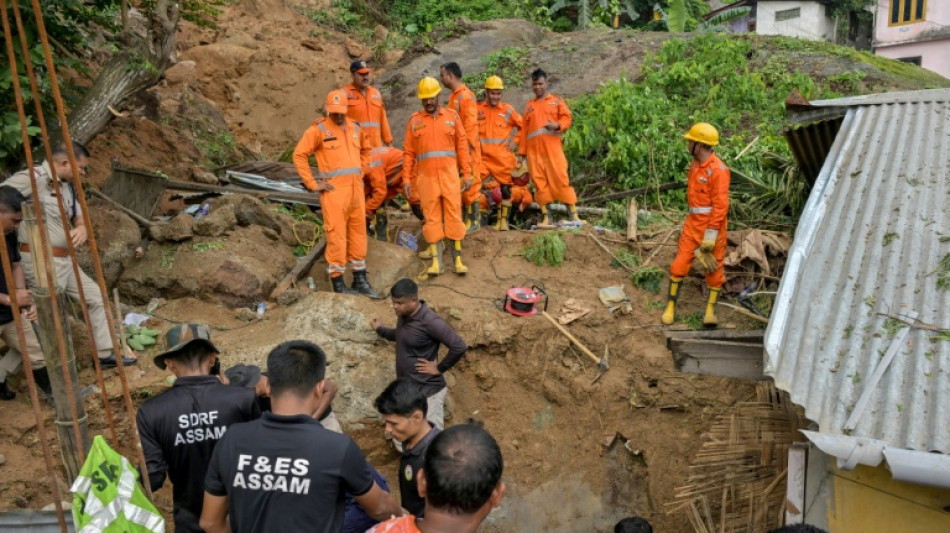
Deadly Indian Himalayan flood likely caused by glacier collapse, experts say / Photo: Biju BORO - AFP

Deadly Indian Himalayan flood likely caused by glacier collapse, experts say

A deadly wall of muddy water that swept away an Indian Himalayan town this week was likely caused by a rapidly melting glacier exacerbated by the rising effects of climate change, experts said on Thursday.

Text size:

Scores of people are missing after water and debris tore down a narrow mountain valley, smashing into the town of Dharali in Uttarakhand state on Tuesday.

Several people could be seen in videos running before being engulfed as waves uprooted entire buildings, leaving others smothered in freezing sludge.

At least four people have been confirmed killed, but at least 50 others are missing.

Government officials said shortly after the disaster that the flood was caused by an intense "cloudburst" of rain.

However, experts assessing the damage suggested that it was only the final trigger, adding to days of prolonged rains that had already soaked and loosened the ground.

P.K. Joshi, of New Delhi's Jawaharlal Nehru University, an expert on Himalayan hazards, said it appeared the flood was caused by the collapse of debris -- known as moraine -- that had dammed a lake of meltwater from a retreating glacier.

"Given the persistent rainfall over preceding days and the sudden discharge observed, a glacial lake outburst flood (GLOF) or collapse of a moraine-dammed lake is suspected as the primary trigger," Joshi told AFP.

That would have contributed to a "sudden high energy flash flood", he said, noting that glacial terrain upstream of the town included "unstable sediment zones".

Cloud cover has obstructed satellite imagery to check for the exact source of the debris, and Joshi cautioned that there was not enough satellite data for a "definitive confirmation".

- 'Disaster severity' -

Safi Ahsan Rizvi, an adviser to the National Disaster Management Authority, also said that it was "likely" that the cause was a "glacio-fluvial debris landslide".

Sandip Tanu Mandal, a glaciologist at New Delhi's Mobius Foundation, also pointed to the "possibility of a GLOF", caused by "significant water accumulation in the lake due to increased melting and rainfall".

Mandal noted that while heavy, the amount of rain immediately before the flood was "not very significant" in comparison to the vast volumes of water that poured down the valley.

That would indicate the source was a potentially collapsing lake.

Himalayan glaciers, which provide critical water to nearly two billion people, are melting faster than ever before due to climate change, exposing communities to unpredictable and costly disasters, scientists warn.

The softening of permafrost increases the chances of landslides.

Joshi said the latest disaster "highlights the complex and interconnected nature of Himalayan hazards".

Rapid development and building downstream meant that the damage caused was multiplied.

"The land use patterns in the floodplain exacerbated the disaster severity," Joshi said.

X.Blaser--NZN