Zürcher Nachrichten - Japan to relax overtime regulation under workaholic PM

EUR -
AED 4.269263
AFN 76.139427
ALL 92.069828
AMD 422.959573
ANG 2.080612
AOA 1067.169554
ARS 1757.296319
AUD 1.610103
AWG 2.092489
AZN 1.977567
BAM 1.955142
BBD 2.340513
BDT 142.731997
BGN 1.972015
BHD 0.438156
BIF 3476.860597
BMD 1.162494
BND 1.471318
BOB 14.497187
BRL 5.96255
BSD 1.162119
BTN 109.737566
BWP 15.558901
BYN 3.573998
BYR 22784.883161
BZD 2.337114
CAD 1.605805
CDF 2650.486518
CHF 0.941041
CLF 0.027512
CLP 1086.328032
CNY 7.801848
CNH 7.799632
COP 3627.853272
CRC 527.427157
CUC 1.162494
CUP 30.806092
CVE 110.228403
CZK 24.193244
DJF 206.598278
DKK 7.474203
DOP 68.787458
DZD 154.807872
EGP 59.192222
ERN 17.437411
ETB 188.440346
FJD 2.576551
FKP 0.859938
GBP 0.858444
GEL 3.028292
GGP 0.859938
GHS 13.218611
GIP 0.859938
GMD 86.024876
GNF 10214.828236
GTQ 8.871055
GYD 243.119282
HKD 9.114012
HNL 31.178782
HRK 7.53424
HTG 151.970198
HUF 363.640345
IDR 20523.832255
ILS 3.49963
IMP 0.859938
INR 109.949968
IQD 1522.288036
IRR 1597964.305585
ISK 140.38296
JEP 0.859938
JMD 184.549521
JOD 0.824233
JPY 179.438509
KES 150.473371
KGS 101.659793
KHR 4705.457973
KMF 492.897284
KPW 1046.244976
KRW 1563.984352
KWD 0.35906
KYD 0.968374
KZT 527.84248
LAK 26042.025808
LBP 104062.402522
LKR 381.253258
LRD 203.362481
LSL 18.579411
LTL 3.432542
LVL 0.703181
LYD 7.386579
MAD 10.906179
MDL 20.074249
MGA 4976.369193
MKD 61.504315
MMK 2440.935276
MNT 4181.527507
MOP 9.384444
MRU 46.682702
MUR 54.509449
MVR 17.97222
MWK 2015.039651
MXN 19.68009
MYR 4.703422
MZN 74.286751
NAD 18.578852
NGN 1536.642546
NIO 42.766721
NOK 10.776553
NPR 175.58046
NZD 1.977722
OMR 0.44698
PAB 1.162009
PEN 3.898689
PGK 5.163264
PHP 72.854644
PKR 322.735636
PLN 4.310237
PYG 6922.671819
QAR 4.224098
RON 5.249589
RSD 117.327093
RUB 99.915909
RWF 1714.038292
SAR 4.36615
SBD 9.300548
SCR 16.14816
SDG 699.178815
SEK 11.150989
SGD 1.471816
SHP 0.861252
SLE 28.655818
SLL 24376.917848
SOS 664.082373
SRD 43.877759
STD 24061.279537
STN 24.491974
SVC 10.167581
SYP 15114.747383
SZL 18.575912
THB 38.220446
TJS 10.731637
TMT 4.068729
TND 3.391674
TOP 2.799007
TRY 56.300168
TTD 7.888347
TWD 36.653104
TZS 3074.250008
UAH 51.651273
UGX 4392.541626
USD 1.162494
UYU 46.77447
UZS 13700.392388
VES 937.408573
VND 30248.09489
VUV 137.136128
WST 3.159793
XAF 655.742107
XAG 0.017558
XAU 0.000264
XCD 3.141698
XCG 2.094296
XDR 0.821944
XOF 655.742107
XPF 119.331742
YER 275.511341
ZAR 18.593197
ZMK 10463.848716
ZMW 22.282506
ZWL 374.322606
  • BCE

    -0.1400

    23.67

    -0.59%

  • CMSD

    -0.0700

    20.69

    -0.34%

  • BTI

    -0.6200

    55.35

    -1.12%

  • CMSC

    -0.1100

    20.81

    -0.53%

  • AZN

    -2.0700

    162.7

    -1.27%

  • RIO

    0.4300

    103.27

    +0.42%

  • BP

    0.2300

    43.81

    +0.52%

  • GSK

    -0.9800

    49.89

    -1.96%

  • BCC

    2.0900

    79.21

    +2.64%

  • RBGPF

    0.0000

    70

    0%

  • RELX

    -1.1400

    35.51

    -3.21%

  • JRI

    -0.0700

    12.14

    -0.58%

  • VOD

    0.3200

    16.9

    +1.89%

  • RYCEF

    0.1400

    19.92

    +0.7%

  • NGG

    -0.0500

    78.12

    -0.06%

Japan to relax overtime regulation under workaholic PM
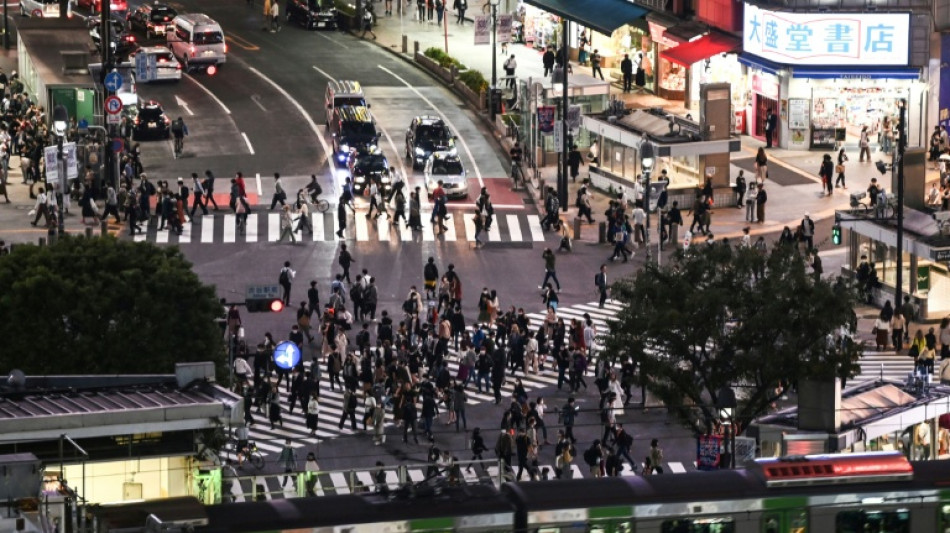
Japan to relax overtime regulation under workaholic PM / Photo: CHARLY TRIBALLEAU - AFP/File

Japan to relax overtime regulation under workaholic PM

Japan will ease overtime regulation starting Tuesday in a move meant to help spur economic growth but criticised as a relapse into the country's ingrained workaholic culture.

Text size:

The move comes after the government led by Prime Minister Sanae Takaichi -- a self-proclaimed workaholic -- adopted a growth strategy in July calling for revisions to the current oversight of work hours.

The change in part reflects calls from certain business sectors for more flexible work styles as they grapple with a deepening labour shortage.

Roughly 40 percent of businesses in Japan are operating under specific labour-management agreements that legally allow monthly overtime of up to 100 hours, according to the labour ministry.

But those companies were still advised by authorities to cap overtime at 45 hours each month, with that guidance considered on par with regulation.

That was because exceeding that threshold can increase risks for so-called "karoshi", or deaths from overwork, a labour ministry official told AFP.

Under the new rule that took effect Tuesday, labour standards inspection offices will no longer pressure businesses over the 45-hour limit.

A Japan Chamber of Commerce and Industry survey showed in May that this pressure was "restricting" activity of around 20 percent of Japan's small and mid-sized businesses, especially in short-staffed industries such as construction, transport and hospitality.

Critics, however, said the move reversed steps taken by Japan to modernise its corporate culture long centred around marathon work hours.

- 'Corporate warriors' -

Once a bastion for "corporate warriors" fiercely devoted to their jobs, the country has in recent years ratcheted up efforts toward a better work-life balance, especially after the 2015 suicide of an exhausted 24-year-old employee at advertising giant Dentsu.

"This is an unacceptable shift away from, and abolition of, the policy that urged companies to shorten work hours," the National Confederation of Trade Unions in Tokyo, commonly known as Zenroren, said in a statement.

The possible shift toward more work is on brand for Takaichi, who herself declared she "shall work, work, work, work and work" when elected as head of her conservative ruling party in October.

And in an X post widely derided for "showing off" her dedication to work, she wrote in July she has been chronically sleeping just "zero to three hours" as prime minister.

The labour ministry stresses that it will keep tabs on companies to ensure they take measures to protect the wellbeing of employees.

It will "continue to provide the necessary guidance if there is a high risk that health problems caused by excessive work may arise," the ministry said in a statement.

And the policy shift, it says, doesn't affect all businesses in Japan.

Those without special labour-management agreements in the first place will remain legally obliged to keep monthly overtime to 45 hours or less.

There are also some companies where going even a minute beyond the statutory working hours -- typically eight hours a day, 40 hours a week -- is illegal.

L.Muratori--NZN