Zürcher Nachrichten - Inequality is major factor in impact of non-communicable diseases : WHO

EUR -
AED 4.126572
AFN 72.469219
ALL 90.843239
AMD 406.08753
ANG 2.010814
AOA 1031.368564
ARS 1713.197656
AUD 1.604362
AWG 2.023695
AZN 1.913163
BAM 1.959925
BBD 2.262021
BDT 138.919942
BGN 1.963679
BHD 0.423839
BIF 3365.99061
BMD 1.123495
BND 1.436155
BOB 13.13494
BRL 5.630396
BSD 1.123089
BTN 106.650864
BWP 15.419801
BYN 3.349691
BYR 22020.499318
BZD 2.258905
CAD 1.579735
CDF 2600.890851
CHF 0.926985
CLF 0.027878
CLP 1097.249743
CNY 7.503991
CNH 7.49903
COP 3563.062844
CRC 510.085037
CUC 1.123495
CUP 26.954737
CVE 110.499559
CZK 24.296359
DJF 199.667673
DKK 7.474308
DOP 69.096981
DZD 151.083114
EGP 61.165984
ERN 16.852423
ETB 183.456443
FJD 2.536966
FKP 0.844338
GBP 0.839661
GEL 2.915471
GGP 0.844338
GHS 13.060638
GIP 0.844338
GMD 82.581609
GNF 9940.924819
GTQ 8.582914
GYD 234.909693
HKD 8.817879
HNL 30.146126
HRK 7.534379
HTG 147.072849
HUF 364.034247
IDR 20208.02123
ILS 3.470874
IMP 0.844338
INR 106.429623
IQD 1702.721977
IRR 2017490.621152
ISK 136.201681
JEP 0.844338
JMD 178.245191
JOD 0.796544
JPY 177.705401
KES 145.886054
KGS 98.249469
KHR 4567.716303
KMF 493.214109
KPW 1011.145333
KRW 1489.804707
KWD 0.347943
KYD 0.935991
KZT 505.334692
LAK 25270.755161
LBP 100577.14456
LKR 372.477403
LRD 191.497347
LSL 18.500613
LTL 3.317388
LVL 0.679591
LYD 7.204293
MAD 11.006372
MDL 20.14886
MGA 5110.871687
MKD 61.780042
MMK 2358.823276
MNT 4042.428044
MOP 9.079714
MRU 45.192586
MUR 53.096488
MVR 17.35814
MWK 1947.542752
MXN 20.689647
MYR 4.586664
MZN 71.80252
NAD 18.501356
NGN 1492.001092
NIO 41.326253
NOK 10.564481
NPR 170.634133
NZD 1.976244
OMR 0.431979
PAB 1.123189
PEN 3.872783
PGK 5.025489
PHP 70.910521
PKR 310.844368
PLN 4.366017
PYG 6446.569492
QAR 4.082493
RON 5.326263
RSD 117.414191
RUB 93.024507
RWF 1658.327543
SAR 4.227319
SBD 9.053288
SCR 15.701063
SDG 675.77597
SEK 11.124116
SGD 1.4355
SHP 0.842832
SLE 27.728013
SLL 23559.130474
SOS 641.839593
SRD 42.3125
STD 23254.075341
STN 24.552227
SVC 9.827862
SYP 14607.679857
SZL 18.496605
THB 37.738399
TJS 10.372163
TMT 3.932232
TND 3.350853
TOP 2.705106
TRY 55.697819
TTD 7.623216
TWD 36.678623
TZS 2971.64167
UAH 50.618448
UGX 4683.859134
USD 1.123495
UYU 45.054837
UZS 13527.232893
VES 988.438306
VND 29071.55308
VUV 134.098174
WST 3.11558
XAF 655.957
XAG 0.019407
XAU 0.000272328061
XCD 3.036301
XCG 2.024125
XDR 0.794369
XOF 655.957
XPF 119.331742
YER 265.31349
ZAR 18.409357
ZMK 10112.802002
ZMW 22.490842
ZWL 361.764888
SSP 6534.858925
MXV 2.335511
  • CMSC

    -0.0800

    19.64

    -0.41%

  • BCC

    1.3000

    76.42

    +1.7%

  • BCE

    0.2050

    20.025

    +1.02%

  • NGG

    2.0800

    81.13

    +2.56%

  • RIO

    -1.2400

    88.26

    -1.4%

  • RELX

    0.0050

    39.255

    +0.01%

  • CMSD

    -0.0700

    19.7

    -0.36%

  • RBGPF

    0.0000

    75.42

    0%

  • GSK

    0.6800

    50.14

    +1.36%

  • BTI

    0.8200

    59.33

    +1.38%

  • BP

    -0.2250

    49.215

    -0.46%

  • JRI

    0.1100

    10.61

    +1.04%

  • RYCEF

    -0.1100

    17.5

    -0.63%

  • VOD

    0.0450

    15.915

    +0.28%

  • AZN

    4.7550

    168.705

    +2.82%

Inequality is major factor in impact of non-communicable diseases : WHO
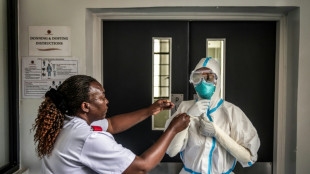
Inequality is major factor in impact of non-communicable diseases : WHO / Photo: Fabrice COFFRINI - AFP

Inequality is major factor in impact of non-communicable diseases : WHO

Non-communicable diseases account for three-quarters of deaths worldwide but affect different population groups in different ways, a World Health Organization study showed on Tuesday.

Text size:

In its biggest-ever look at inequality in health and non-communicable diseases (NCDs), the WHO studied the top four killers -- cancer, cardiovascular diseases, chronic respiratory diseases and diabetes.

It also looked at the five main risk factors driving them -- tobacco use, alcohol consumption, obesity, unhealthy diets, physical inactivity and air pollution.

The report then scanned this across differences in NCD burden, prevention and care -- by age, gender, economic status, education, place of residence, disability status, employment and migration status.

"This is the first effort to systematically measure inequalities in NCDs and their risk factors on a global scale," said Ahmad Reza Hosseinpoor, who leads the WHO's health inequality monitoring team.

"The findings show which populations are being left behind."

NCDs cover eight of the top 10 causes of death, with cardiovascular diseases the biggest killer by far, claiming almost 20 million deaths a year.

The 10 years of national data, collected between 2013 and 2022, confirmed that socio-economic status influences health at every stage -- from initial exposure to risk factors, through to diagnosis, treatment and disease management.

For example, the report found that in low- and middle-income countries, less educated populations suffered higher rates of hypertension and diabetes.

Cervical cancer screening rates are very low among the poorest and least-educated women; while tobacco use remains higher among less-educated men than among more educated men.

Looking at geographical factors, the study found that people in rural areas has significantly more limited access to hypertension diagnosis and cancer screening.

Gender and age also play a role. Men with hypertension are diagnosed and treated less frequently than women, even though they consume more tobacco and alcohol.

Conversely, obesity is more common among women, particularly in developing countries.

The study confirmed that social marginalisation, disability and migrant status were significant factors contributing to increased risk.

The United Nations' health agency urged governments to raise health-related taxes on tobacco, alcohol and sugary drinks -- measures that are particularly effective among low-income populations.

Countries were also encouraged to tailor insurance schemes or subsidies for under-served communities and to incorporate inequality indicators into their national health systems.

E.Leuenberger--NZN