Zürcher Nachrichten - Global warming pushes ocean temperatures off the charts: study

EUR -
AED 4.239763
AFN 72.158596
ALL 94.976352
AMD 425.349641
ANG 2.067019
AOA 1059.796721
ARS 1654.64246
AUD 1.648432
AWG 2.080919
AZN 1.945012
BAM 1.955305
BBD 2.326151
BDT 141.764088
BGN 1.92786
BHD 0.435592
BIF 3452.040476
BMD 1.154463
BND 1.487123
BOB 7.981013
BRL 5.983346
BSD 1.154927
BTN 110.029604
BWP 15.684095
BYN 3.179095
BYR 22627.465986
BZD 2.322812
CAD 1.610209
CDF 2627.556752
CHF 0.922271
CLF 0.02686
CLP 1057.118247
CNY 7.818886
CNH 7.82467
COP 4110.371553
CRC 529.665824
CUC 1.154463
CUP 30.593258
CVE 110.238984
CZK 24.182816
DJF 205.171133
DKK 7.474868
DOP 67.38293
DZD 154.264319
EGP 59.822289
ERN 17.316938
ETB 186.198139
FJD 2.566659
FKP 0.86228
GBP 0.863036
GEL 3.059702
GGP 0.86228
GHS 13.45465
GIP 0.86228
GMD 84.276131
GNF 10117.612274
GTQ 8.80377
GYD 241.629837
HKD 9.046484
HNL 30.876713
HRK 7.532526
HTG 151.061733
HUF 356.311074
IDR 20741.074179
ILS 3.437585
IMP 0.86228
INR 110.517163
IQD 1513.016721
IRR 1587588.037964
ISK 143.419044
JEP 0.86228
JMD 182.373801
JOD 0.818482
JPY 185.356466
KES 149.537015
KGS 100.956715
KHR 4647.842733
KMF 492.955691
KPW 1038.849185
KRW 1765.467597
KWD 0.357122
KYD 0.96246
KZT 563.399719
LAK 25431.667768
LBP 103423.548565
LKR 384.599236
LRD 210.197663
LSL 19.135084
LTL 3.408828
LVL 0.698323
LYD 7.373036
MAD 10.694891
MDL 20.100995
MGA 4844.772717
MKD 61.611921
MMK 2423.121221
MNT 4128.685183
MOP 9.322179
MRU 46.180102
MUR 55.252767
MVR 17.848112
MWK 2002.701347
MXN 20.085628
MYR 4.695892
MZN 73.797886
NAD 19.135084
NGN 1571.270228
NIO 42.499234
NOK 10.938936
NPR 176.047166
NZD 1.993255
OMR 0.443892
PAB 1.154912
PEN 3.926805
PGK 5.1337
PHP 70.662326
PKR 321.390953
PLN 4.250211
PYG 7133.254785
QAR 4.210979
RON 5.238029
RSD 117.36384
RUB 83.409187
RWF 1694.278142
SAR 4.334352
SBD 9.288313
SCR 17.105777
SDG 693.248401
SEK 10.975066
SGD 1.486498
SHP 0.861923
SLE 28.457351
SLL 24208.504879
SOS 660.035658
SRD 43.131862
STD 23895.043941
STN 24.494219
SVC 10.105615
SYP 127.605167
SZL 19.130237
THB 38.018739
TJS 10.804169
TMT 4.052164
TND 3.3899
TOP 2.779669
TRY 53.281797
TTD 7.839014
TWD 36.638602
TZS 3030.461838
UAH 52.042217
UGX 4347.973891
USD 1.154463
UYU 46.788148
UZS 13922.714281
VES 654.549321
VND 30388.340481
VUV 137.94937
WST 3.168993
XAF 655.793714
XAG 0.018165
XAU 0.000283
XCD 3.119993
XCG 2.081473
XDR 0.816003
XOF 655.782356
XPF 119.331742
YER 275.512217
ZAR 19.108721
ZMK 10391.541044
ZMW 20.009018
ZWL 371.73647
  • RBGPF

    2.0500

    60.72

    +3.38%

  • CMSC

    -0.0100

    22.3

    -0.04%

  • BP

    0.2800

    42.95

    +0.65%

  • RIO

    -2.3600

    99.06

    -2.38%

  • GSK

    -0.0800

    51.17

    -0.16%

  • NGG

    -0.7000

    80.38

    -0.87%

  • AZN

    -4.4700

    178.96

    -2.5%

  • RYCEF

    -0.2300

    16.49

    -1.39%

  • RELX

    -0.9600

    33.98

    -2.83%

  • BTI

    1.1700

    61.12

    +1.91%

  • VOD

    0.3800

    15.05

    +2.52%

  • CMSD

    0.0100

    22.29

    +0.04%

  • BCC

    -1.7000

    68.31

    -2.49%

  • BCE

    0.1300

    24.71

    +0.53%

  • JRI

    0.1400

    12.86

    +1.09%

Global warming pushes ocean temperatures off the charts: study
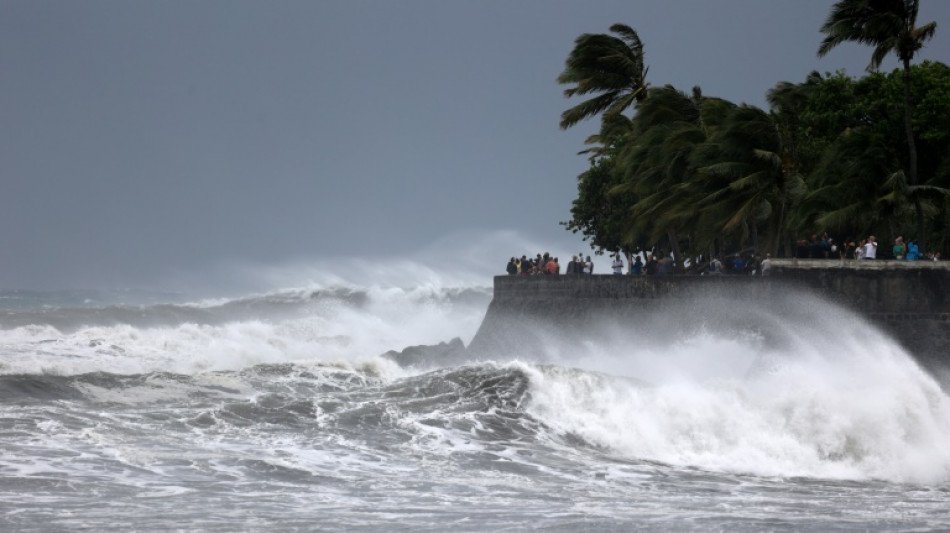
Global warming pushes ocean temperatures off the charts: study / Photo: Richard BOUHET - AFP/File

Global warming pushes ocean temperatures off the charts: study

In 2023, the world's oceans took up an enormous amount of excess heat, enough to "boil away billions of Olympic-sized swimming pools," according to an annual report published Thursday.

Text size:

Oceans cover 70 percent of the planet and have kept the Earth's surface livable by absorbing 90 percent of the excess heat produced by the carbon pollution from human activity since the dawn of the industrial age.

In 2023, the oceans soaked up around 9 to 15 zettajoules more than in 2022, according to the respective estimates from the US National Oceanic and Atmospheric Administration (NOAA) and the Chinese Institute of Atmospheric Physics (IAP).

One zettajoule of energy is roughly equivalent to ten times the electricity generated worldwide in a year.

"Annually the entire globe consumes around half a zettajoule of energy to fuel our economies", according to statement.

"Another way to think about this is 15 zettajoules is enough energy to boil away 2.3 billion Olympic-sized swimming pools."

In 2023, sea surface temperature and the energy stored in the upper 2000 metres of the ocean both reached record highs, according to the study published in the journal Advances in Atmospheric Sciences.

The amount of energy stored in the oceans is a key indicator of global warming because it is less affected by natural climate variability than sea surface temperature.

Some of the colossal amounts of energy stored in the ocean helped make 2023, a year rife with heatwaves, droughts and wildfires, the hottest on record.

That's because the warmer the oceans gets, the more heat and moisture enters the atmosphere. This leads to increasingly erratic weather, like fierce winds and powerful rain.

Warmer sea surface temperatures are driven mostly by global warming, caused mainly by the burning of fossil fuels.

Every few years, a naturally occurring weather phenomenon, El Nino, warms the sea surface in the southern Pacific, leading to hotter weather globally. The current El Nino is expected to peak in 2024.

Conversely, a mirror phenomenon called La Nina periodically helps cool the surface of the ocean.

Increasing water temperatures and ocean salinity -- also at an all-time high -- directly contribute to a process of "stratification", where water separates into layers that no longer mix.

This has wide-ranging implications because it affects the exchange of heat, oxygen and carbon between the ocean and atmosphere, with effects including a loss of oxygen in the ocean.

Scientists are also concerned about the long-term capacity of the oceans to continue absorbing 90 percent of the excess heat from human activity.

D.Smith--NZN