Zürcher Nachrichten - Shark bites and deaths up even as species faces crisis: study

EUR -
AED 4.235108
AFN 72.638695
ALL 95.986116
AMD 435.092592
ANG 2.063949
AOA 1057.292369
ARS 1577.236365
AUD 1.673475
AWG 2.078266
AZN 1.958134
BAM 1.955386
BBD 2.320668
BDT 141.373711
BGN 1.970817
BHD 0.435957
BIF 3424.38207
BMD 1.152991
BND 1.480725
BOB 7.979516
BRL 6.049975
BSD 1.152186
BTN 108.575339
BWP 15.841123
BYN 3.460157
BYR 22598.615681
BZD 2.317349
CAD 1.59725
CDF 2635.149736
CHF 0.916506
CLF 0.027072
CLP 1068.948607
CNY 7.966185
CNH 7.980055
COP 4255.61911
CRC 534.200663
CUC 1.152991
CUP 30.554251
CVE 110.542933
CZK 24.511426
DJF 204.909943
DKK 7.471979
DOP 68.605777
DZD 153.395731
EGP 60.817599
ERN 17.294859
ETB 181.192506
FJD 2.594811
FKP 0.862247
GBP 0.865314
GEL 3.107286
GGP 0.862247
GHS 12.636424
GIP 0.862247
GMD 84.719455
GNF 10120.377686
GTQ 8.814361
GYD 241.055175
HKD 9.023247
HNL 30.577003
HRK 7.535828
HTG 150.891941
HUF 388.338432
IDR 19510.445669
ILS 3.602059
IMP 0.862247
INR 108.645093
IQD 1510.417681
IRR 1514222.549315
ISK 143.339936
JEP 0.862247
JMD 181.081615
JOD 0.817484
JPY 184.182756
KES 149.773716
KGS 100.828779
KHR 4629.257123
KMF 492.326899
KPW 1037.758177
KRW 1739.332384
KWD 0.35421
KYD 0.960221
KZT 555.084372
LAK 25063.132529
LBP 103250.307387
LKR 362.372615
LRD 211.803486
LSL 19.658594
LTL 3.404482
LVL 0.697433
LYD 7.35573
MAD 10.768576
MDL 20.238324
MGA 4813.735514
MKD 61.653053
MMK 2421.261549
MNT 4132.119635
MOP 9.284814
MRU 46.246593
MUR 53.751971
MVR 17.825775
MWK 2001.591211
MXN 20.574308
MYR 4.605027
MZN 73.687834
NAD 19.658789
NGN 1598.632905
NIO 42.337441
NOK 11.175356
NPR 173.720942
NZD 2.002185
OMR 0.443309
PAB 1.152181
PEN 3.988767
PGK 4.968807
PHP 69.448107
PKR 321.972295
PLN 4.27801
PYG 7540.995323
QAR 4.215912
RON 5.097026
RSD 117.441351
RUB 93.822176
RWF 1683.36627
SAR 4.326033
SBD 9.272321
SCR 15.995702
SDG 692.947394
SEK 10.884917
SGD 1.482394
SHP 0.865042
SLE 28.306224
SLL 24177.648784
SOS 658.93198
SRD 43.308612
STD 23864.577457
STN 24.616349
SVC 10.082038
SYP 128.492581
SZL 19.658268
THB 38.014217
TJS 11.02665
TMT 4.046997
TND 3.370773
TOP 2.776124
TRY 51.145977
TTD 7.820546
TWD 36.875174
TZS 2968.95063
UAH 50.55856
UGX 4286.184377
USD 1.152991
UYU 46.710504
UZS 14054.955391
VES 537.314539
VND 30382.455194
VUV 137.232784
WST 3.170183
XAF 655.832201
XAG 0.01708
XAU 0.000263
XCD 3.116015
XCG 2.076605
XDR 0.813367
XOF 653.172449
XPF 119.331742
YER 275.161365
ZAR 19.752487
ZMK 10378.307533
ZMW 21.632883
ZWL 371.262501
  • RBGPF

    -13.5000

    69

    -19.57%

  • CMSC

    -0.0650

    22.845

    -0.28%

  • RIO

    -1.7700

    85.77

    -2.06%

  • NGG

    -1.8800

    82.41

    -2.28%

  • RYCEF

    -0.6000

    15.3

    -3.92%

  • CMSD

    0.1600

    22.84

    +0.7%

  • GSK

    -0.7100

    53.99

    -1.32%

  • BCC

    -0.3300

    74.32

    -0.44%

  • RELX

    -0.4050

    32.065

    -1.26%

  • JRI

    -0.0300

    12.07

    -0.25%

  • AZN

    -3.7400

    183.4

    -2.04%

  • BTI

    -0.1700

    58.28

    -0.29%

  • BCE

    -0.0300

    25.46

    -0.12%

  • VOD

    -0.0900

    14.63

    -0.62%

  • BP

    0.7800

    46.19

    +1.69%

Shark bites and deaths up even as species faces crisis: study
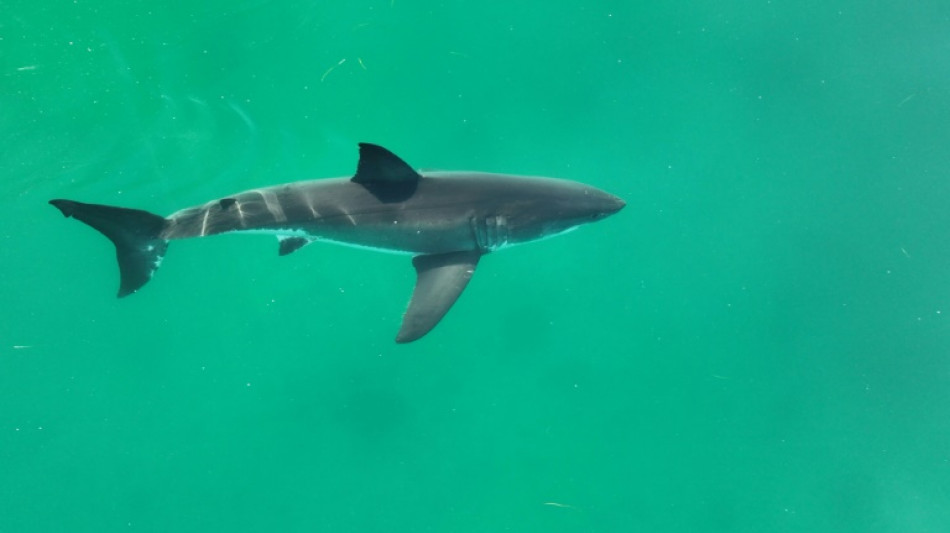
Shark bites and deaths up even as species faces crisis: study / Photo: Handout - @TheMalibuArtist/AFP/File

Shark bites and deaths up even as species faces crisis: study

Shark bites and fatalities ticked up worldwide last year, with Australia accounting for a disproportionate number of deaths resulting from heightened contact with humans even as the ancient predators face a wider extinction crisis.

Text size:

There were 69 unprovoked attacks in 2023, up slightly from 63 in 2022, and ten deaths, which is double the year before and a 12-year-high, according to the International Shark Attack File, an annual global report published Monday by the University of Florida.

Gavin Naylor, director of the Florida Program for Shark Research at the Florida Museum of Natural History who co-authored the study, told AFP that the uptick didn’t mean sharks were becoming more numerous or fierce.

Three of the deaths happened off the coast of southern Australia in a region called the Eyre Peninsula, where a rebounding seal population has brought great whites into closer proximity to surfers in a remote region.

"If you get nobbled by a white shark you're probably not going to have all of the helicopters being able to be there within five minutes and stretchers and all the medical infrastructure," he said.

In all, Australia saw four deaths, followed by two in the United States, and one each in the Bahamas, Egypt, Mexico and New Caledonia.

The US saw 36 unprovoked attacks -- just over half of the total number worldwide. Most of these are "test" bites when a shark mistakes a human for prey.

"Provoking" a shark was defined as intentionally approaching one or swimming in an area where bait was used to lure fish -- and such incidents were not included in the study's headline figures.

Data was collected through media reports then independently validated by Naylor and his co-author Joe Miguez.

- Global numbers down -

"Globally shark numbers are down," said Naylor, with a broad trend of sharks moving closer to coastal waters as overfishing causes the collapse of fish stocks in the ocean. A study in Nature in 2021 found the global abundance of oceanic shark and rays down 71 percent since 1970.

This in turn had led to a disconnect between what scientists are reporting globally and coastal fishermen say locally about increased encounters, added Naylor.

What's more, shark encounters are often a consequence of people spending more time in the water, with bites spiking during the summer time of the northern and southern hemispheres.

Improving water quality off the coast of New York had, for example, attracted more fish, which in turn had brought more sand tiger sharks.

Last summer, several people were bitten off Long Island, forcing increased shark patrols.

Increasing heat meanwhile was driving shark species to pursue prey in new waters.

"Coral trout are supposed to be on the Barrier Reef, we see them in Tasmania, which is super cold water," said Naylor, and "predators follow the food."

Practical advice to avoid sharks varies from place to place, said Naylor, and people should do local research.

For instance, off the coast of Florida, wearing jewelry that reflects light can look like fish scales and attract black tip sharks. People should also get out of the water if they see schools of bait fish.

O.Meier--NZN