Zürcher Nachrichten - Did cuts to shipping emissions spur more global warming?

EUR -
AED 4.251083
AFN 74.08239
ALL 95.019512
AMD 426.497811
ANG 2.07247
AOA 1062.625575
ARS 1653.355313
AUD 1.642373
AWG 2.085345
AZN 1.970787
BAM 1.95579
BBD 2.331088
BDT 142.359269
BGN 1.957269
BHD 0.436198
BIF 3438.082351
BMD 1.157544
BND 1.485992
BOB 7.997959
BRL 5.858908
BSD 1.157394
BTN 110.027435
BWP 15.58092
BYN 3.202284
BYR 22687.863537
BZD 2.327788
CAD 1.619925
CDF 2656.563402
CHF 0.925481
CLF 0.026526
CLP 1047.464623
CNY 7.838308
CNH 7.829003
COP 4043.179245
CRC 526.497297
CUC 1.157544
CUP 30.674918
CVE 110.264434
CZK 24.163389
DJF 206.108942
DKK 7.479007
DOP 67.959651
DZD 154.093209
EGP 60.014692
ERN 17.363161
ETB 182.378464
FJD 2.564998
FKP 0.863395
GBP 0.866069
GEL 3.073309
GGP 0.863395
GHS 12.846934
GIP 0.863395
GMD 84.50101
GNF 10138.947954
GTQ 8.822955
GYD 242.148757
HKD 9.070573
HNL 30.948841
HRK 7.540009
HTG 151.329223
HUF 352.182562
IDR 20580.323071
ILS 3.380978
IMP 0.863395
INR 110.094596
IQD 1516.192217
IRR 1592638.824291
ISK 144.287703
JEP 0.863395
JMD 183.459058
JOD 0.820752
JPY 185.46753
KES 149.879231
KGS 101.227604
KHR 4649.97613
KMF 493.11366
KPW 1041.790057
KRW 1757.17526
KWD 0.357079
KYD 0.964595
KZT 565.967095
LAK 25485.869174
LBP 103650.567934
LKR 388.018008
LRD 210.648919
LSL 18.852303
LTL 3.417926
LVL 0.700186
LYD 7.376962
MAD 10.719745
MDL 20.213896
MGA 4829.975206
MKD 61.644684
MMK 2429.621781
MNT 4141.565227
MOP 9.341452
MRU 45.903764
MUR 54.693197
MVR 17.896013
MWK 2006.989698
MXN 19.936265
MYR 4.69685
MZN 73.970285
NAD 18.852303
NGN 1574.837995
NIO 42.589781
NOK 11.012292
NPR 176.044096
NZD 1.985326
OMR 0.444788
PAB 1.157394
PEN 3.93618
PGK 5.067974
PHP 70.345146
PKR 322.019447
PLN 4.248129
PYG 7086.963621
QAR 4.231078
RON 5.239158
RSD 117.359398
RUB 83.874369
RWF 1699.691275
SAR 4.345186
SBD 9.313105
SCR 16.281116
SDG 695.109697
SEK 10.972001
SGD 1.486866
SHP 0.864224
SLE 28.533708
SLL 24273.124366
SOS 661.496604
SRD 43.418898
STD 23958.824929
STN 24.499874
SVC 10.126948
SYP 127.945773
SZL 18.836903
THB 38.051883
TJS 10.787045
TMT 4.06298
TND 3.395583
TOP 2.787089
TRY 53.516154
TTD 7.86196
TWD 36.603276
TZS 3038.184404
UAH 51.862034
UGX 4339.977722
USD 1.157544
UYU 46.74976
UZS 13861.928843
VES 673.64184
VND 30454.984166
VUV 136.791375
WST 3.175711
XAF 655.953633
XAG 0.017014
XAU 0.000275
XCD 3.12832
XCG 2.085889
XDR 0.815796
XOF 655.953633
XPF 119.331742
YER 276.181789
ZAR 18.881026
ZMK 10419.284009
ZMW 20.219896
ZWL 372.728714
  • CMSC

    -0.0200

    22.33

    -0.09%

  • CMSD

    -0.0400

    22.26

    -0.18%

  • JRI

    -0.0300

    12.8

    -0.23%

  • NGG

    0.3200

    81.84

    +0.39%

  • BTI

    0.9300

    62.32

    +1.49%

  • BCE

    0.0200

    24.59

    +0.08%

  • GSK

    0.1800

    53.04

    +0.34%

  • RIO

    1.7100

    105.35

    +1.62%

  • BCC

    0.4800

    71.14

    +0.67%

  • AZN

    -3.5300

    178.75

    -1.97%

  • RBGPF

    0.0000

    60.72

    0%

  • RELX

    0.6300

    33.74

    +1.87%

  • BP

    0.1000

    42.78

    +0.23%

  • RYCEF

    0.4600

    17.5

    +2.63%

  • VOD

    0.2700

    15.53

    +1.74%

Did cuts to shipping emissions spur more global warming?
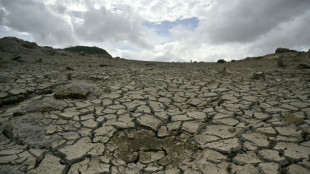
Did cuts to shipping emissions spur more global warming? / Photo: MARTIN BERNETTI - AFP

Did cuts to shipping emissions spur more global warming?

Could a sudden drop in pollution from cargo vessels criss-crossing global shipping lanes be inadvertently making the world hotter?

Text size:

The main reason for global warming is the heat-trapping emissions from burning fossil fuels.

But scientists have been looking at the extent to which a shift to cleaner, lower-sulphur shipping fuels in 2020 may have fuelled warming by reducing the amount of particles in the atmosphere that reflect heat back into space.

This theory surfaced again when January was declared the hottest on record, extending a streak of exceptional global temperatures that has persisted since mid-2023.

- Why did shipping emissions drop? -

On January 1, 2020, the sulphur content in engine fuel used to power container vessels, oil tankers and other ships in global trade was slashed by decree from 3.5 percent to 0.5 percent.

This was mandated by the International Maritime Organization (IMO), a UN agency that regulates the global shipping sector, including its environmental impact.

Sulphur oxides in fuels are tiny airborne particles harmful to human health and linked to strokes and the development of lung and cardiovascular diseases.

Some jurisdictions have even tighter restrictions in so-called "emissions control areas" in the Baltic Sea, the North Sea, the North American zone and the US marine Caribbean area.

- Is it working? -

The IMO estimated its fuel mandate would cut emissions of sulphur oxide by 8.5 million tonnes a year.

Last June, research published in the academic journal Earth System Science Data reported that sulphur oxide emissions from the shipping industry declined 7.4 million tonnes between 2019 and 2020.

The IMO said that in 2023 just two vessels flagged for inspection were found to be using fuel with a sulphur level above the 0.5 percent requirement.

Since the new regulation came into force, only 67 violations have been recorded.

- Is there a link to global warming? -

Sulphur oxides are not greenhouse gases like carbon dioxide or methane which are effective at trapping heat in the atmosphere, raising global temperatures.

On the contrary, they boost the reflectivity of clouds by making them more mirror-like and capable of bouncing incoming heat from the Sun back into space.

The sudden decline in these particles may have spurred recent warming "but we can't quantify it in an ultra-precise manner", said Olivier Boucher from the French National Centre for Scientific Research (CNRS)

He said studies had detected changes in clouds above major shipping lanes since 2020, including a greater presence of larger particles less reflective of sunlight.

Scientists could say shipping emissions had aided warming to some degree "but we are not able to say that it contributes a lot", Boucher added.

One study published in August in the journal Earth's Future concluded that the IMO regulation could increase global surface temperatures by nearly 0.05 degrees Celsius a year up until 2029.

The drastic reduction in airborne sulphur pollution helps to explain the exceptional heat of 2023 but the authors said the magnitude of the temperature extremes meant other factors were likely also at play.

M.J.Baumann--NZN