California GOP Faces Near-Extinction After 2026 Midterms; Calls for New Vision
California Republicans have suffered historic losses in the 2026 midterm elections, reducing their congressional delegation to just four seats. With one-party Democratic rule firmly entrenched and state spending soaring, party officials warn that without a new ideological framework centered on economic freedom, the GOP may cease to exist as a viable political force in the Golden State.
California Republicans are facing an existential crisis following the 2026 midterm elections, a cycle of defeats that has stripped the party of nearly all its political power in the state. With the Republican congressional delegation reduced to just four seats out of 52, party leaders argue that the GOP is on the brink of extinction unless it adopts a fundamentally new vision for California.
The scale of the losses is unprecedented in recent memory. While the national midterm elections were difficult for Republicans, the situation in California was far more severe. As votes continue to be counted in tight races, it appears that only four Republican representatives will remain in Washington from the state. This collapse occurred despite Proposition 50, a redistricting measure passed in 2025 that drew district boundaries favorable to Democrats. However, analysts note that even without the map changes, Republicans would have suffered heavy losses due to broader political shifts.
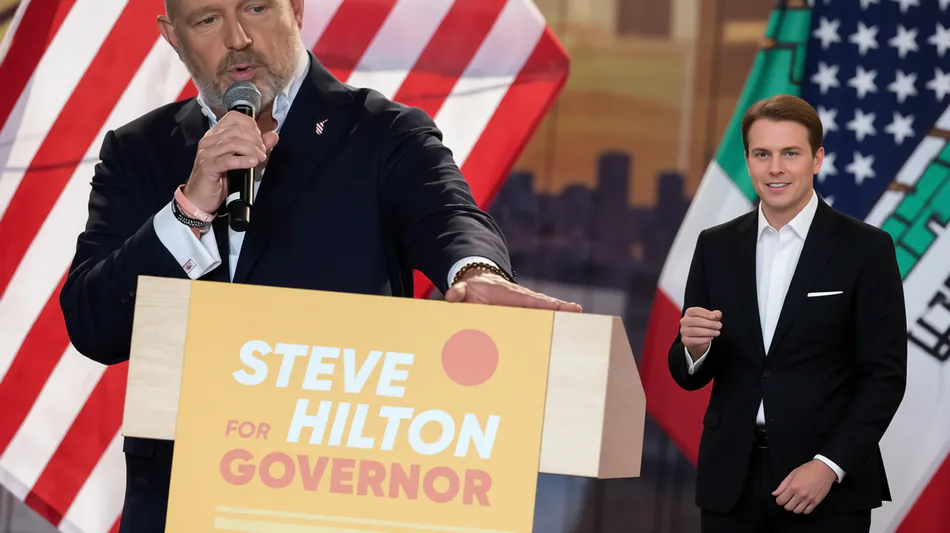
The defeat extended beyond federal offices into state leadership. The last Republican to win a statewide office was Arnold Schwarzenegger, who secured re-election as governor two decades ago. In the current cycle, Steve Hilton ran a competitive campaign for governor that drew more support than his party typically commands, yet he still lost by a wide margin. At the legislative level, the party’s leader in the State Assembly, Ali Macedo, acknowledged on Saturday that she is likely to lose her seat. Tony Strickland, a prominent figure in the State Senate, has also been defeated.
With few elected officials remaining, attention has turned to leadership of the California Republican Party itself. Strickland, now seeking to lead the state party, has a viable path to victory simply because other Republicans have not won significant offices to challenge him. The most prominent Republican officeholder currently in California is federal prosecutor Bill Essayli. Essayli was rescued from the state Legislature by President Donald Trump after Democrats stripped him of his committee assignments.
The absence of a strong opposition party has allowed Democrats to maintain a supermajority in Sacramento for several terms. This unchecked power has led to dramatic increases in government spending, which has risen from approximately $200 billion when Governor Gavin Newsom took office to over $350 billion today. Critics argue that this massive expenditure has yielded little tangible benefit. The state’s infrastructure continues to crumble, and public services are declining despite the increased budget.
Despite holding all available political power, Democrats appear unable to resolve key crises, including wildfires and homelessness. Without effective legislative oversight, there have been significant increases in fraud, corruption, and mismanagement. California only managed to balance its budget this year by borrowing from emergency savings, even though no emergency existed. The state’s revenues received a boost from the growth of the artificial intelligence sector, but structural deficits remain a persistent threat. With Democrats relying on tax increases to manage these deficits, voters have increasingly supported such measures, including sales and property tax hikes in major cities, despite citing the cost of living as their top concern.
Political observers offer various explanations for the GOP’s decline. Some blame the party’s tough stance on illegal immigration in the 1990s, while others point to social conservatives alienating voters in a state with a liberal culture. Anti-Trump sentiment also played a role in recent elections. Additionally, Schwarzenegger’s shift toward moderate policies and the implementation of "jungle" primaries devastated Republican fortunes. Many Republican voters simply moved to other states, though some of those destinations have since become politically competitive.
In response to these challenges, party officials argue that Republicans must articulate a clear alternative to what they describe as "democratic socialism." They characterize this ideology as a utopian vision where the state provides every need and regulates all human activity. While superficially appealing, they argue it is unworkable and destructive. California’s current taxes and regulations are driving businesses and middle-class families out of the state, exacerbating inequality.
Furthermore, officials contend that environmental policies intended to protect the state often cause more harm. Allowing brush to grow naturally on state lands increases wildfire fuel, while shutting down local oil refineries forces the importation of dirtier oil. Green energy policies, they argue, have minimal impact on global climate but significantly increase the cost of living in California.
The proposed solution is a return to a vision of freedom. Officials note that freedom attracted migrants from Oklahoma in the 1930s, counterculture movements in the 1960s, and tech entrepreneurs in the 1990s. They argue that California’s cultural greatness, from surfing to rock music, took root when the state was more politically conservative and economically free.
To survive, Republicans must focus on local issues and advocate for those left behind by current policies. By making freedom the central theme of their platform, they hope to unite the party and build a winning coalition for 2028. This approach requires standing up for ordinary people against what they describe as radical state overreach. The work ahead is difficult, but proponents believe that fighting for economic liberty is the only cause capable of revitalizing the Republican Party in California.
A.Weber--NZN