Zürcher Nachrichten - This year's El Nino likely to become record-breaker: top expert

EUR -
AED 4.175728
AFN 73.328437
ALL 92.12319
AMD 413.073921
ANG 2.035429
AOA 1043.654828
ARS 1733.645151
AUD 1.619717
AWG 2.047804
AZN 1.929658
BAM 1.955205
BBD 2.290054
BDT 139.988644
BGN 1.913869
BHD 0.428546
BIF 3410.637413
BMD 1.136879
BND 1.453322
BOB 13.921948
BRL 5.940079
BSD 1.137029
BTN 109.070258
BWP 15.545476
BYN 3.441704
BYR 22282.831098
BZD 2.286635
CAD 1.611242
CDF 2643.243691
CHF 0.945292
CLF 0.027864
CLP 1100.237215
CNY 7.628971
CNH 7.629846
COP 3833.658771
CRC 516.376973
CUC 1.136879
CUP 27.287899
CVE 110.615584
CZK 24.397762
DJF 202.045914
DKK 7.476079
DOP 63.523102
DZD 152.155133
EGP 59.224244
ERN 17.053187
ETB 185.279579
FJD 2.543426
FKP 0.858135
GBP 0.857639
GEL 2.972931
GGP 0.858135
GHS 13.250277
GIP 0.858135
GMD 84.129164
GNF 9951.102741
GTQ 8.683435
GYD 237.900764
HKD 8.919101
HNL 30.520983
HRK 7.532055
HTG 148.801276
HUF 367.143218
IDR 20468.826746
ILS 3.501135
IMP 0.858135
INR 109.123401
IQD 1489.360006
IRR 1563038.2821
ISK 136.971423
JEP 0.858135
JMD 179.985245
JOD 0.806063
JPY 178.950458
KES 147.430914
KGS 99.418378
KHR 4614.657011
KMF 492.268388
KPW 1023.191585
KRW 1546.292209
KWD 0.351091
KYD 0.947524
KZT 499.99229
LAK 25510.575738
LBP 101814.469258
LKR 376.332132
LRD 195.553089
LSL 18.68358
LTL 3.356908
LVL 0.687686
LYD 7.272915
MAD 10.948962
MDL 20.10115
MGA 4987.54849
MKD 61.551275
MMK 2387.259195
MNT 4088.298238
MOP 9.186926
MRU 45.546544
MUR 53.967978
MVR 17.564927
MWK 1971.526233
MXN 20.450757
MYR 4.640284
MZN 72.657494
NAD 18.68358
NGN 1505.819136
NIO 41.83764
NOK 10.842985
NPR 174.517583
NZD 2.006494
OMR 0.437134
PAB 1.136969
PEN 3.863495
PGK 5.143526
PHP 71.042411
PKR 315.023605
PLN 4.369538
PYG 6677.968423
QAR 4.144239
RON 5.276139
RSD 117.410088
RUB 96.042466
RWF 1678.71145
SAR 4.27002
SBD 9.168529
SCR 15.90461
SDG 683.84998
SEK 11.322464
SGD 1.452594
SHP 0.858346
SLE 28.023601
SLL 23839.777847
SOS 649.845174
SRD 42.8444
STD 23531.1028
STN 24.494164
SVC 9.948061
SYP 14781.702837
SZL 18.678893
THB 38.129142
TJS 10.488448
TMT 3.990446
TND 3.366876
TOP 2.737332
TRY 55.698665
TTD 7.716856
TWD 36.144685
TZS 2995.679938
UAH 51.019579
UGX 4450.724294
USD 1.136879
UYU 45.576936
UZS 13433.149672
VES 969.111532
VND 29529.867161
VUV 133.925611
WST 3.121549
XAF 655.957
XAG 0.018746
XAU 0.000276277497
XCD 3.072473
XCG 2.049095
XDR 0.803833
XOF 655.957
XPF 119.331742
YER 269.042434
ZAR 18.643117
ZMK 10233.283289
ZMW 22.142556
ZWL 366.074618
SSP 6494.52655
MXV 2.315995
  • RBGPF

    -1.5200

    64.47

    -2.36%

  • RYCEF

    -0.0400

    19.56

    -0.2%

  • CMSC

    0.0000

    20.4

    0%

  • NGG

    -0.2500

    75.24

    -0.33%

  • BCC

    -0.5500

    76.59

    -0.72%

  • RIO

    -0.1500

    94.41

    -0.16%

  • BCE

    -0.4100

    20.56

    -1.99%

  • CMSD

    -0.0300

    20.27

    -0.15%

  • RELX

    -0.4500

    33.07

    -1.36%

  • VOD

    -0.0400

    16.58

    -0.24%

  • JRI

    -0.2500

    10.77

    -2.32%

  • GSK

    0.4600

    49.7

    +0.93%

  • BP

    0.2800

    44.43

    +0.63%

  • BTI

    0.4200

    56.05

    +0.75%

  • AZN

    -0.4300

    166.15

    -0.26%

This year's El Nino likely to become record-breaker: top expert
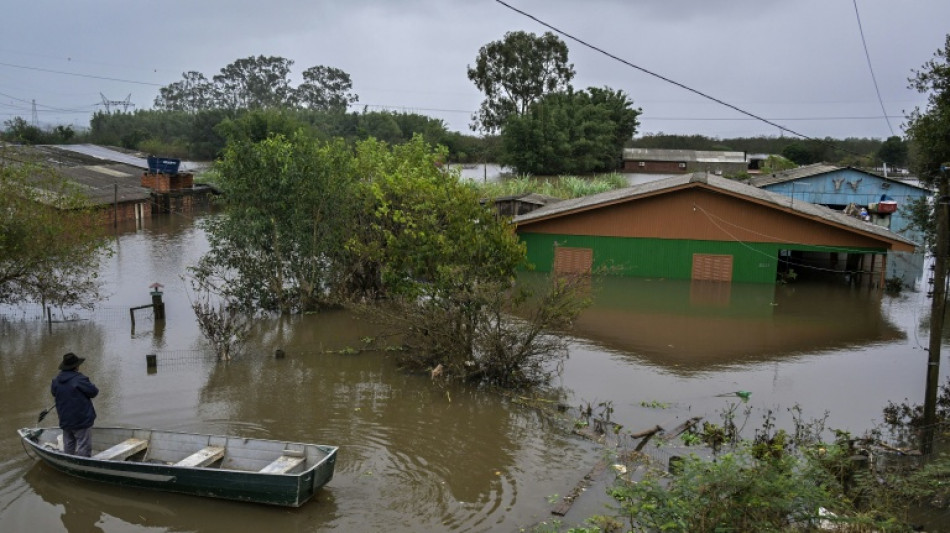
This year's El Nino likely to become record-breaker: top expert / Photo: Nelson ALMEIDA - AFP/File

This year's El Nino likely to become record-breaker: top expert

The current El Nino weather phenomenon is expected to break records for its overall strength, a top expert said Tuesday, as regions face the risk of droughts, floods and other extremes linked to the event.

Text size:

El Nino warms surface temperatures in the central and eastern equatorial Pacific Ocean, bringing worldwide changes in winds, pressure and rainfall patterns.

It typically takes place every two to seven years and lasts around nine to 12 months, and it can lead to droughts in some parts of the world and flooding in others.

This year's El Nino is unlike anything seen in more than three decades of tracking the phenomenon, with forecast models pointing to an "extreme" event, said Tim Stockdale, an El Nino expert at the European Centre for Medium-Range Weather Forecasts (ECMWF), an intergovernmental organisation.

"I think it's absolutely true to say we've never had a forecast of an El Nino that was so strong and so consistent across (forecast) models," he said in a media briefing.

Stockdale said it would be "a very, very big surprise" if the event failed to be a record-breaker.

"I would expect it to break records," he said, while cautioning: "but no guarantees."

While El Nino usually peaks between November and February, the resulting spike in temperatures typically comes later.

Combined with human-induced climate change, the last El Nino contributed to making 2023 the second-hottest year on record and 2024 the all-time high.

- Floods, droughts, wildfires -

The US weather agency declared last month that El Nino had developed and would would intensify into potentially historic strength.

Last week, the World Meteorological Organization (WMO) said El Nino would quickly develop into a strong event between July and September.

UN food aid agencies appealed last month for funds to enact prevention measures over El Nino.

In India, agricultural officials said they would prepare contingency plans to help farmers cope with potentially low rainfall linked to the phenomenon.

Many parts of Asia experience drier-than-average conditions and drought during El Nino years.

El Nino can suppress the monsoon over South Asia, depriving India and other parts of the subcontinent of vital rain that supports hundreds of millions of people.

El Nino also raises the likelihood of drought, heatwaves and wildfires in Australia as warmer-than average conditions grip the continent.

It is often associated with increased rainfall in parts of the Horn of Africa.

But swathes of southern, west, central and eastern Africa usually see drier-than-normal conditions.

Parts of western South America, including coastal Peru and Ecuador, often see above-average rainfall during strong events, raising the risk of flooding and landslides.

In contrast, the weather pattern is tied to drier-than-average conditions in northern Brazil, increasing the risk of wildfires in the Amazon.

A.Weber--NZN