Trump to host Lula in test of fitful relationship / Photo: Evaristo Sa, Ludovic MARIN - AFP/File
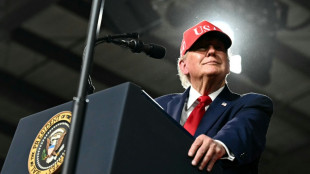
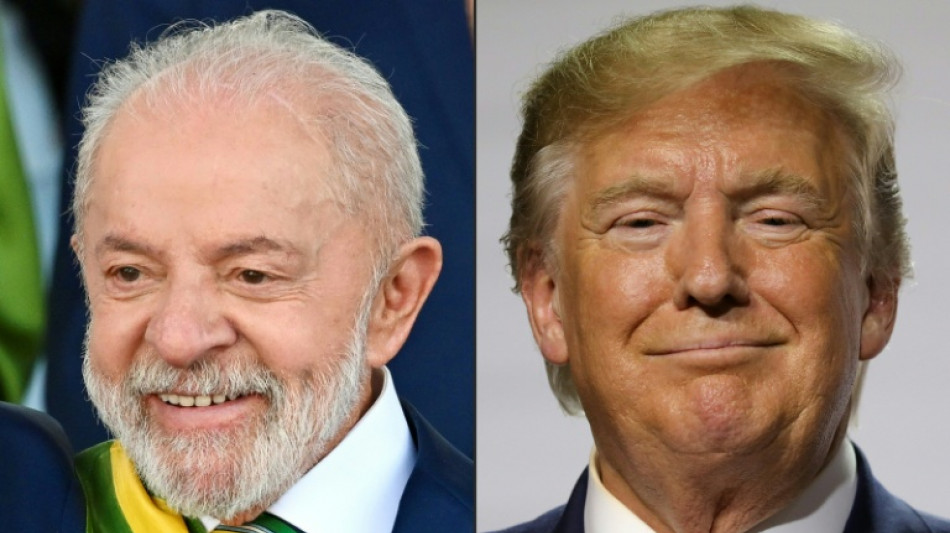
US President Donald Trump will host his Brazilian counterpart Luiz Inacio Lula da Silva at the White House on Thursday -- the latest test of the ideological opposites' tenuous relationship, with security and investment topping the agenda.
At the helm of the Americas' two largest economies, the leaders have clashed over the years but worked to bury the hatchet in recent months.
Lula, as the Brazilian is widely known, is looking to boost his image domestically ahead of October elections that are expected to be close.
Trump is expected to seek greater investment access to Brazil's strategically important minerals supply as well as cooperation on security matters.
Trump hit Brazil with steep tariffs on all its products in July as punishment for what he called a "witch hunt" against his far-right ally, former president Jair Bolsonaro, who is serving a 27-year prison sentence for an attempted coup.
Lula, who once said that Trump wants to be "emperor of the World," took a strong, public stand against the economic measures. He has also slammed the United States' removal of Nicolas Maduro and the war it launched alongside Israel against Iran.
But relations appeared to warm after a series of meetings and calls between the two leaders, with Trump at one point hailing the "excellent chemistry" between the two men. The US tariffs have since been partially reduced.
Lula heads to the meeting politically weakened after a series of defeats in Congress. He is tied with Bolsonaro's eldest son, Senator Flavio Bolsonaro, in opinion polls ahead of the election.
The veteran leftist is seeking a fourth non-consecutive term in office.
Oliver Stuenkel, an international relations professor at the Getulio Vargas Foundation in Sao Paulo, told AFP that Lula will want to "strengthen the personal rapport with Trump" to reduce the risk of US interference in the elections, such as overt displays of support for Flavio.
- Fight against gangs -
Security is the main concern of Brazilian voters ahead of the vote, and combating organized crime is high on the agenda of the meeting.
Finance Minister Dario Durigan, who is part of the delegation, said Wednesday that Brazil wanted to expand cooperation in fighting cartels.
The US and Brazil in April signed a deal to share information to combat arms and drug trafficking, such as X-ray data on containers traveling from the US to Brazil.
Trump has made the fight against so-called "narcoterrorism" a priority of his second term, designating major cartels as foreign terrorist organizations and using it to justify the ouster of Maduro.
Stuenkel said Brazil was keen to show it was doing its part and hopes to "reduce the risk" of Washington designating Brazil's powerful gangs, Comando Vermelho (Red Command) and Primeiro Comando da Capital (PCC), as terrorist groups.
"The US increasingly sees these groups as sophisticated transnational criminal organizations with regional reach," said Rebecca Bill Chavez, president of the Washington-based Inter-American Dialogue.
"But in Brazil, there is real concern about the legal, political, and sovereignty implications of applying a terrorism framework to criminal groups."
- Scramble for rare earths -
Also up for discussion are Brazil's vast reserves of rare earth minerals -- crucial for the production of high-tech goods -- which Washington is scrambling to invest in.
The country holds the second-largest reserves of the critical elements in the world after China.
"Of course, foreign investment in Brazil is welcome, but we want to...drive industrialization within Brazil, generating high-quality jobs in partnership with our universities," said Durigan.
Late on Wednesday, Brazilian lawmakers advanced a bill that would incentivize mineral exploitation. It will next be debated in the senate.
Washington is also investigating Brazil for unfair trade practices, such as whether the country's free PIX electronic payment system is undermining the competitiveness of US companies.
Launched in 2020, PIX has revolutionized payments in Brazil and surpassed the use of credit and debit cards, with seven billion transactions in January alone, according to the central bank.
Ch.Siegenthaler--NZN