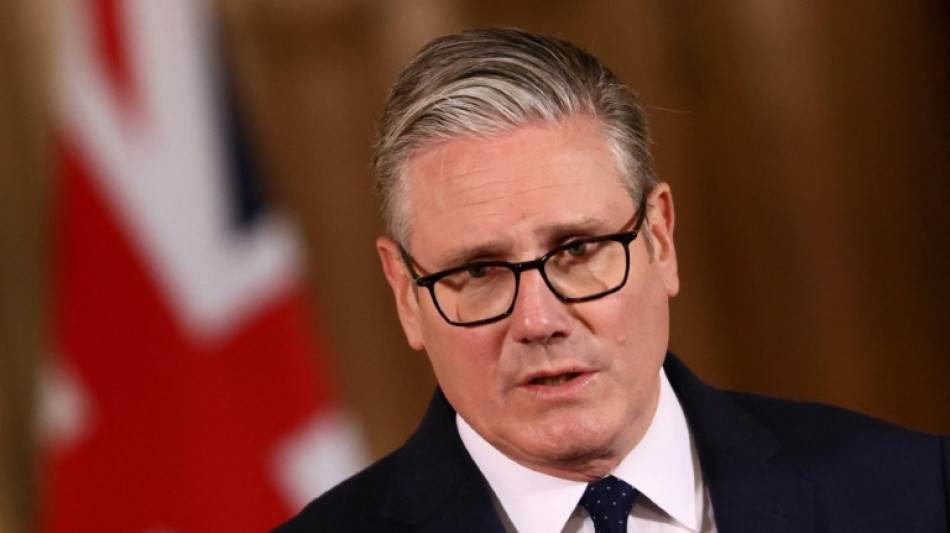
Under-threat UK PM Starmer to attempt reset after disastrous polls / Photo: Jack Taylor - POOL/AFP
Beleaguered British Prime Minister Keir Starmer will attempt a reset on Monday, as he faces a growing threat to his leadership following disastrous local and regional polls.
In a speech, his office said he will acknowledge that "incremental change won't cut it" with an increasingly disgruntled public, promising "a bigger response" in areas such as economic growth, closer European ties and energy.
On Sunday, his Education Minister Bridget Phillipson said a leadership contest was not the answer as Labour licks its wounds from last week's election drubbing.
Starmer himself signalled that he hoped to stay in power until 2034.
But several Labour lawmakers made it clear they believed it was time for him to go.
Former junior minister Catherine West announced that if a cabinet minister did not challenge Starmer by Monday, she would try to kickstart a leadership contest herself -- a move that could open the door to others.
Such a move would also likely spark a damaging bout of infighting as MPs from the left and right of the party battled to position their preferred candidate or shore up Starmer.
- 'Lost the country' -
Under party rules, any challenger would need the support of 81 Labour MPs -- 20 percent of the party in parliament -- to trigger a contest.
Another lawmaker, former loyalist Josh Simons, urged Starmer to step down, saying he had "lost the country".
A third, veteran MP Clive Betts, said there had "to be a way to actually bring in a new leader in a proper and constructive manner in the next few months".
The election results were particularly tough for Labour in Wales, where they lost control of the devolved government for the first time since the parliament in Cardiff was established 27 years ago.
Elsewhere, they lost nearly 1,500 local council seats while the anti-immigration Reform UK party surged from less than 100 to over 1,400 seats under Brexit figurehead leader Nigel Farage.
In Scotland, leader of the Scottish National Party (SNP) John Swinney called for another independence referendum to shield the nation from a future Reform government.
The polls came less than two years after Starmer swept to power in a landslide general election victory, ending 14 years of Conservative rule.
Starmer, 63, has swerved from one policy misstep to another since then, and is engulfed in a scandal over the appointment -- and sacking -- of Peter Mandelson as UK ambassador to Washington, after revelations about the envoy's ties to the sex offender Jeffrey Epstein.
The prime minister has failed to spur economic growth as British citizens continue to feel the effects of a years-long cost-of-living pinch, but has been praised for resisting US President Donald Trump over Iran.
- 'Decade of renewal' -
Before last Thursday's polls, the British press had been awash with rumours that former deputy prime minister Angela Rayner or Health Minister Wes Streeting could try to oust Starmer afterwards.
But neither is universally popular within Labour and would need to be nominated by a high threshold of the party's MPs to fire the starting gun on a leadership contest.
Rayner on Sunday stopped short of calling for Starmer to quit but said the current strategy "isn't working and it needs to change".
"This may be our last chance... The prime minister must now meet the moment and set out the change our country needs," she wrote on X.
Another much-touted possible contender, Andy Burnham, the mayor of Greater Manchester, is currently unable to challenge as he does not have a seat in parliament.
The lack of consensus has led to speculation that there could be a move behind a so-called unity candidate like Defence Secretary John Healey or Armed Forces minister Al Carns.
The absence of an obvious successor means Starmer could still hold on.
There has also been reluctance in the party to replace him after the Conservatives went through three prime ministers in four months in 2022.
Starmer himself has repeatedly resolved to stay put.
Questioned over whether he would lead Labour at the next election, expected in 2029 at the latest, and serve a full term of up to five years, he told the Sunday Mirror: "Yes, I will."
"I've always said it's a decade of national renewal," he added.
X.Blaser--NZN